Hoggar and Tassili n'Ajjer
Central Sahara from Tamanrasset and Djanet: black volcanoes of Hoggar at 2,908 metres, 15,000 rock paintings of Tassili, Tuareg bivouacs from November to March.
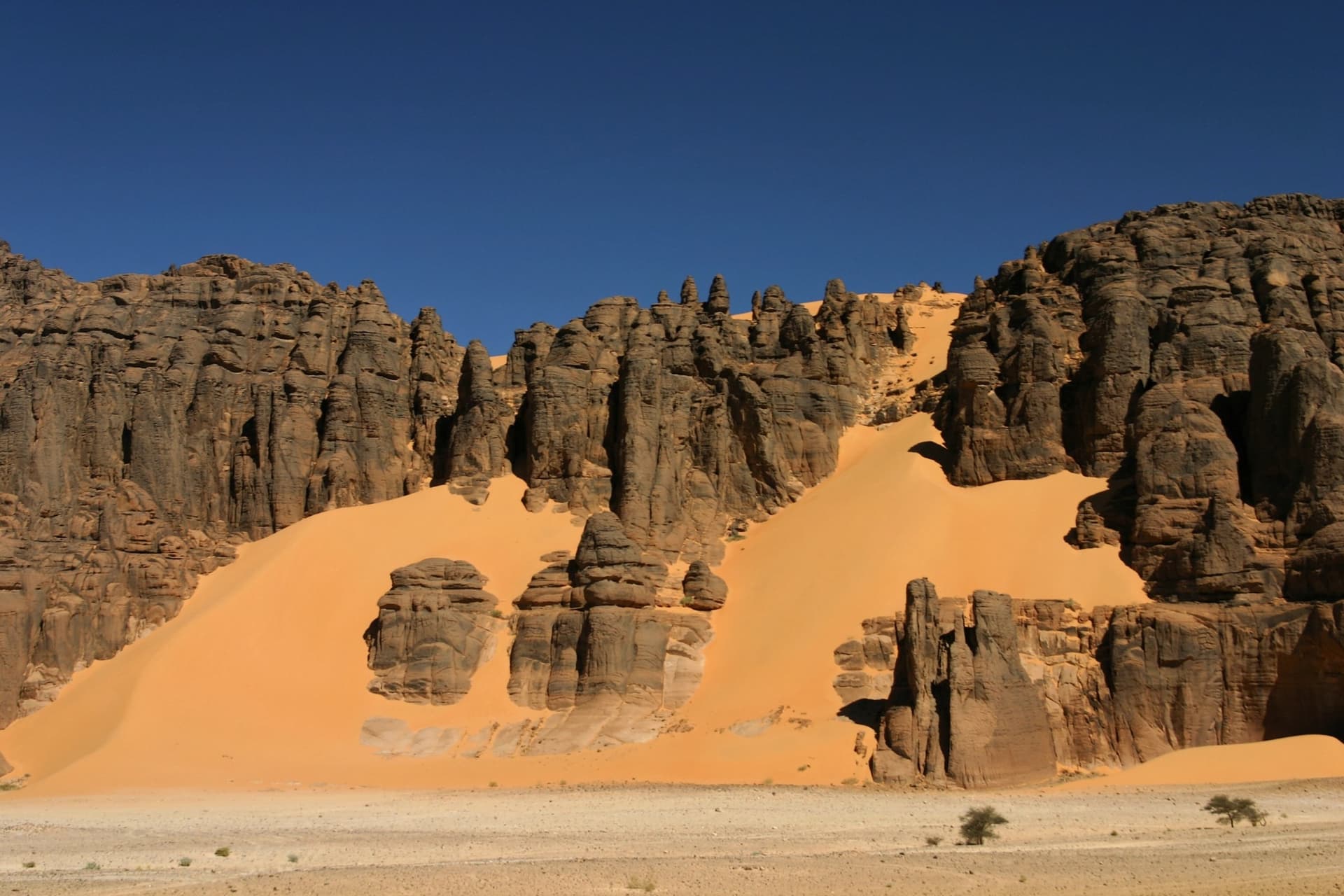
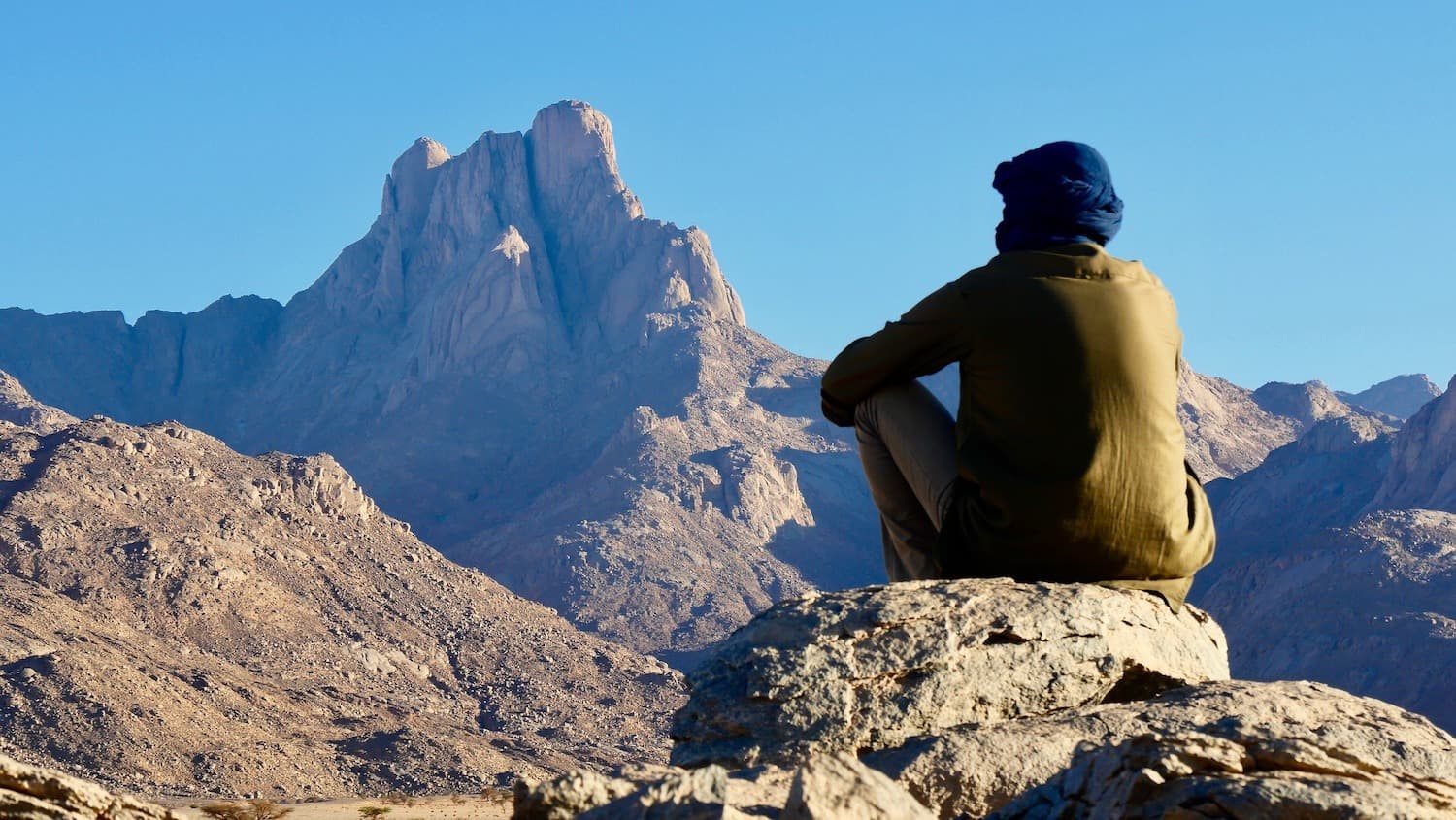
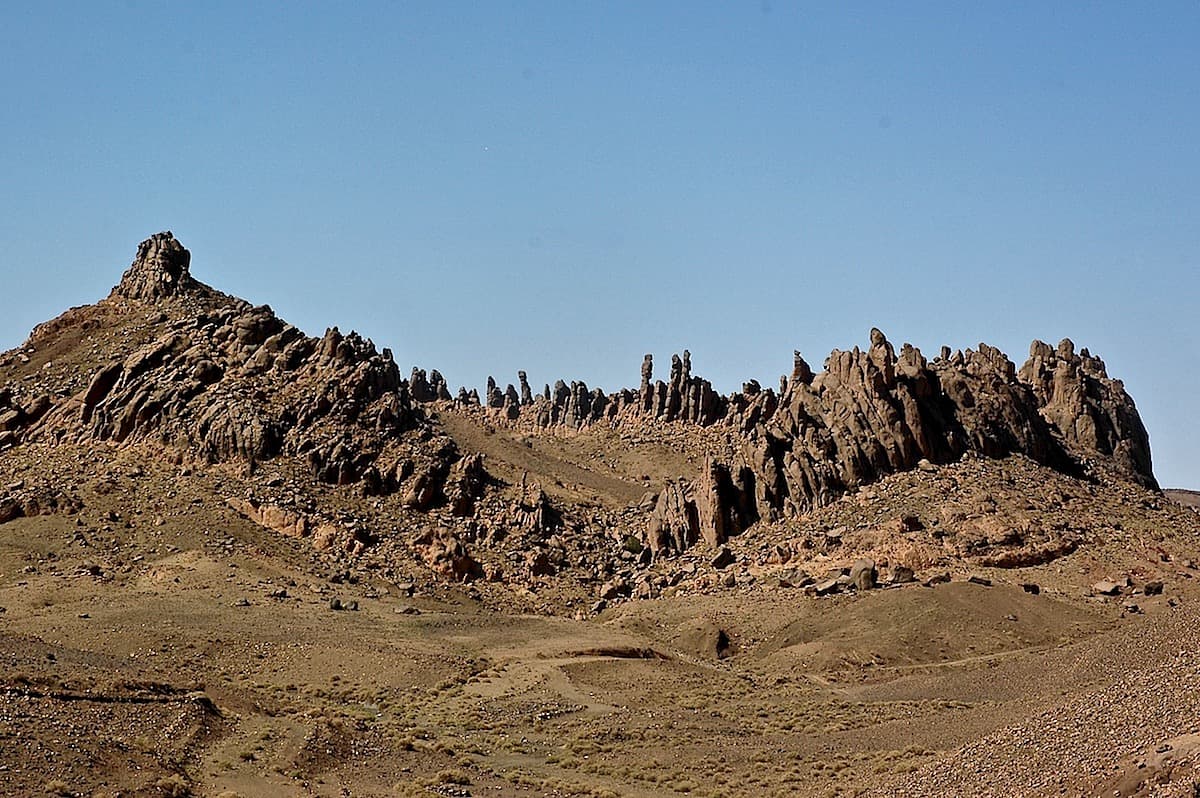
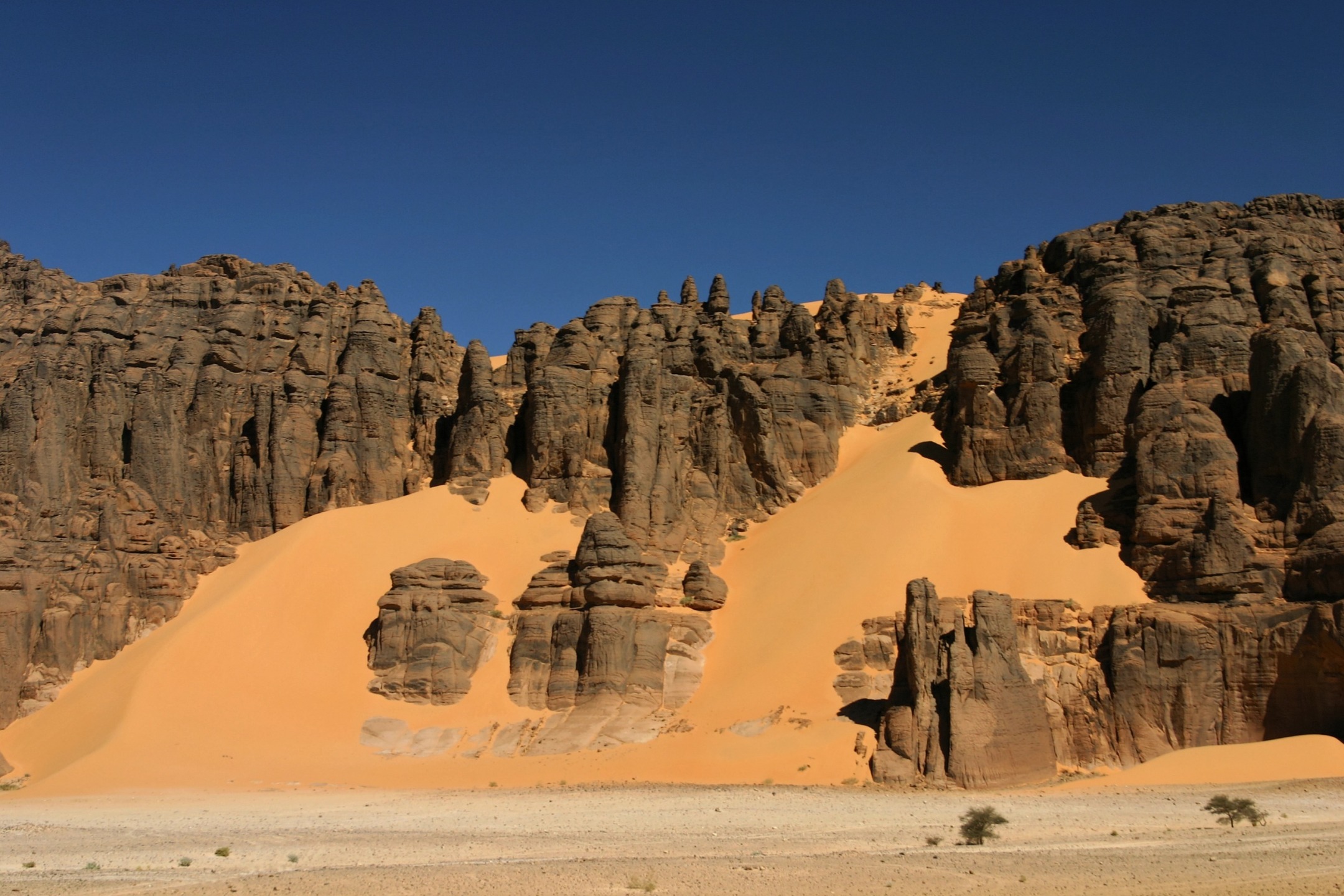
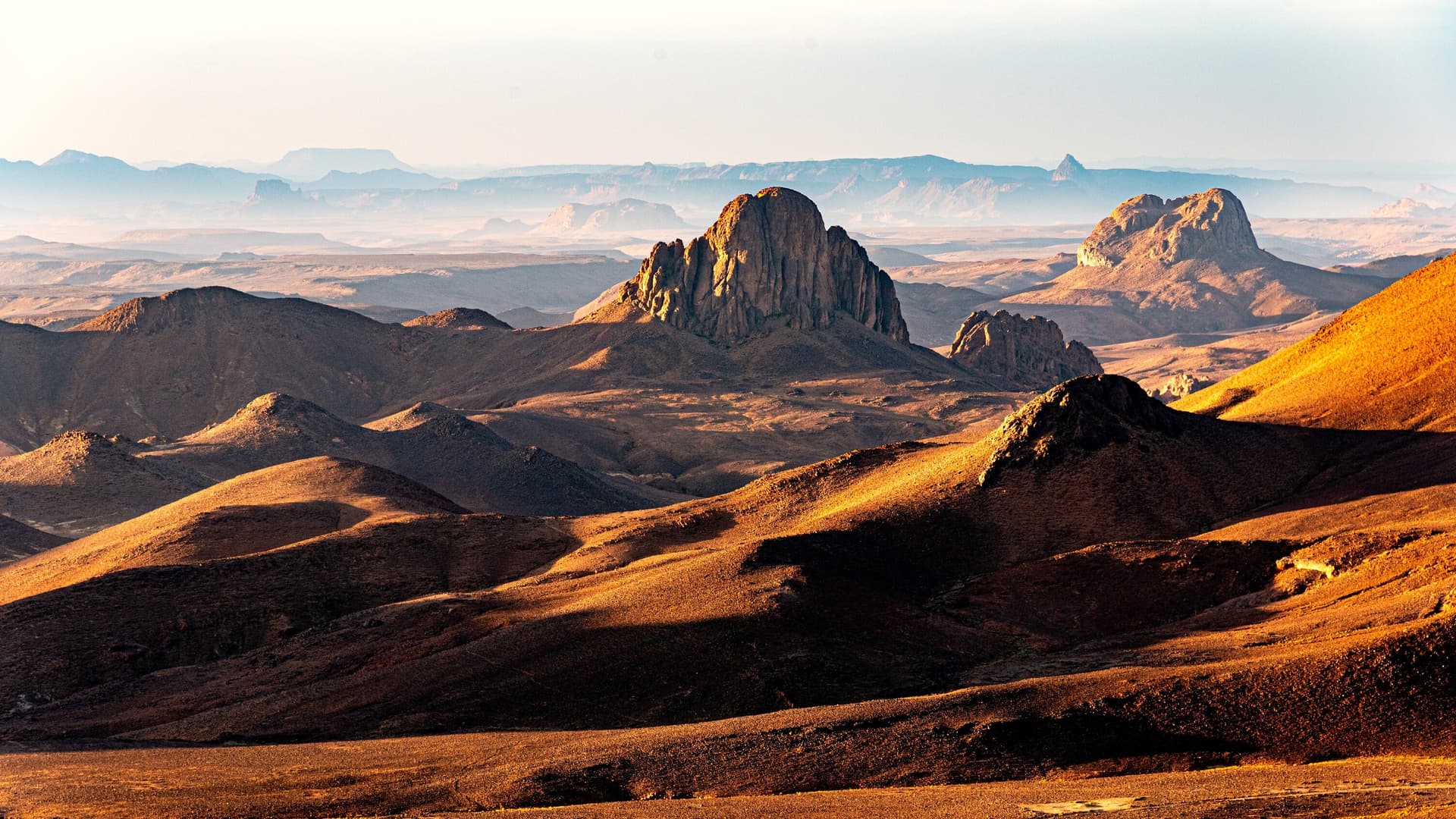
Central Algerian Sahara spans two distinct massifs that we operate from Tamanrasset in the west and Djanet in the east. Hoggar is a volcanic complex culminating at Tahat at 2,908 metres, with black phonolithic peaks rising from a granite base. Tassili n'Ajjer, 700 kilometres further east, is a sandstone plateau carved by canyons and forests of rock formations sculpted by erosion. The track crossing between the two requires several days and is not standard practice: most of our travellers choose one or the other, or combine both via a domestic flight through Algiers.
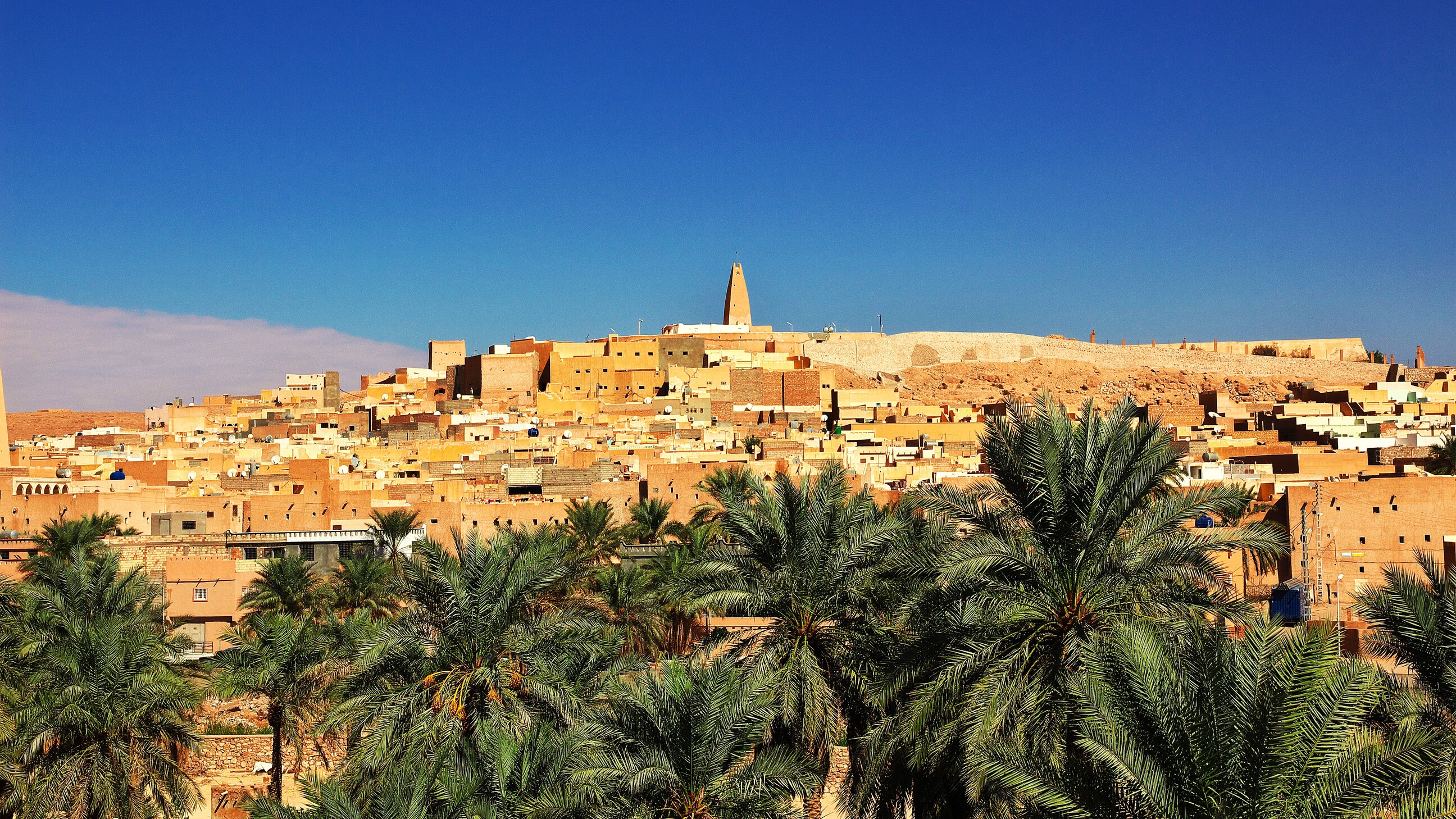
The local population is Tuareg, from the Kel Ahaggar confederation around Tamanrasset and the Kel Ajjer around Djanet. Tamasheq remains the working language, with Arabic and French used for exchange. Our camel guides and 4x4 drivers come from these families, many having grown up between high-altitude encampments and oases like Iherir or Abalessa. The economy relies on goat herding, oasis farming (Djanet dates, tomatoes and mint under palm groves) and Saharan tourism, which has been recovering since 2022 after a long hiatus.
Hoggar was marked by the presence of Charles de Foucauld, who settled at the Assekrem hermitage in 1911, at 2,728 metres. The site is reached by 4x4 from Tamanrasset in four to five hours on track, and custom dictates sleeping in the stone refuge to catch the sunrise over the volcanic peaks. Nearby, the sites of Tagrera, Tin Akacheker and Afilal valley allow for three to five-day bivouacs, with night temperatures dropping to 0 degrees in December and January at this altitude.
Tassili n'Ajjer, a UNESCO World Heritage site since 1982, preserves approximately 15,000 rock paintings and engravings created between 10,000 and 1,500 years before our era. The Tassili-n-Ajjer plateau itself, above Djanet, is reached by a four to six-hour walk with donkey portage for equipment. The sites of Sefar, Jabbaren and Tin Tazarift showcase frescoes of hunters, herds and human figures testifying to a green Sahara. Further south, the Admer erg and the lakes of Tamerit offer landscapes of orange dunes and permanent gueltas. A complete loop from Djanet takes seven to ten days depending on the sites selected.
Logistically, Tamanrasset and Djanet each have airports connected to Algiers by regular flights (two to three hours travel time). A road from the north exists but represents more than 1,900 kilometres of highway with long empty stretches; few travellers take it. A 4x4 with a local driver is mandatory beyond the cities, and a travel permit issued by the authorities is required for any venture outside town limits. We handle these arrangements from Algiers before your trip; allow two to three weeks for administrative processing.
Tuareg cuisine encountered at bivouacs remains simple: taguella (wheat bread cooked under sand), rice with lamb, dates, mint green tea served in three ritual pourings. Evenings around the fire are an opportunity to hear the imzad, a single-string fiddle played by women, and the tindé, percussion rhythming the chants. The Sebeïba, an annual festival in Djanet inscribed on UNESCO's register, takes place around Mawlid (date varies according to the lunar calendar) and pits two quarters of the oasis against each other in ten days of danced contests.
To Discover
Sunrise at Assekrem. Night at the stone refuge at 2,728 metres then climb to Foucauld's hermitage before dawn, 360-degree view over the volcanic peaks of central Hoggar.
Rock paintings of the Sefar plateau. Two days' walk on Tassili above Djanet, with bivouac among sculpted rocks and painted shelters dating from the Bovid period.
Gueltas and dunes of the Admer erg. Three to four-day loop by 4x4 and on foot from Djanet, alternating orange dune ridges and permanent water points in sandstone canyons.
Tuareg evening with imzad. Encampment evening with a single-string fiddle player and songs in Tamasheq, shared with our camel guide's family.
Iherir oasis and Abalessa engravings. Stop at the Iherir oasis-canyon with dry stone houses, and detour to the tomb of Queen Tin Hinan at Abalessa, the mythical founder of the Tuaregs of Hoggar.
When to Go
The ideal window runs from late October to mid-March. During the day, temperatures range between 18 and 25 degrees in Tassili, slightly cooler in Hoggar at altitude. Nights regularly drop to 5 degrees on the plain and can reach 0 degrees, even -3 degrees at Assekrem in December and January. We provide appropriate blankets and duvets, but a fleece jacket and hat are essential. Rain is rare but possible in August-September in the form of short storms that can cut off tracks for one to two days.
From April to October, daytime temperatures frequently exceed 40 degrees and reach 48 degrees in July-August in Tassili canyons. We do not schedule trips during this period: the walk to the plateau becomes dangerous and tent camping impractical. May and October remain feasible for experienced travellers accepting hot days, with shortened itineraries and very early departures.
Practical Advice
We recommend a minimum of 8 to 10 days on site for either region alone, and 12 to 15 days if you wish to combine Hoggar and Tassili via a domestic Tamanrasset-Djanet flight (or return via Algiers). Track distances are long: allow four to six hours by 4x4 to reach a remote site from your starting city, and bivouac days follow a deliberately slow pace to adapt to walking, tea breaks and terrain conditions. Trying to see everything in a week makes no sense here.
The most coherent combination on a three-week trip pairs central Sahara with Algiers and the coast for arrival and departure, possibly with a detour via Mzab and northern Sahara (Ghardaia, Timimoun) to compare Saharan architectures and landscapes. Comfort is rustic: bivouac under double tent or under the stars, natural toilets, bucket showers, meals cooked over wood fires. This region suits contemplatives, walkers accustomed to moderate elevation (300 to 600 metres on the Tassili approach), and travellers drawn to archaeology and Berber cultures. Not suitable for young children or people with reduced mobility.