Aurès and North-East
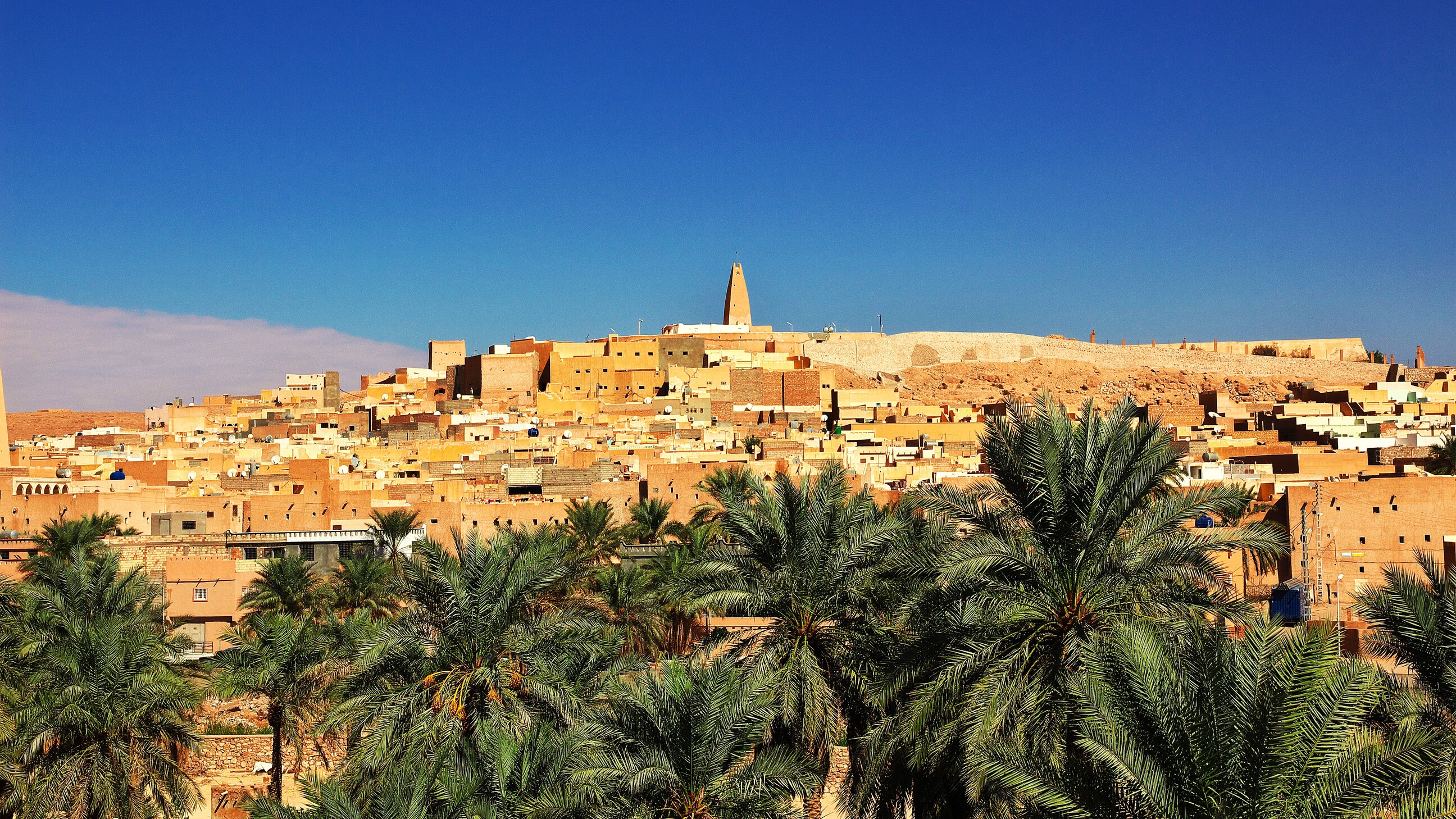
The Chaoui massif of the Aurès, the canyons of Ghoufi and the Roman grid of Timgad, extending towards perched Constantine and the Mediterranean coast of Annaba.
The Aurès form a limestone massif stretching nearly 300 kilometres between Batna and Khenchela, culminating at 2,326 metres at Djebel Chélia. This is the homeland of the Chaouis, Berber-speaking populations who have inhabited these valleys since antiquity, their language, Tachawit, still spoken in remote villages. Our team works regularly with families in Menaa and T'kout, where terrace agriculture, apricot orchards and goat herding still structure the local economy.
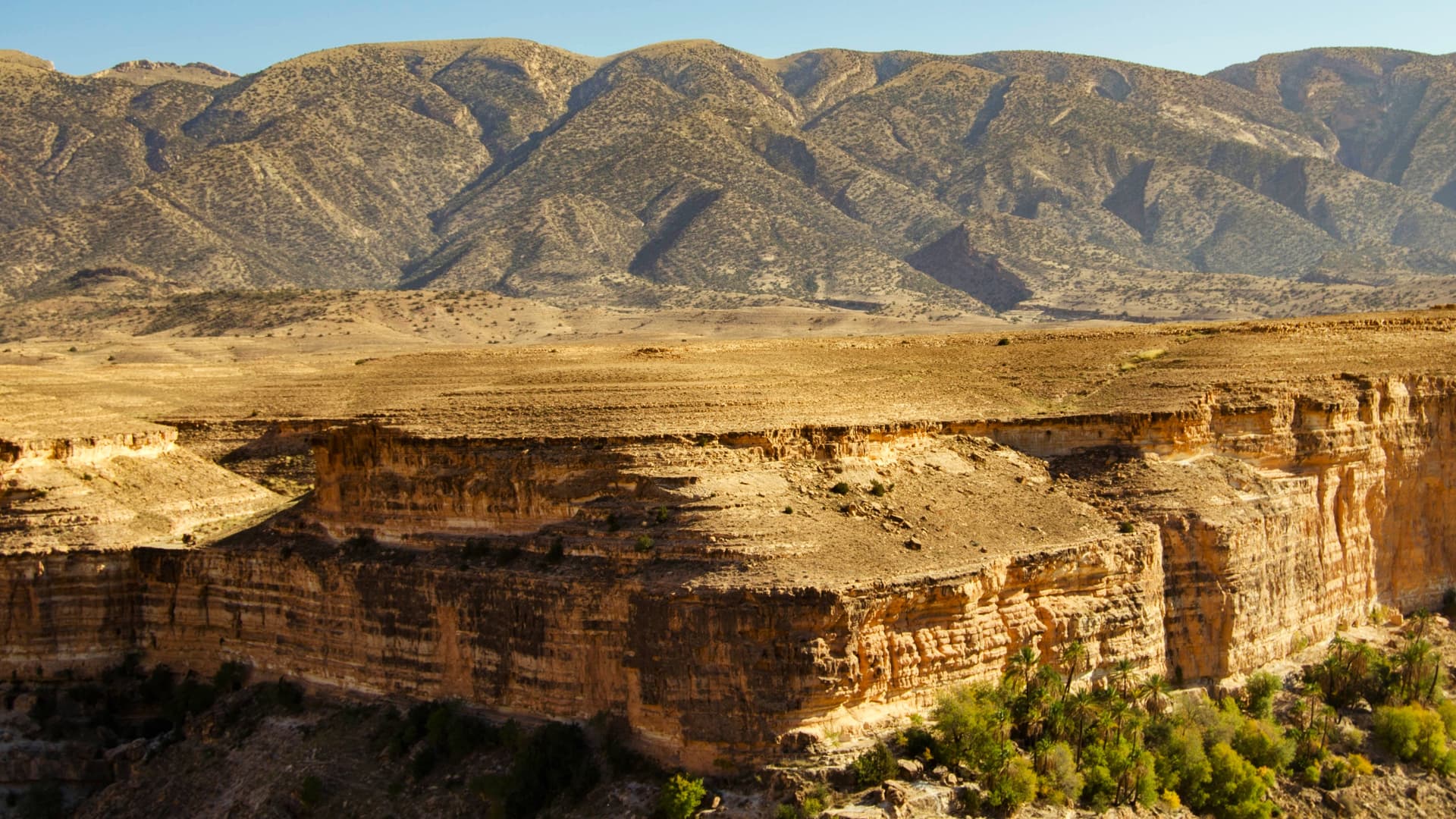
The visual signature of the Aurès is the Ghoufi canyon, carved by the Labiod wadi over some fifteen kilometres. The troglodytic dwellings clinging to the ochre cliffs are still partially inhabited, and some families have reopened their homes to welcome travellers. South of the massif, Timgad unfolds one of the best-preserved Roman urban grids in the Maghreb: cardo, decumanus, the Arch of Trajan and a theatre of 3,500 seats, all set on a plateau at 1,000 metres altitude. Further east, Khenchela provides access to the thermal springs of Hammam Essalihine, whose Roman pools remain in use today.
To the north, the region tips towards the Mediterranean. Constantine, perched 650 metres above the Rhumel gorges, is visited for its suspension bridges, the Palace of Ahmed Bey and its malouf music tradition, inherited from Andalusian exiles expelled in the 15th century. Annaba, ancient Hippo of Saint Augustine, blends a neo-Byzantine basilica perched on its hill, the remains of the Roman city below and a Mediterranean coastline extending to the Tunisian border, towards El Kala and its national park of wetlands.
The cuisine of the North-East bears the marks of this dual identity, mountain and coastal. In the Aurès, one eats chakhchoukha from Biskra (crumbled pancakes in a lamb and chickpea sauce) and herb couscous with wild spring greens. On the coast, grilled sardines and fish chorba dominate Annaba's tables. Spring is also the season of local festivals: the cherry festival in Miliana, the carpet festival of Babar near Khenchela in May.
This region remains very rarely visited by foreign travellers. In practical terms, you'll encounter few other visitors at the archaeological sites of Timgad or Madaure, and exchanges with locals happen without commercial intermediaries. This is an advantage for those seeking direct contact, but also a constraint: hotel infrastructure remains limited outside Constantine and Annaba, and we often favour accommodation with local families in Chaoui villages.
Climate dictates a strict calendar. The Aurès experience very hot summers, with peaks above 38°C in July and August in Biskra, and cold winters at altitude, snow possible on Chélia between December and February. The useful window runs from April to late May, then from mid-September to late October. On the Annaba coast, the season stretches a little longer, into early November.
To discover
The Ghoufi canyon and villages. Two to three-hour trek through the Labiod wadi gorges, with descent towards the troglodytic dwellings carved into the red cliff face. Overnight stay possible with a Chaoui family in upper Ghoufi.
Timgad at sunrise. Arrival at the Roman site before 8am, when raking light illuminates the cardo and the 3,500 theatre steps are empty. Allow two hours to tour the residential quarters and capitol.
Constantine and the Rhumel bridges. Crossing the Sidi M'Cid suspension bridge on foot, 175 metres above the gorges, then descent into the medina to listen to malouf rehearsal at a music master's home.
Hippo and the Basilica of Saint Augustine in Annaba. Remains of the forum and Roman baths at the foot of the hill, topped by the 1881 basilica from where views extend over the Gulf of Annaba and the fishing port.
T'kout weekly market. A Tuesday morning in a Chaoui town, with stalls of dried figs, local olive oil and pottery from Aïn El Beïda. It's an opportunity to strike up conversation in Tachawit with herders descended from Chélia.
When to go
We recommend two main windows. From April to late May, the Aurès are green, apricot orchards in bloom around Menaa, temperatures oscillate between 18 and 26°C during the day in Batna, cooler at altitude on Chélia. This is also the season of village festivals. From mid-September to late October, the air dries, canyon colours turn ochre and the Annaba coast remains swimmable until mid-October, with sea around 22°C.
Summer should be avoided inland: July and August regularly exceed 38°C in Biskra and 35°C in Timgad, making visits to archaeological sites taxing before 10am and after 5pm. Winter, from December to February, is not excluded but requires adapted logistics: snow can block the Tizougarine pass road, and several village accommodations close. The Annaba coast remains mild in winter (12 to 16°C) but with marked rainy episodes in December and January, up to 100mm monthly.
Practical advice
Plan a minimum of 6 to 7 days to properly cover the region: 2 days around Batna for Timgad and Lambèse, 2 days in the Aurès massif with overnight in Ghoufi or Menaa, 1 day in Constantine and 1 to 2 days on the coast between Annaba and El Kala. The most efficient logistical entry point is Constantine Mohamed Boudiaf airport, well-connected to Algiers, Paris and Marseille. Annaba Rabah Bitat airport is an alternative for those prioritising the coast.
The region combines naturally with Algiers and the coast via a one-hour domestic flight, which we frequently propose on two-week itineraries. Combination with Kabylie is possible by road (5 to 6 hours between Constantine and Bejaia), but requires an expanded programme. For a first trip to eastern Algeria focused on Roman heritage, Berber villages and gentle hiking, this region suits contemplative travellers and archaeology enthusiasts well. Comfort remains adequate in towns (3 and 4-star hotels in Constantine, Batna, Annaba) but lightens in Chaoui villages, where we work with family guesthouses offering simple amenities.