Algiers and the Coastal Region
White Algiers, the UNESCO-listed Casbah, the Roman ruins of Tipasa facing Mount Chenoua and the creeks of maritime Kabylie, spanning 400 km of Mediterranean coastline.
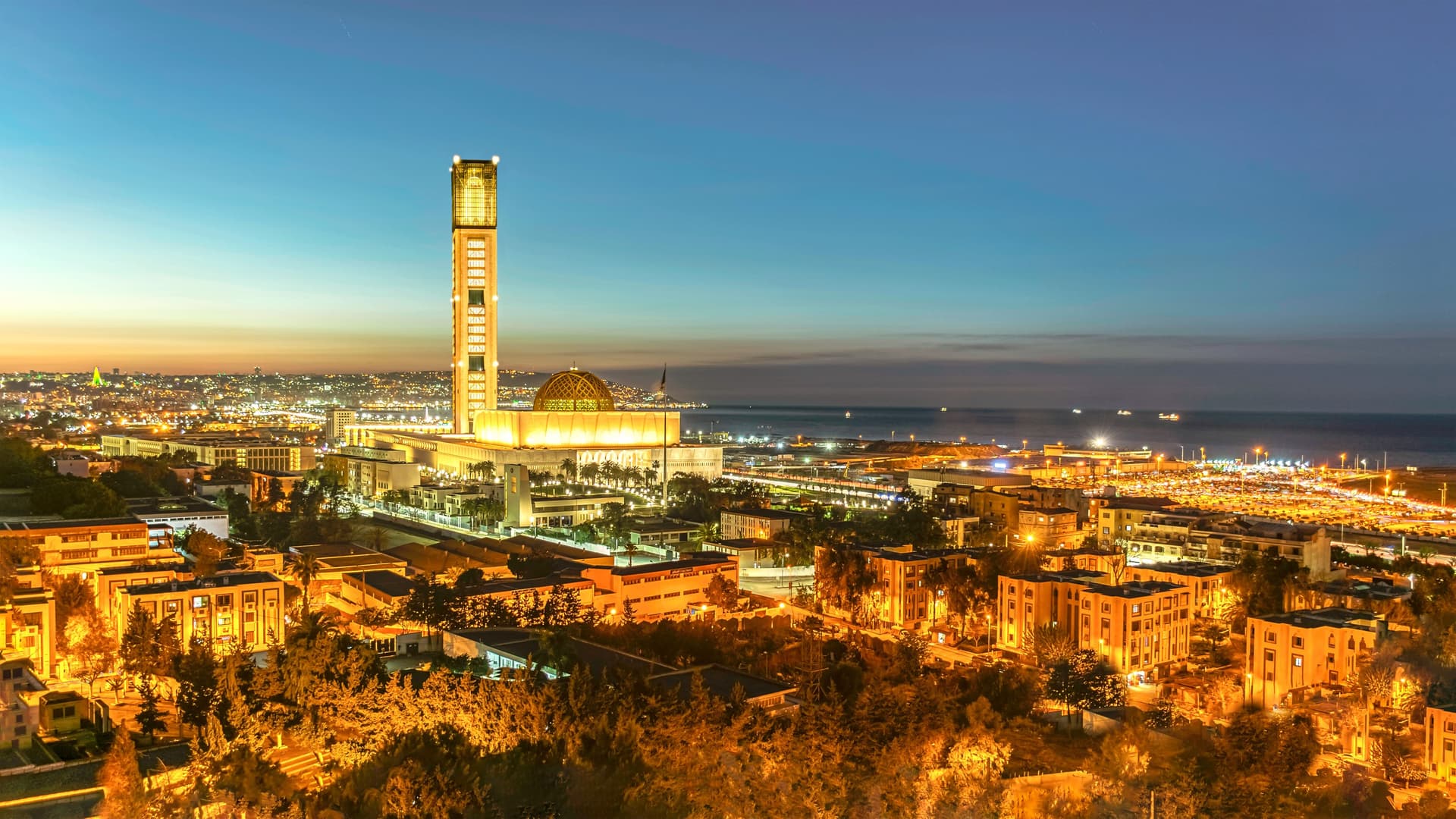
Algiers and its coastline form Algérie's Mediterranean facade, a coastal strip less than 100 kilometers deep where the country's population is concentrated and the majority of its urban heritage is found. From our agency in central Algiers, we watch the capital rise in an amphitheater above the bay: the Ottoman Casbah at the top, UNESCO-listed since 1992, then the 19th-century Haussmann-style boulevards, and finally the port and fish market below. The winding streets of the Casbah climb at a 30-degree incline, punctuated by fountains, douirate (small courtyard houses) and palaces such as Dar Hassan Pacha or Dar Mustapha Pacha.
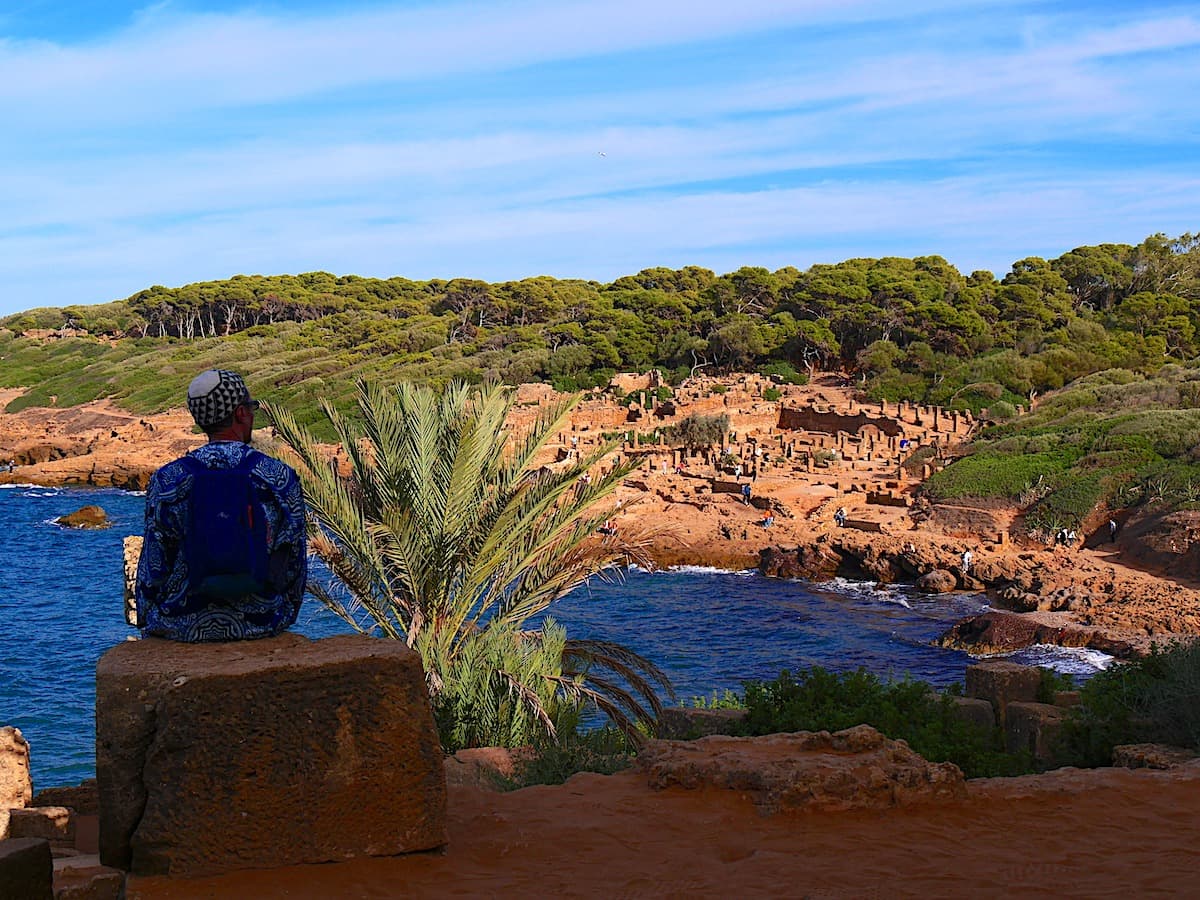
To the west of the capital, the coast unfolds toward Tipaza, 70 kilometers away, where the Roman ruins of ancient Tipasa occupy a promontory facing the sea, with the Chenoua massif (905 meters) in the background. The site, excavated since the 1890s, was immortalized by Albert Camus in Noces. Further along, Cherchell preserves a small archaeological museum with sarcophagi and mosaics from the era of Juba II, King of Mauretania. The coastal road continues onward to Ténès and Mostaganem, less frequented and more wild.
To the east, the coastline takes on a different character. Past Boumerdès and Dellys, you enter maritime Kabylie: the foothills of the Djurdjura plunge into the sea, creating creeks accessible only by trail. Béjaïa, the medieval Bougie of old, which gave its name to wax candles, occupies a bay protected by Cape Carbon and its lighthouse perched 220 meters above the water. Gouraya National Park, which overlooks the city, still shelters a few Barbary macaques, these endemic primates of the Atlas.
The Mediterranean climate makes the region accessible year-round. Summers are warm but ventilated by sea breezes, around 28 to 32 degrees in Algiers in July-August. Winters remain mild, between 12 and 15 degrees during the day, with rainy episodes concentrated between November and February. The shoulder seasons, April-May and September-October, are the periods we recommend to our travelers: temperatures of 20 to 25 degrees, sea still swimmable in September, soft light on the ruins.
Culturally, this coastal strip concentrates the historical layers of Algérie: Phoenician trading posts in Tipasa and Cherchell, Roman cities, Ottoman medinas from the 16th to 19th centuries, French colonial urbanism, and post-independence architecture. Local cuisine reflects this blend: chorba frik made with cracked wheat, dolma wrapped in vine leaves, makrouts with date paste from the pastry shops of Didouche-Mourad street, Moorish coffee served in the fondouks of the lower Casbah. The markets of Bab El Oued and Belouizdad supply fresh fish (sardine, red mullet, grouper) that is simply grilled in the small restaurants along the corniche.
Economically, the region depends on Algiers' port (the country's largest), administration, services and primarily domestic tourism. International tourism remains modest, which means for our travelers uncrowded sites, but also logistics that require solid local organization: pre-booked taxis, authorized guides for the Casbah, ticketing for archaeological sites. This is exactly what our team manages from Algiers.
Things to Discover
The Casbah of Algiers on foot. Three hours of walking from Martyrs' Square to the citadel, passing through the Ketchaoua Mosque and Ottoman palaces. Steep slopes, worn stairs, the scent of mint and coffee in interior courtyards.
Tipasa at sunset. The ruins of the Christian basilica and Roman forum on their promontory, facing Mount Chenoua. Visit in late afternoon when the light grazes the columns and school groups have departed.
Cape Carbon and Gouraya Park. A 2-hour hike above Béjaïa to the lighthouse, with spectacular passages along the Mediterranean. Possibility of spotting free-roaming Barbary macaques in the pine groves.
The Royal Mausoleum of Mauretania. A circular tomb 33 meters in diameter built around 3 BC, between Tipasa and Algiers, on a ridge 261 meters high. The presumed burial place of Juba II and Cleopatra Selene, daughter of Cleopatra VII.
The fishing port of Madrague. A small port west of Algiers where trawlers return late morning. You can eat grilled sardine in small restaurants facing the water, 30 minutes from the center.
When to Go
The Algiers region can be visited year-round, but our recommended periods are April to June and September to mid-November. In spring, temperatures range between 18 and 25 degrees during the day, vegetation is lush after winter rains, and archaeological sites like Tipasa or Djemila remain pleasant to explore on foot. In autumn, the sea remains at 22-24 degrees until the end of October, allowing you to alternate cultural visits and swimming in the creeks of maritime Kabylie.
July and August are hot (28 to 32 degrees in Algiers, sometimes more inland during sirocco episodes), and the coast is very crowded with Algerians on vacation: coastal hotels fully booked, beaches packed on weekends. We advise against this period for discovering the cultural heritage of the Casbah, where the heat in the narrow streets becomes uncomfortable. Winter, from December to February, is mild (12-15 degrees during the day) but rainy, with approximately 100 mm of monthly precipitation. It is a good season for architecture and museum enthusiasts, provided you accept a few gray days.
Practical Advice
We recommend 4 to 6 days to properly cover Algiers and its coastline: 2 full days in the capital (Casbah, Bardo, Notre-Dame d'Afrique, Botanical Garden), one day in Tipasa and the Royal Mausoleum of Mauretania, then 1 to 2 days toward Béjaïa and maritime Kabylie if you wish to extend eastward. The logistical entry point is Houari Boumediene Airport in Algiers, served by direct flights from Paris, Marseille, Lyon, Montreal and several European capitals.
The region combines naturally with Kabylie and the High Plateaus, 3 hours' drive to the east, to add a mountain dimension and Berber villages. For a longer 12 to 15-day trip, we often arrange Algiers as the entry point before a domestic flight to Tamanrasset or Djanet for the Hoggar and Tassili n'Ajjer. The comfort level in Algiers is good, with several internationally-standard hotels and several guesthouses in Sidi Fredj or Tipasa. This region suits travelers interested in history, architecture and gastronomy, as well as families, since distances are short and roads are in good condition.