Ghardaïa
Ghardaïa
Capital of the M'Zab Valley, Ghardaïa brings together five Berber cities from the 11th century, a palm grove irrigated by foggaras, and a vibrant Ibadi community.
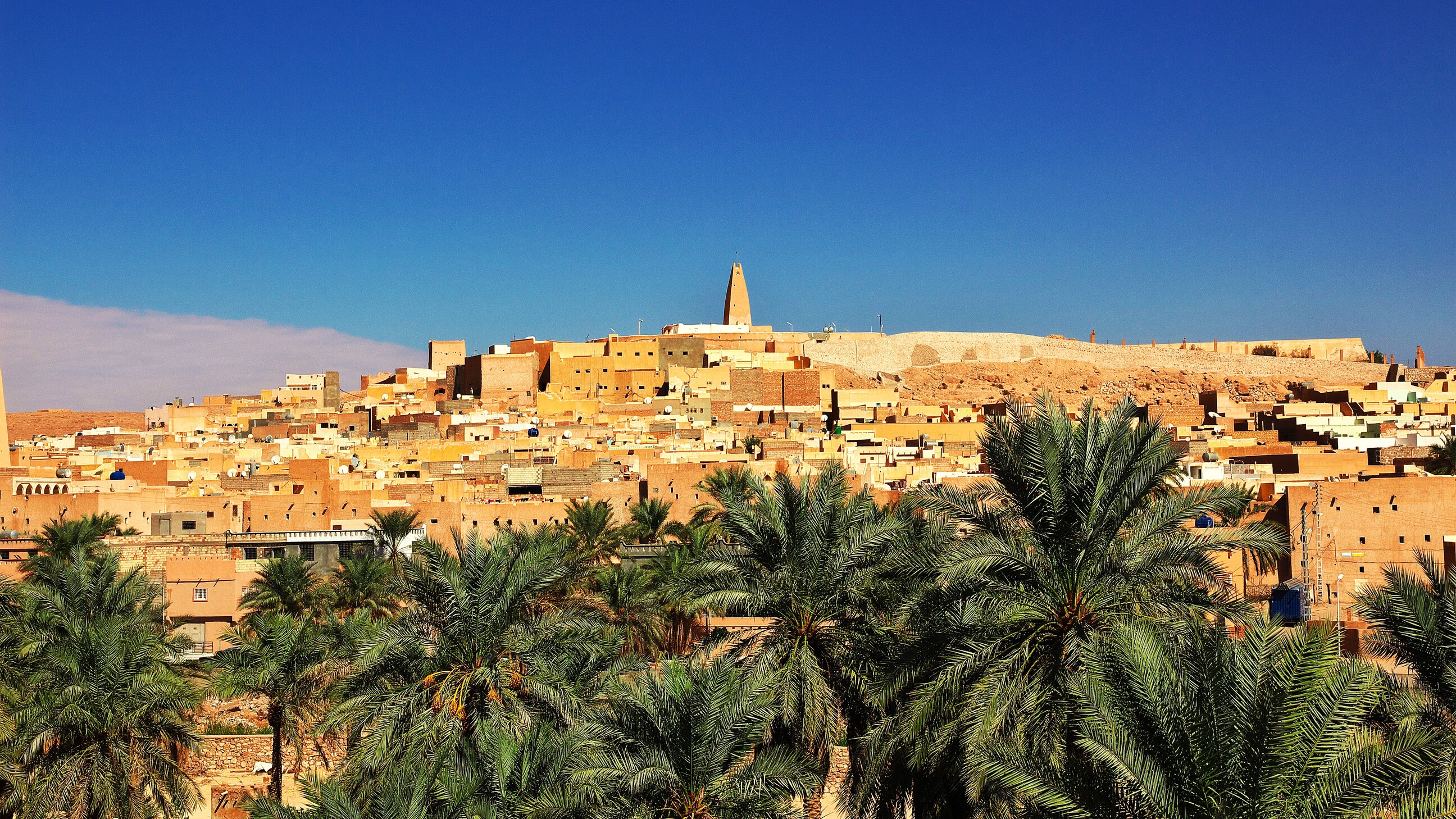
Ghardaïa is a city listed as a UNESCO World Heritage Site located 630.53 km south of Algiers. Attracting many tourists, it is renowned for its history and magnificently preserved ksar architecture. Ghardaïa promises you a unique journey into the heart of the Algerian Sahara, blending cultural exploration with immersion in a spectacular landscape. Prepare yourself to be captivated by the singular beauty of this remarkable place!
History and Legend
The name Ghardaïa is said to derive from "Ghar Daïa," meaning "the cave of Daïa." According to legend, Daïa was a young woman living alone in a cave. One day, Sheikh Sidi Bou Gdemma, passing through the region, was enchanted by her beauty and married her. Together, they then founded the city of Ghardaïa.
Historically, Ghardaïa was founded in the 11th century by Berber refugees from Tahert, who established 5 fortified villages forming a pentapolis: Ghardaïa (the capital), Melika, Beni Isguen, Bounoura, and El Atteuf. These villages, built according to defensive urban planning principles, are celebrated for their mosques that also served as watchtowers and storage facilities. Due to their perfectly preserved Mozabite architecture, they were inscribed as a World Heritage Site in 1982.
What to Do in Ghardaïa?
Explore the City and Appreciate Its Architecture
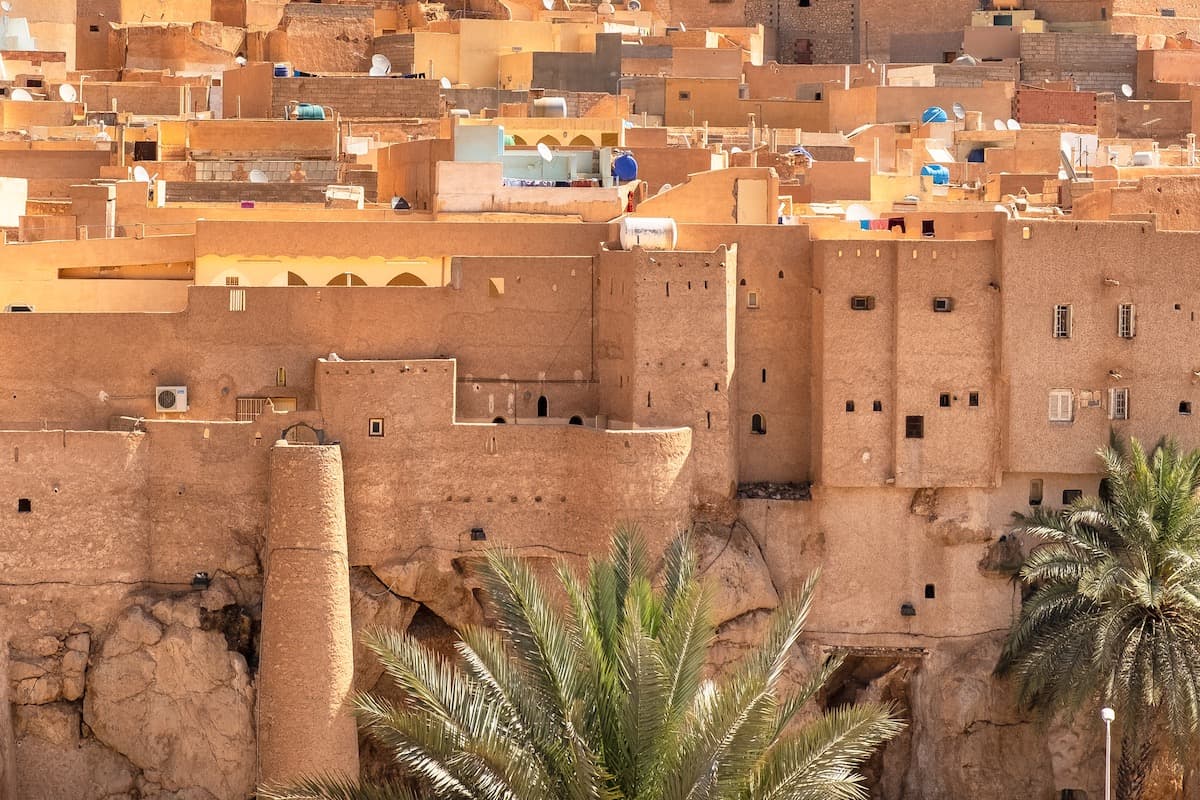
Ghardaïa is a true open-air museum. The narrow, winding streets, tangled like a labyrinth, reveal a unique architecture rich in simplicity and functionality. The houses, constructed from local materials, blend seamlessly into the desert landscape and create a striking visual harmony.
Wander through the old city to admire the structures of Mozabite style, featuring arches and carved wooden screens that filter the desert light. The Great Mosque, perched atop the hill, is an unmissable landmark. Its architecture, both austere and majestic, bears witness to the ancestral craftsmanship of the Mzab's inhabitants.
Visit the market square, the vibrant heart of the city. Take time to observe the ramparts surrounding the ksar. Be sure not to miss the panoramic views of the Mzab Valley from the watchtowers. Every step you take in Ghardaïa will be a true immersion in its history and heritage.
Discover Its Traditions and Culture
To understand Ghardaïa, immerse yourself in the daily life of the Mozabites, whose lifestyle is deeply influenced by centuries-old traditions. The Ibadi community, which forms the majority of inhabitants, follows unique religious rituals, distinguished by a different prayer practice. Taste maghlouga, a local specialty resembling a filled pancake. Also enjoy mint tea with the locals.
Every interaction is an opportunity to enrich your understanding of this fascinating city.
Purchase a Ghardaïa Carpet
Ghardaïa is also renowned for its handcrafted carpets. Veritable works of art, these pieces captivate with their exceptional quality. Often made from wool and goat hair, they feature complex geometric patterns inspired by the local environment, such as palm tree lines and vegetal forms. A multitude of designs await you in the city's souks.
It is worth noting that Ghardaïa celebrates the carpet festival annually, a tradition spanning half a century. This celebration takes place in March. Should your stay coincide with this celebration, seize the opportunity to discover Algerian traditional craftsmanship in all its splendor, particularly that of carpets. This event holds national importance in Algérie.
See the Irrigation System of Ghardaïa's Palm Grove
The irrigation system of Ghardaïa's palm grove is a model of ingenuity and adaptation to desert constraints. Inherited from the earliest civilizations, the foggaras, as they are called, play a central role in water distribution. These underground galleries capture groundwater and channel it to the palm groves.
Water management relies on equitable sharing, orchestrated by local committees. Water resources, precious and limited, are thus optimized to ensure crop survival. Date palms, essential to the local economy, benefit from gravitational irrigation, ensuring efficient water distribution.
This system also allows the irrigation of intercropped cultures, such as vegetables and cereals. A visit to the palm grove offers an opportunity to appreciate this ancestral know-how.
Take a Camel Ride in the Desert
Enjoy an unforgettable adventure exploring the desert on camelback. Your ride will allow you to embrace its silence and appreciate its breathtaking landscapes. You will discover vast expanses of golden sand, unique rock formations, and hidden oases.
Take time to watch for local wildlife, discreet yet sometimes visible. A stop to enjoy mint tea under a Berber tent will add an authentic touch to your adventure.
For those seeking total immersion, spend a night under the stars. The desert's night sky, free from light pollution, reveals an infinity of stars, promising unforgettable memories.
Visit the Other Ksours of the Mzab Valley
The neighboring cities of the Mzab Valley, nestled close to Ghardaïa, are treasures waiting to be discovered. Each reveals a unique atmosphere. Beni Isguen, known for its auction market, is a city where traditions are carefully preserved. El Atteuf, the oldest, invites you to explore its narrow streets and picturesque houses. Melika, nicknamed "The Queen," stands out for its position overlooking the M'zab wadi. Bounoura, with its striking landscapes, is ideal for a peaceful stroll.
Each city offers a fascinating glimpse into Mozabite culture and ksar architecture. By visiting these places, you will discover the richness of a thousand-year-old civilization inscribed in UNESCO's World Heritage. Take advantage of every moment to immerse yourself in the singular atmosphere of these oases.
When to Visit Ghardaïa?
The best time to visit Ghardaïa is between October and April, when temperatures are milder, ranging between 15°C and 25°C. This season is ideal for exploring the region without enduring the intense summer heat.
Ghardaïa is accessible by air from Algiers and cities in southern Algérie (Illizi, Djanet, and Tamanrasset). The airport is located 19 km from the city. You can also reach Ghardaïa by car from Algiers. It is situated on Route 1.
Accommodation in Ghardaïa
Want to discover this destination?
Our local advisors design your tailor-made trip.