What to see in the fortified city of Ghardaïa?
A UNESCO World Heritage site, the M'zab valley ranks among Algeria's most treasured destinations. We invite you to discover its capital: the fortified city of Ghardaïa.
A UNESCO World Heritage site, the M'zab valley ranks among Algeria's most treasured destinations. We invite you to discover its capital: the fortified city of Ghardaïa. Pack your bags for an authentic and utterly immersive stay through what is known as the "Pearl of the South"...
Ghardaïa, the capital of the M'zab Valley
Known as the "pearl of the south" of Algérie, the city of Ghardaïa is the capital of the M'zab valley. Located 600 km south of Algiers, in the north of the Algerian Sahara, Ghardaïa is part of a collection of fortified cities called "ksour." These cities were built by the Mozabites, an Ibadi Berber community.
The 7 ksour of the M'zab valley
As you may have gathered, Ghardaïa is part of a pentapolis. The first cities of the traditional pentapolis were erected between the 11th and 14th centuries. These are:
Ghardaïa;
Al Ataf;
Bou Noura;
Melika; and
Béni Ysguen.
From the 17th century onward, two additional cities were added to the original ensemble:
Guerrara; and
Berriane.
Founded in 1053, Ghardaïa is the largest of the Pentapolis cities.
Unique and well-preserved architecture
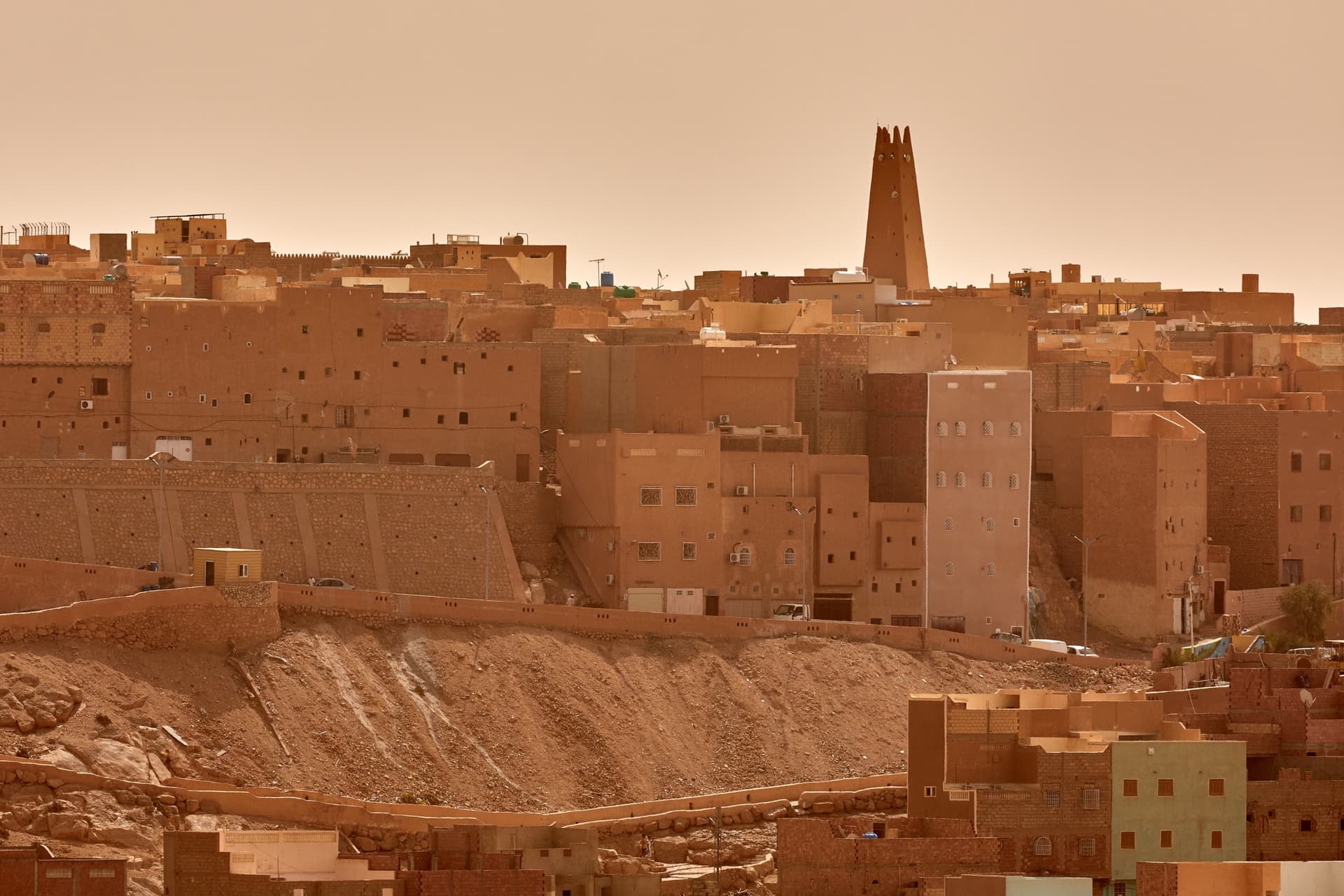
Built around oases, each ksar has its own identity and palm grove. Yet they all share one characteristic: similar architecture. Built in a pyramid shape on hillsides, the cities are arranged around a central point: the mosques. As for the houses, they were designed for communal living while respecting family structures.
The result of millennia of stratification, the architecture of a ksar is characterized by simplicity, functionality, and a commitment to ecosystem preservation. This was made possible thanks to the palm groves and the ancestral expertise of the Mozabites, who created an ingenious system for capturing, storing, and distributing the floodwaters of the M'zab Oued.
The city of Ghardaïa today
Classified as a UNESCO World Heritage site in 1982, the old city of Ghardaïa and the M'zab valley are major tourist destinations in Algérie.
The architecture and ingenuity of these places have inspired great masters throughout history, such as Fernand Pouillon, André Ravéreau, and Charles-Édouard Jeanneret-Gris, known as Le Corbusier (who described the city as: "Houses built according to plans remarkable for their efficiency and deference to the desires of the soul"), and even artists like Simone de Beauvoir who fell under the region's spell.
What to do and see in Ghardaïa?
Getting lost in the city's narrow streets
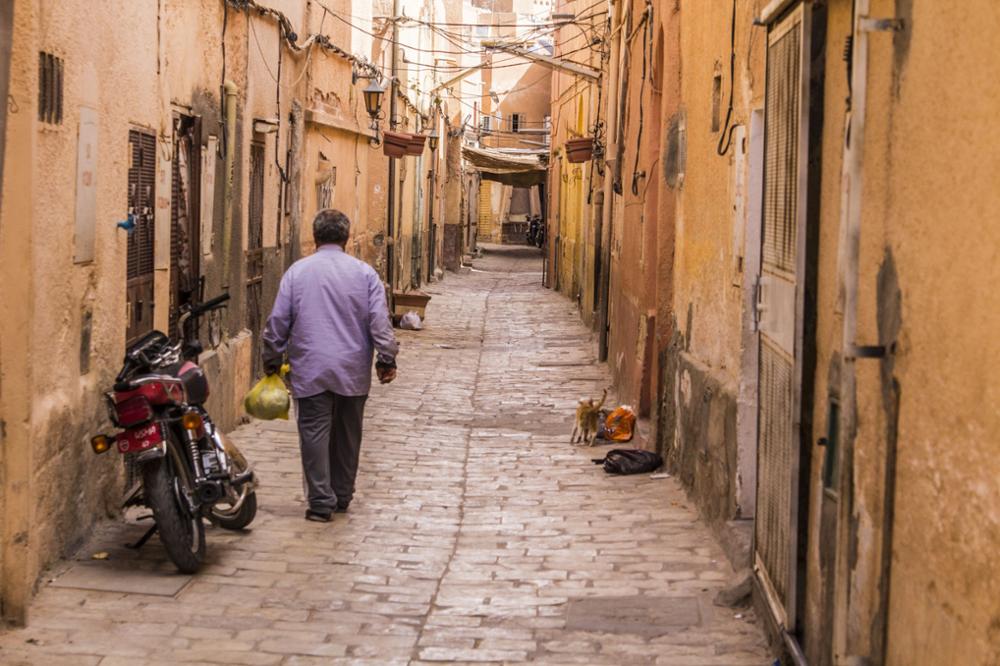
In Ghardaïa, time seems to have stood still. To treat yourself to a journey through history, you can wander through the narrow, labyrinthine streets. Take time to admire the old stone and clay houses with their flat roofs and colorful facades that seem to shimmer in the Saharan sunlight.
As you lose yourself in the city center, you'll enjoy a peaceful atmosphere and have the chance to meet locals renowned for their incredible hospitality.
Visit the Grand Mosque of Ghardaïa
The Grand Mosque of Ghardaïa was the first building constructed at the highest point of the city when the ksar was founded in 1048. Today, it remains one of Algeria's most significant historical mosques.
Known as the "spiritual lighthouse," the Grand Mosque of Ghardaïa has always been a central focal point in the city and served several roles throughout history: fortification, school, town hall, and courthouse.
It is characterized by two minarets (one 23 meters high, the most recent, and another 6 meters high dating from its foundation) and austere architecture that excludes unnecessary ornamentation. The Grand Mosque contains two prayer halls, "Mahdrates," spaces reserved for learning the holy scriptures, as well as other structures dedicated to the administration and management of the ksar's control and defense systems.
It's worth noting that the city of Ghardaïa is home to other mosques, including the Mosque of Sidi Bou Gdemma, the Mosque of Chikh Baba-ouljemma, and the Mosque of Chikh Baissa-oualouane.
Explore the souk of Ghardaïa
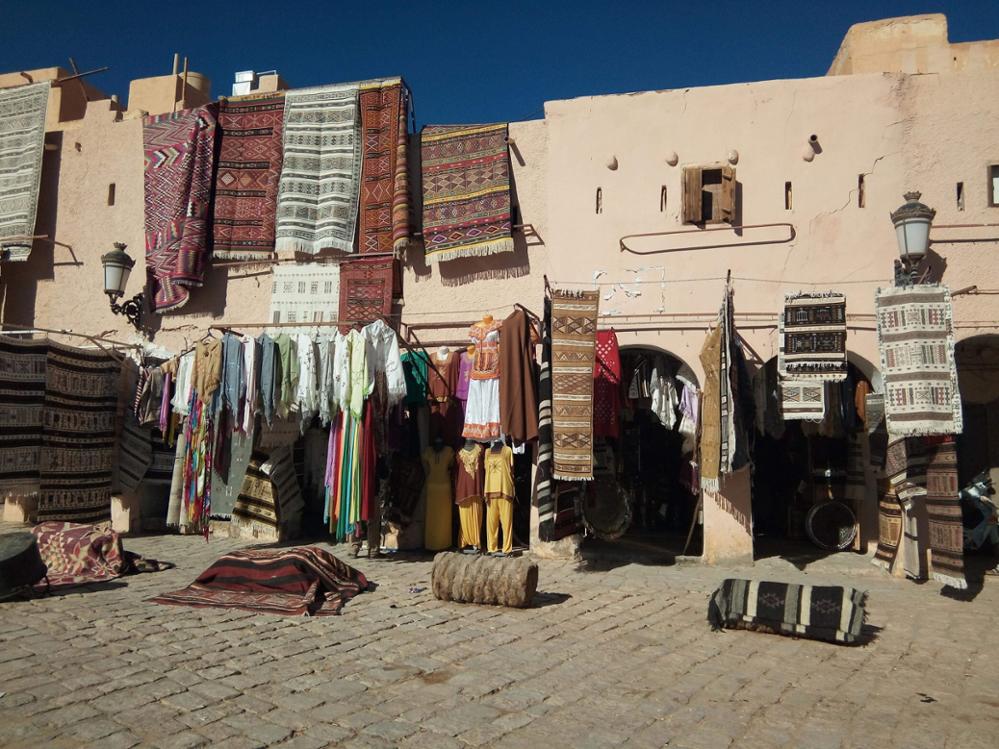
You cannot visit Ghardaïa without passing through its souk. Once frequented by caravans, the souk of Ghardaïa remains today the largest and most important in the region. Ghardaïa's market is held on the southwestern edge of the Ksar, on a beautiful rectangular plaza surrounded by arcades where numerous shops are nestled.
A true Ali Baba's cave, you'll find groceries (fruits, spices, dates...), textiles, and numerous craft items (pottery, jewelry, leather, wooden objects, and the famous carpets of Ghardaïa).
Good to know: if you stay in Ghardaïa in March, you can witness the famous carpet festival. This major event highlights traditional craftsmanship from various regions of Algérie. The typical carpet of Ghardaïa is made from wool and goat hair and is distinguished by geometric patterns in red, black, and ochre colors.
Visit the M'zab Folk Museum
Located in the lower city, the M'zab Folk Museum offers a genuine immersion into the history and daily life of the Mozabites. The museum houses various antique pieces as well as the recreation of a furnished and decorated house according to traditional customs.
Discover the irrigation system of Ghardaïa's palm grove
Head south of the city to reach the palm grove of Ghardaïa and discover the incredible irrigation system inherited from the region's earliest civilizations. An opportunity to understand how the floodwater-sharing system works and to explore the dikes built on the M'zab Oued riverbed. You can also enjoy a breathtaking view of the M'zab valley from the viewpoint.
Taste local specialties
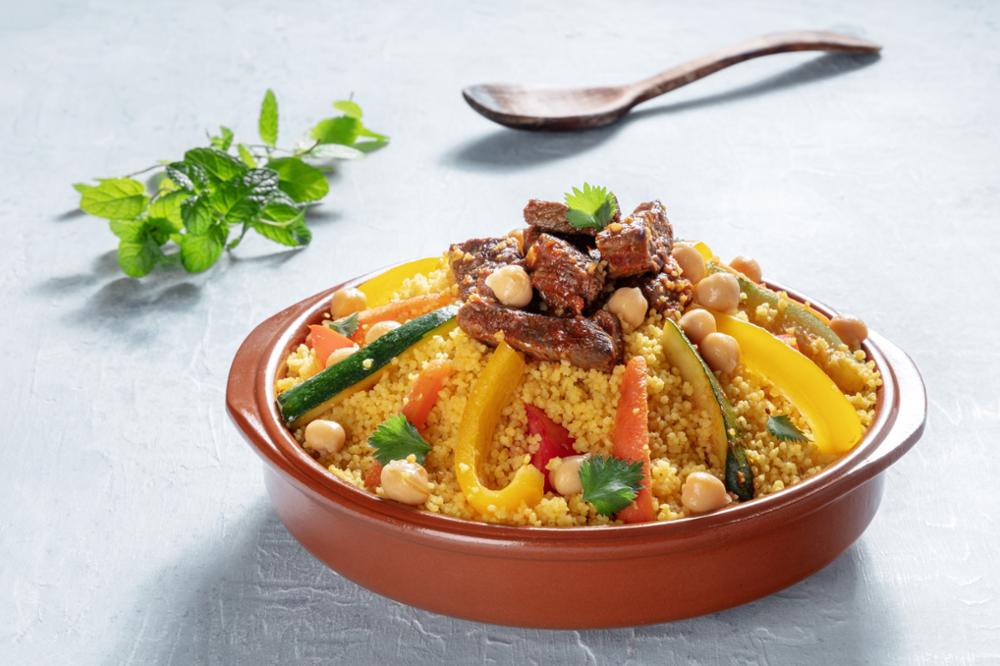
Beyond its architectural and historical treasures, Ghardaïa is also renowned for its local cuisine. Among the culinary specialties you must try during a stay in Ghardaïa are:
Ouchou souffer, a couscous with herbs, a true specialty of the city;
Ouchou Tinni, a date couscous that locals prepare especially for special occasions such as weddings;
Tiftitine, a dish of artisanal pasta served with a red sauce made from date juice and pieces of lamb or camel meat;
"Ibaoun," a local specialty prepared for the celebration of Ashura. These are fava beans soaked in fresh palm grove water that are dried before being boiled and seasoned with salt, cumin, and olive oil;
Maghlouga, a traditional Algerian dish originating from Ghardaia that resembles a crêpe filled with ground meat, onions, tomatoes, peppers, herbs, and Saharan spices.
As for beverages, don't miss "Takerwait," an infusion made from medicinal herbs with therapeutic properties, and of course, the ever-popular mint tea.
Visit the other fortified cities around Ghardaïa
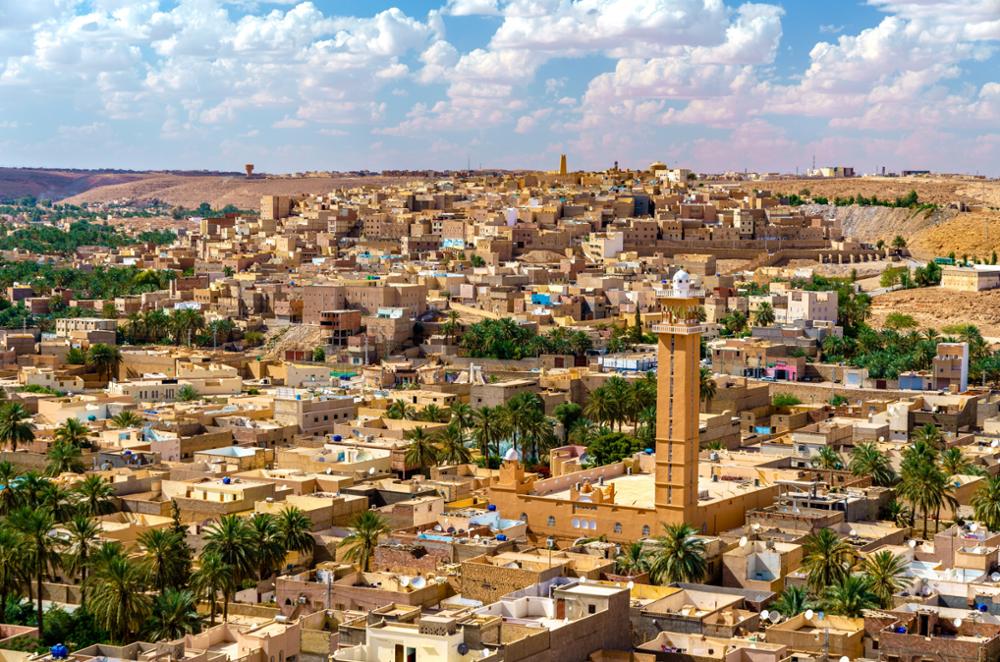
The M'zab valley extends far beyond the city of Ghardaïa alone. After thoroughly exploring the fortified city, you can discover the region's other gems:
Beni Isguen, its magnificent palm grove, the Boulila tower, and its unmissable auction market held every Friday evening;
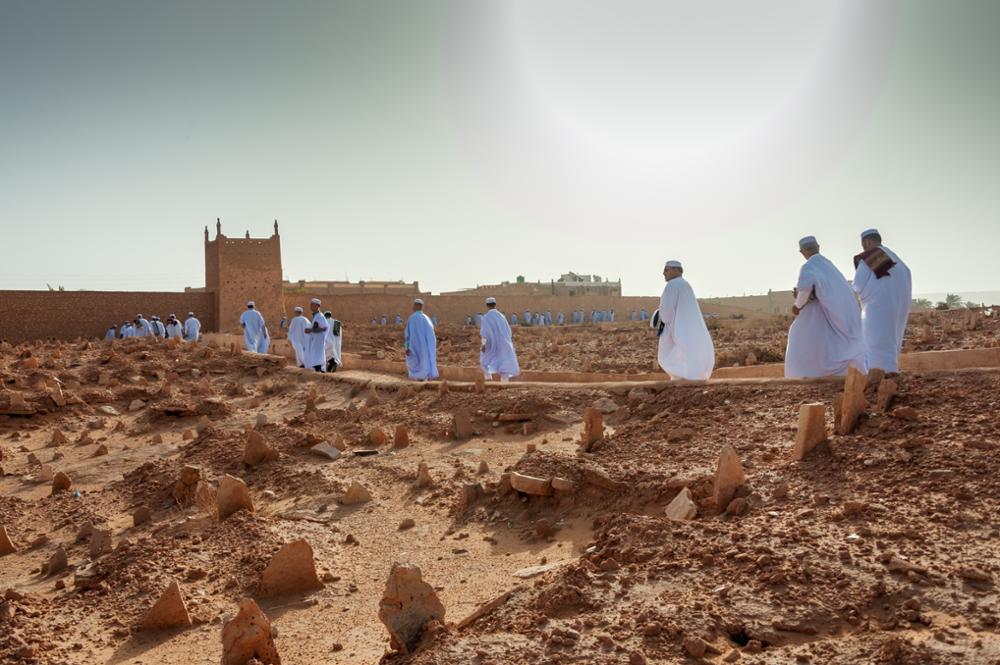
Melika and the Sidi Aissa cemetery with its famous mausoleum;
El Atteuf, the oldest city of the pentapolis, which was built in 1012;
Zelfana and its thermal springs;
The oasis of Sebseb and its ochre-colored dunes...
Discover the gems of Ghardaïa with our "Escape to the M'zab Valley and Ghardaïa " itinerary. And to create a tailor-made circuit suited to your wishes, don't hesitate to contact us!