Oued Labiod
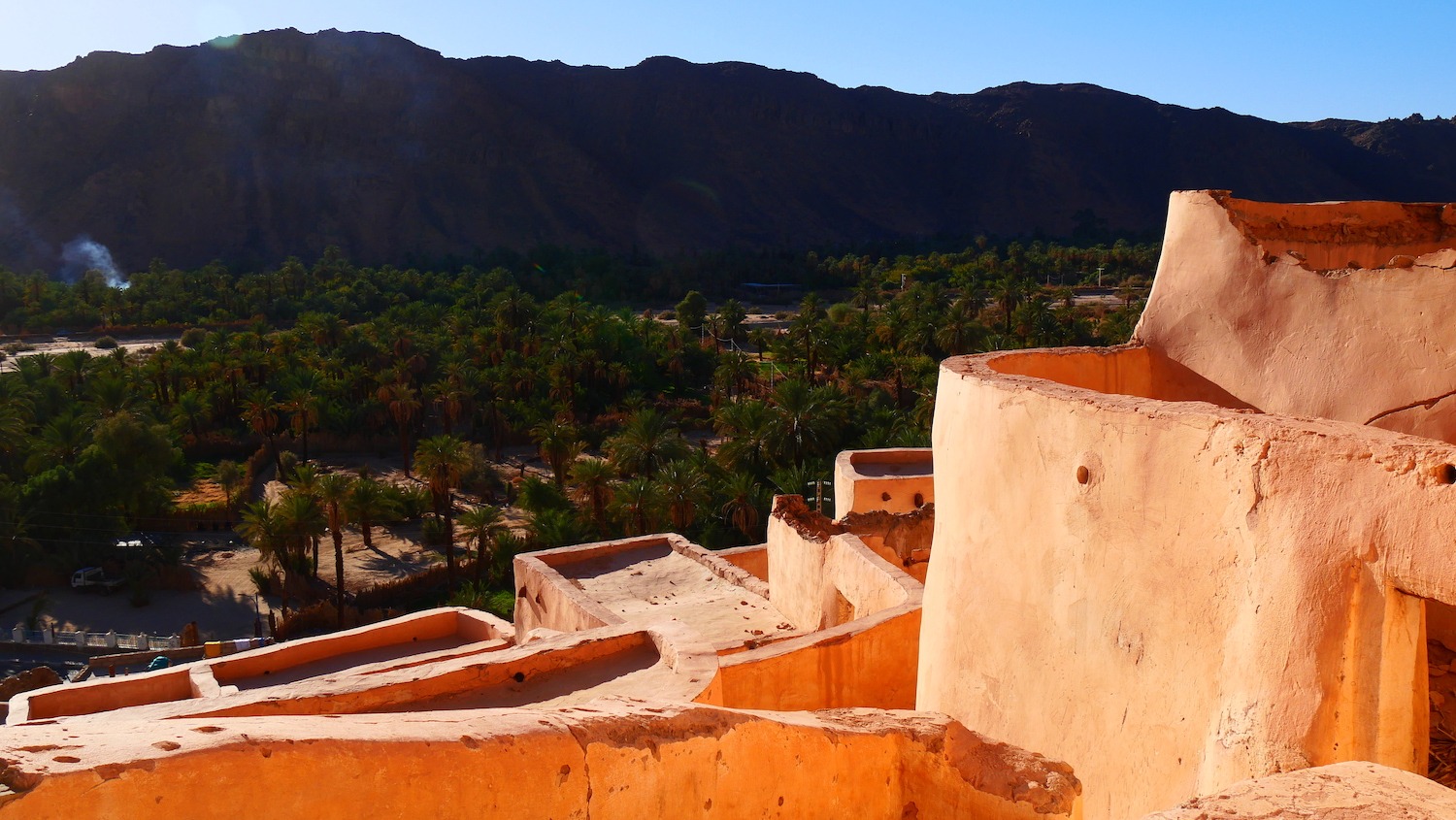
Oued Labiod cuts through the Aurès between ochre cliffs and Berber dry-stone villages. An authentic destination for nature and culture, best combined with Timgad or the Tighanimine Gorges.
Oued Labiod is a commune in Batna Province, within the Aurès massif, traversed by the wadi of the same name. Framed by the foothills of the Aurès range, it forms a natural waypoint between the Tighanimine Gorges and the high plateaus. The landscape, sculpted by erosion and seasonal flooding, attracts hikers and nature enthusiasts seeking wilderness away from conventional tourist circuits.
What to see
The watercourse that lends its name to the commune carves out a dramatic valley with ochre and grey walls. Riparian vegetation—poplars, tamarisks, reeds—contrasts sharply with the arid slopes. Berber villages clinging to the hillsides retain the characteristic dry-stone architecture of the Aurès. Terraced fields bear witness to ancient subsistence agriculture.
History and context
The Aurès have been a centre of Berber resistance since antiquity. The Oued Labiod region, like the entire massif, played a central role in the Algerian War of Independence (1954–1962): it was in the Aurès that the first shots were fired on 1 November 1954. Traces of this history remain deeply embedded in the collective memory of local communities.
Highlights of a visit
The valley and its gorges
The wadi bed, accessible on foot from the village, offers passages between cliffs and riparian woodland. Outside the flood season, you can follow the watercourse for several kilometres. Low-angle light in late afternoon reveals the warm tones of the rock face.
Mountain villages
The surrounding hamlets, built from local stone, exemplify Chaabi adaptation to challenging terrain. Some are partially abandoned, lending them a particular atmosphere. Encounters with locals remain the most authentic experience the area has to offer.
Photography tips
Morning light is ideal for photographing the valley before mist clears. Contrasts between green vegetation and dry rock are most pronounced in spring. Always ask locals for permission before photographing them.
Location and access
Oued Labiod lies in Batna Province, within the Aurès range. The city of Batna is the most practical entry point, with bus and rail terminals. From Batna, shared taxis serve Aurès communes. The main road is paved but winding; a vehicle with good clearance is recommended for secondary tracks.
Nearby attractions
- Tighanimine Gorges — spectacular canyon carved by the Oued Abdi, nearby in the Aurès.
- Timgad — Roman city designated a UNESCO World Heritage Site, accessible from Batna.
- Batna — provincial capital and logistical hub for exploring the Aurès.
- Arris — administrative centre of the Aurès, heart of Chaabi country and gateway to mountain villages.
Frequently asked questions
Spring (April–May) and autumn (September–October) offer pleasant temperatures and lush vegetation. Summer is hot and dry; winter can be cold with snow at higher elevations.
A local guide is strongly recommended for hiking beyond main routes. They also facilitate encounters with locals and deepen understanding of Chaabi cultural context.
Yes. Timgad is accessible from Batna, which serves as a base for both destinations. A day suffices for Timgad; allow an extra night to explore Oued Labiod valley.
Lodging options within the commune are very limited. Batna or Arris provide better bases with more choice.
The region is conservative. Modest dress is appreciated, especially in villages. Always seek permission before photographing people or private property.
Want to discover this destination?
Our local advisors design your tailor-made trip.