Saharan Wildlife
Saharan Wildlife
Mammals, birds, reptiles and insects of the Algerian Sahara: guide to emblematic species, the massifs where to observe them and the best season.
Words in italics are in Tamasheq. Arabic terms are noted with (ar.).
The Algerian Sahara, covering nearly 84% of the national territory, is not the barren desert one might imagine. It is home to around 70 species of mammals, 90 species of birds and over 100 species of reptiles, not to mention arthropods. Most of these animals are crepuscular or nocturnal, making their observation discreet but possible for those who know when and where to look.
Why take an interest in Saharan wildlife?
Saharan species illustrate extreme adaptation strategies: thermal regulation through ears (fennec), solar reflection through silver fur (desert ant), kidneys capable of highly concentrating urine, activity shifted to cooler hours. Several emblematic species, such as the Saharan cheetah or dorcas gazelle, are today threatened by desertification, poaching and habitat fragmentation. Observing this wildlife also means measuring the fragility of an ecosystem often underestimated.
Which species can you see in the Algerian Sahara?
Herbivorous Mammals
The Dorcas Gazelle
Also called the dorcade gazelle, it is the smallest bovid of the Sahara. It feeds on dry grasses and acacia leaves, and draws the moisture it needs from its food, allowing it to go without free water for long periods.
The Barbary Sheep (Aoudad)
Recognizable by the "ruff" of long hairs under the neck and throat, it frequents the mountainous areas of the Hoggar and Tassili. Its ability to climb rocky escarpments allows it to escape predators and reach rare vegetation.
The Dromedary
A central domestic animal of Saharan nomadic culture, it provides transport, milk, meat and hair. Its physiology (fat stored in the hump, tolerance to dehydration, closable nostrils) makes it one of the mammals best adapted to hyper-arid climates.
The Rock Hyrax
Resembling a large rodent, the hyrax is actually genetically closer to elephants. It lives in colonies within rocky crevices, where it takes shelter during hot hours and when predators pass.
The Cape Hare
Present in several Saharan regions, this small herbivore is mainly active at dawn and dusk, to minimize water loss.
Carnivorous Mammals
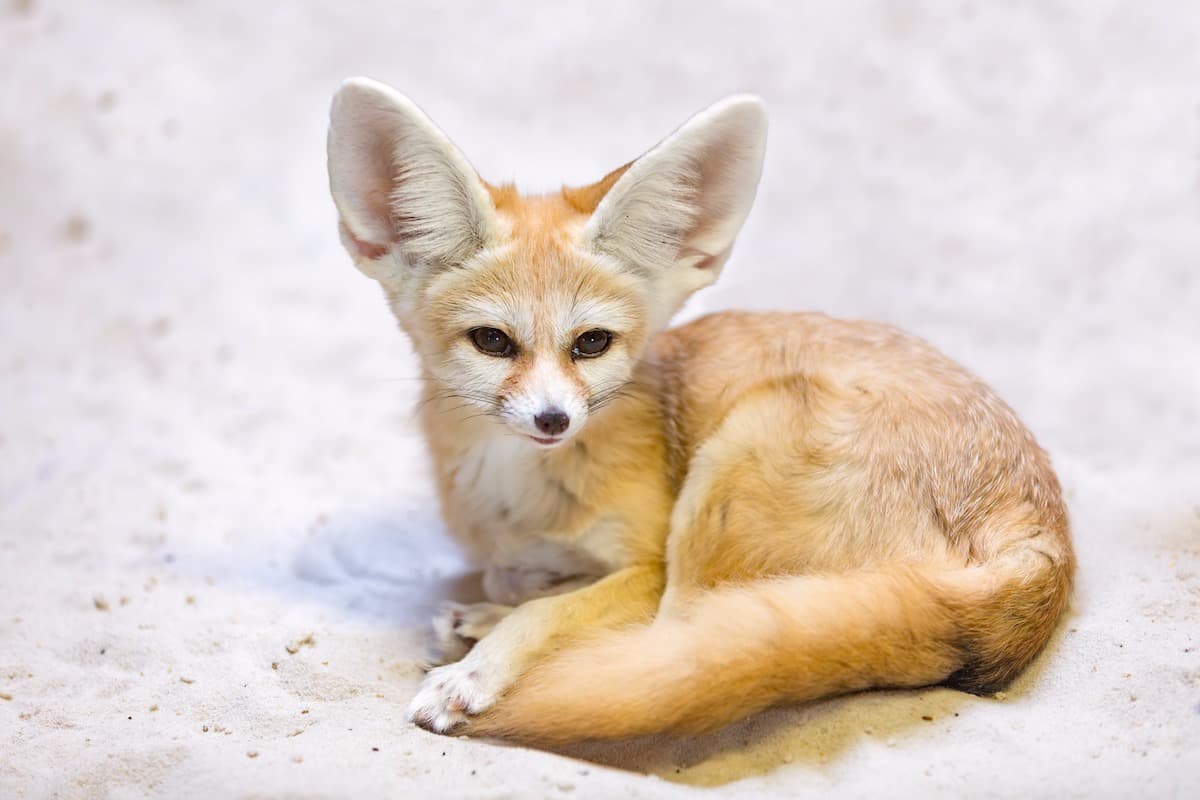
The Fennec
A small desert fox with disproportionately large ears that act as a thermal radiator. It is a nocturnal hunter of rodents, insects, lizards and fruit. Its dense fur protects it from cold nights, sometimes close to 0°C in winter.
The Saharan Cheetah
A distinct subspecies of the African cheetah, with a slimmer silhouette and paler coat. Classified as critically endangered, only a few dozen individuals are thought to remain in the Hoggar massif and Tassili. Its presence remains an indicator of a still-functioning ecosystem.
The Caracal
A medium-sized feline with ears adorned with black tufts, mainly crepuscular. It hunts birds, rodents and small mammals thanks to remarkable vertical leaps.
The Sand Cat
The sand cat (Felis margarita) is one of the few felids confined to arid deserts. It digs burrows to escape the heat and hunts rodents, birds and reptiles. Its pads covered in hair allow it to move across scorching sand.
The Golden Jackal
The golden jackal (ebegi in Tamasheq) is an opportunistic omnivore: small mammals, birds, reptiles, fruit and insects make up its diet depending on the season.
Rodents
The jerboa, with its long hind legs and slender tail, moves in rapid bounds across the sand. Gerbils dig deep burrows to escape thermal extremes. Gundis, or rock rats, live in herbivorous colonies within rocky formations. Various species of rats and mice complete this essential link in the desert food chain.
Reptiles
Impermeable skin, nocturnal or crepuscular behavior, deep burrows: Saharan reptiles cumulate adaptations.
Lizards
Several agamas (el rechaba ar.), geckos (amatartar, tamekwart) and the whip-tail or Uromastyx, called agezeram in Tamasheq and dob in Arabic, are encountered. The desert monitor (arata) is the largest lizard of the Sahara, exceeding one meter. The most common species remain small Acanthodactyles.
Snakes
- The Sidewinder Viper (Cerastes vipera): buried in the sand, it awaits its prey in ambush.
- The Horned Viper (Cerastes cerastes): recognizable by its horn-like protrusions above the eyes, its venom is potent.
- Colubrids: less dangerous, they regulate rodent populations.
Birds
Brown ravens are opportunistic and often frequent campsites. The Saharan bunting and white-crowned wheatear are encountered near rocky outcrops. One also observes the fierce buzzard, the falcon (tamida), the owl (bouhan) and, as night falls, the scops owl (tawik) can be heard. Rare water points occasionally attract migrants.
Insects and Arachnids
The silver ant (Cataglyphis bombycina) owes its color to silver hairs that reflect sunlight and allow it to tolerate surface temperatures close to 70°C. Reputed to be the fastest ant in the world (approximately 0.855 m/s), it leaves its nest when heat peaks, taking advantage of the forced inactivity of its predators to retrieve insects killed by the heat wave.
Among arachnids, the scorpion Leiurus quinquestriatus, with its yellow tail, is one of the most venomous in the desert.
When to observe Saharan wildlife?
The best period for observation extends from October to March, when daytime temperatures remain bearable and animals extend their activity periods. Outside this season, wildlife concentrates almost exclusively on crepuscular hours.
- Dawn: gazelles, birds, hares, fresh carnivore tracks in the sand.
- Dusk and night: fennec, sand cat, jerboa, caracal, scorpions (visible under UV light).
- Midday: thermoregulating reptiles, silver ants at peak summer activity.
Practical advice for observation
- Have a local Tuareg guide accompany you: reading tracks in the sand is essential to locate animal passages.
- Prioritize protected areas (Hoggar, Tassili n'Ajjer) where wildlife is less persecuted.
- Bring binoculars, a red-filtered headlamp and, for scorpions, a UV light.
- Keep distance from reptiles and do not lift stones: vipers and scorpions shelter there.
- Do not feed animals and leave no waste: the brown raven and jackal quickly learn to depend on campsites.
- Plan several days of immersion to increase chances of observing discreet species.
What to see nearby
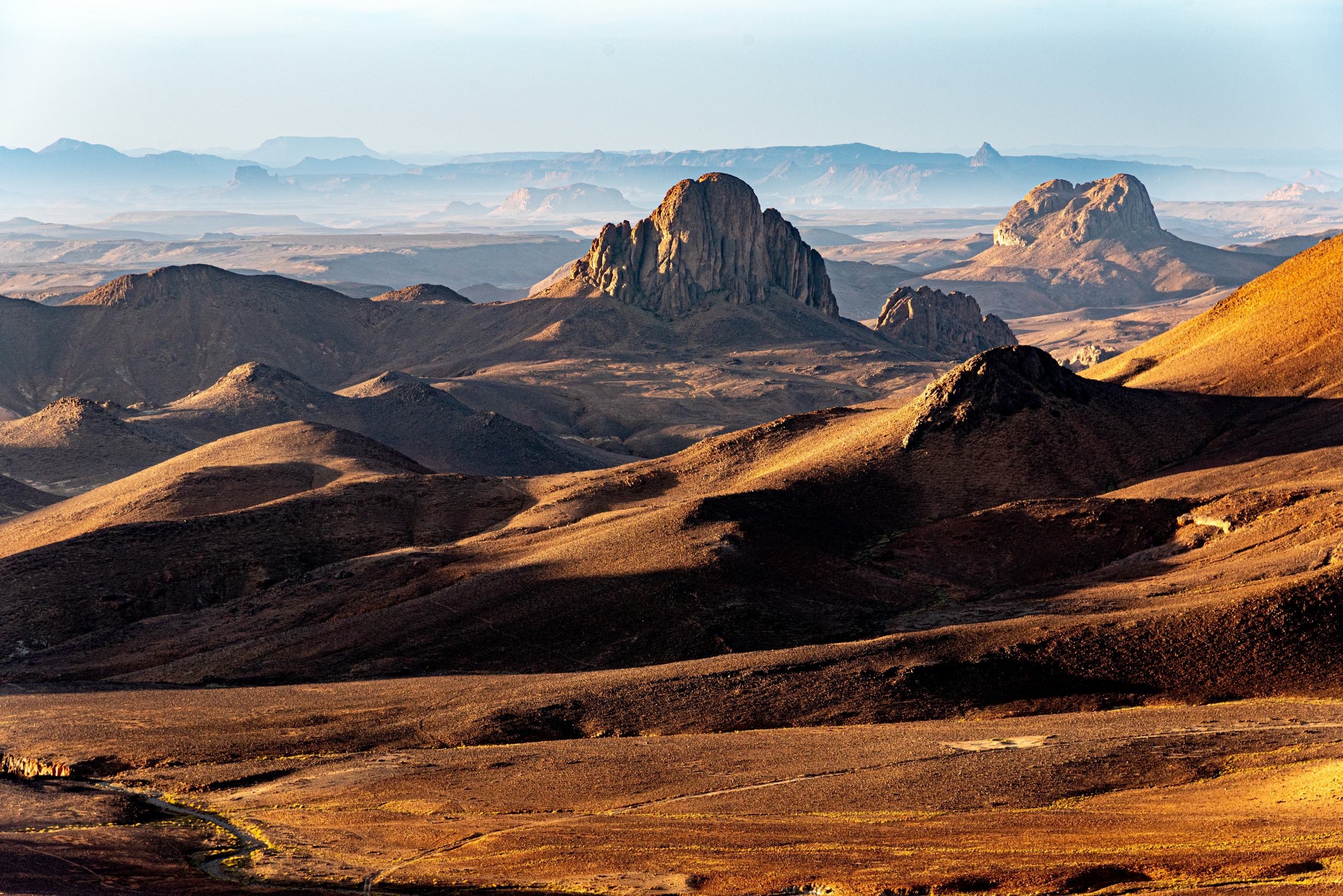
The best sites to encounter this wildlife are located in the massifs of southern Algeria:
- The Hoggar National Park, potential sanctuary of the Saharan cheetah and Barbary sheep.
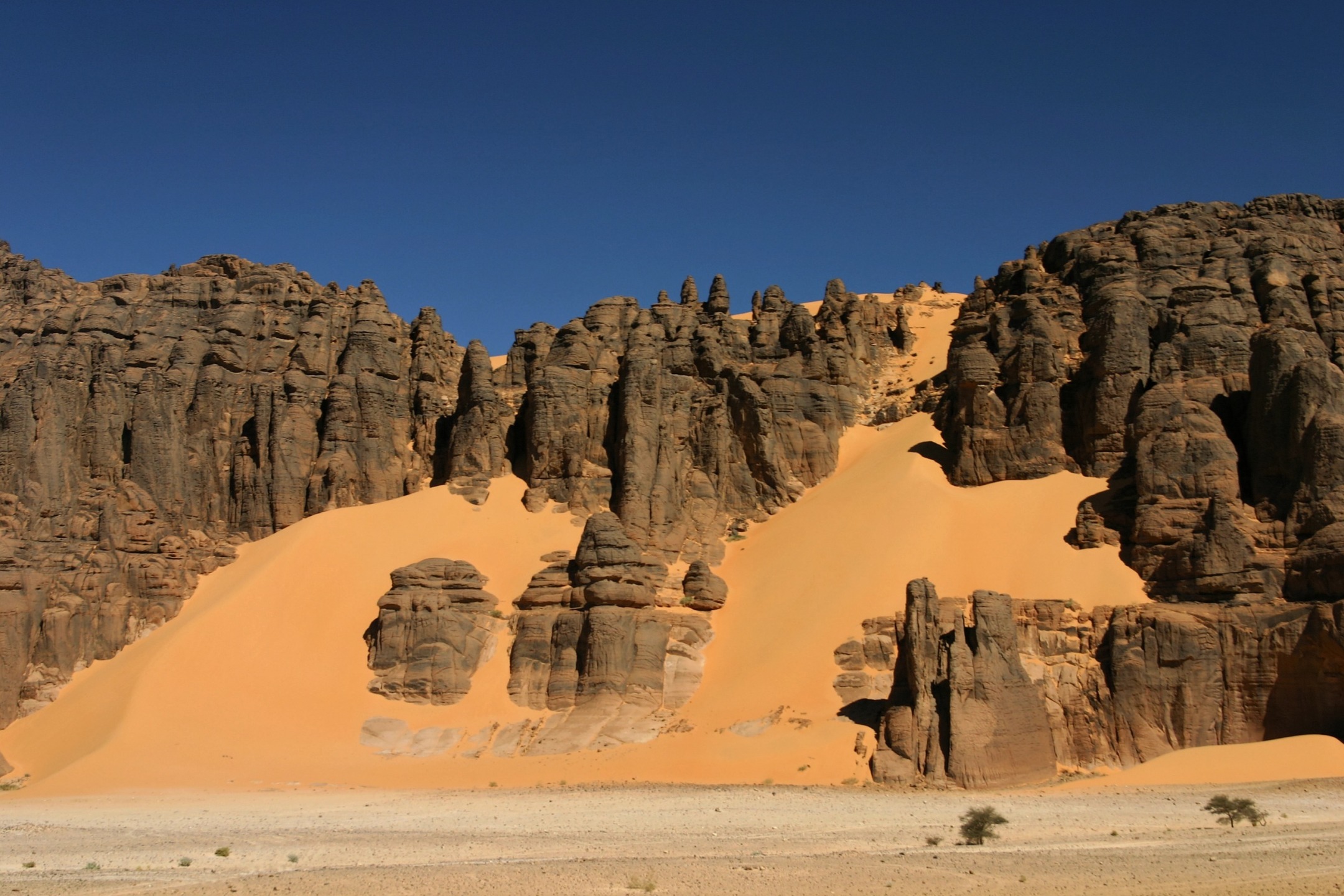
- The Tassili n'Ajjer National Park, UNESCO-listed, combines desert fauna and prehistoric rock art.
- The Amadror salt flats, vast salt expanse frequented by migratory birds.
- The Ighzer Caves, natural shelters appreciated by bats and several reptile species.
Frequently Asked Questions
Frequently asked questions
Conflicting encounters are rare. The main risks come from horned and sand vipers, and a few venomous scorpions such as Leiurus quinquestriatus. Wearing high-cut shoes, shaking out your belongings before dressing and avoiding walking barefoot at night is enough to avoid the majority of incidents.
With great difficulty. The subspecies is critically endangered and its Algerian population is estimated at only a few dozen individuals. Evidence of presence relies mainly on camera traps in the Hoggar and Ahaggar. A direct observation during a trip remains exceptional.
October to March, when temperatures are moderate and wildlife is active over wider time periods. Dawn and dusk remain the most productive times.
Yes, an experienced Tuareg or Saharan guide is essential. He knows the water points, territories and can read tracks, which greatly multiplies the chances of observation while ensuring safe travel.
The fennec, dorcas gazelle, Barbary sheep, dromedary and, to a lesser extent because far more discreet, the Saharan cheetah and sand cat. The silver ant, though tiny, is another symbol given how spectacular its adaptations are.
Discover the Algerian Sahara
To encounter this wildlife in its natural setting, consult our detailed itineraries on our trips to Algeria, designed around the great massifs of the South and their ecosystems.
Interested in this visit?
We can include it in your personalised itinerary.