Saharan Wildlife: What Animals to Observe in the Desert?
Stretching from the northern half to the south of the country, the Sahara covers nearly 90% of Algerian territory. Despite hostile living conditions,
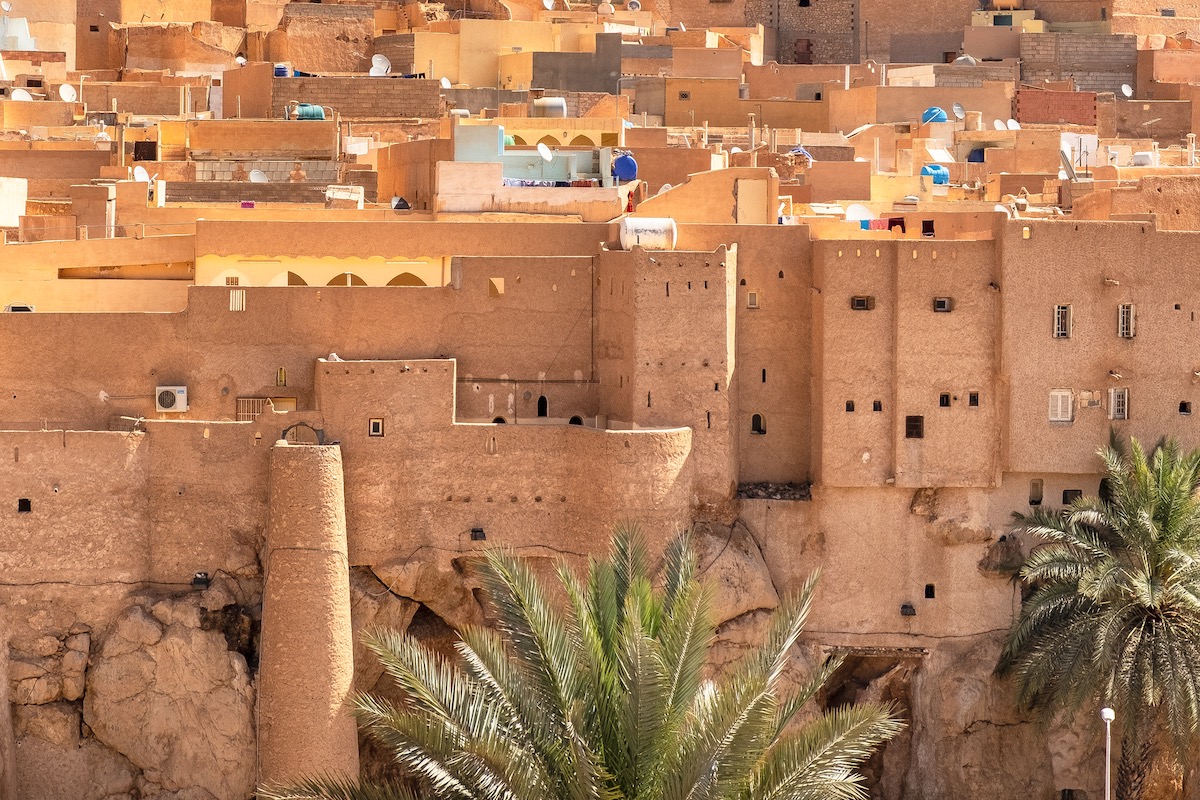
Stretching from the northern half to the south of the country, the Sahara covers nearly 90% of Algerian territory. Despite hostile living conditions, the desert is home to Saharan wildlife that has adapted to extreme temperatures and water scarcity. Here are the main wild animals to see in the Algerian Sahara.
Mammals to See in the Algerian Sahara
The Dorcas Gazelle
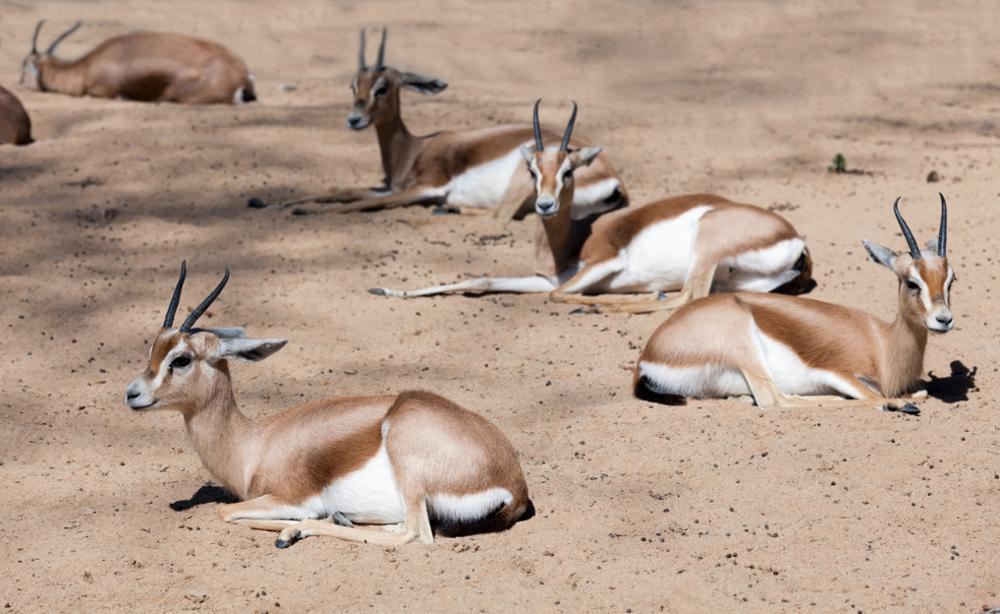
The Dorcas gazelle is a protected gazelle species found throughout the Sahara. Measuring a maximum of 67 cm at the shoulder, it is the smallest of the Saharan bovines. To survive in the desert, this herbivorous species feeds on low plants and tree leaves (such as acacias), from which it obtains water. Indeed, the Dorcas gazelle is capable of going without water for extended periods.
The Barbary Sheep
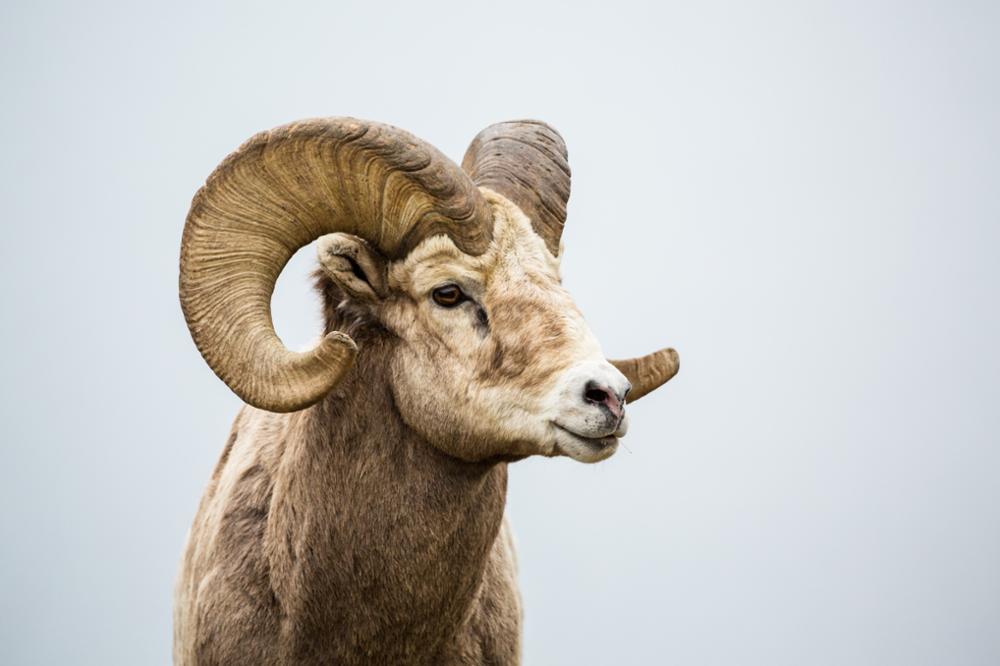
Also called the Barbary sheep, the Barbary sheep is a bovine inhabiting the desert mountains of North Africa. It is found in the mountainous and rocky areas of the Algerian Sahara. While its physiology allows it to live several months without drinking (thanks to the water from the plants it feeds on), the Barbary sheep is a threatened species. This is because it was long considered a prime game animal, particularly by the Tuaregs.
The Dromedary
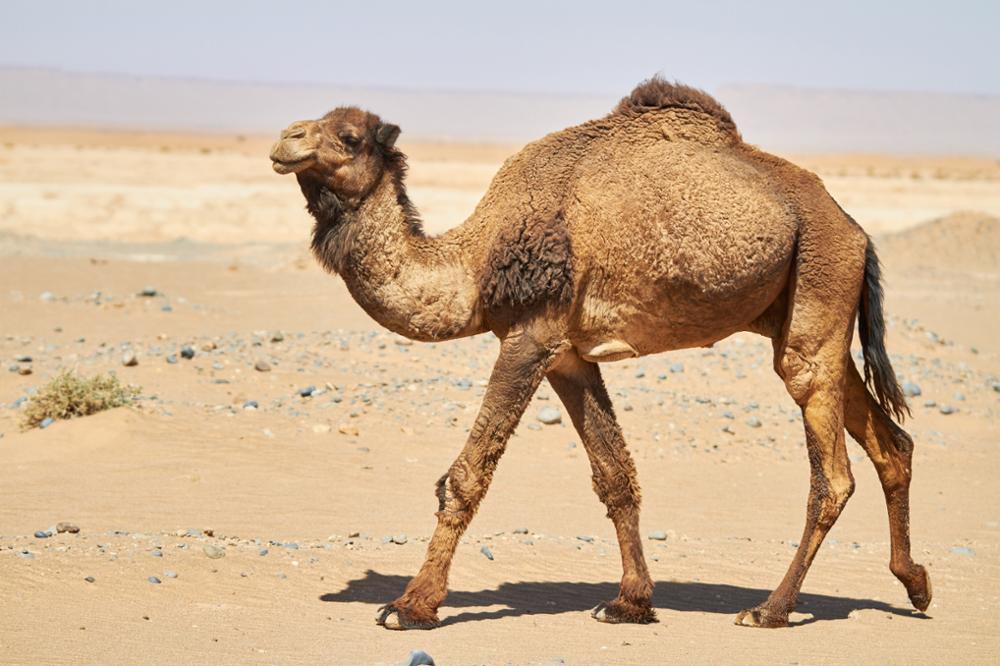
The dromedary is one of the emblematic species of the desert. Used as a means of transport by nomads for decades, it also provides an excellent source of milk and meat for herders. Thanks to their physiology, thermal regulation, and their ability to go without water and food for several weeks, it is an extremely resilient species in the desert's extreme conditions. It is often called the Arabian camel, though it is actually a dromedary.
The Fennec (or Sand Fox)
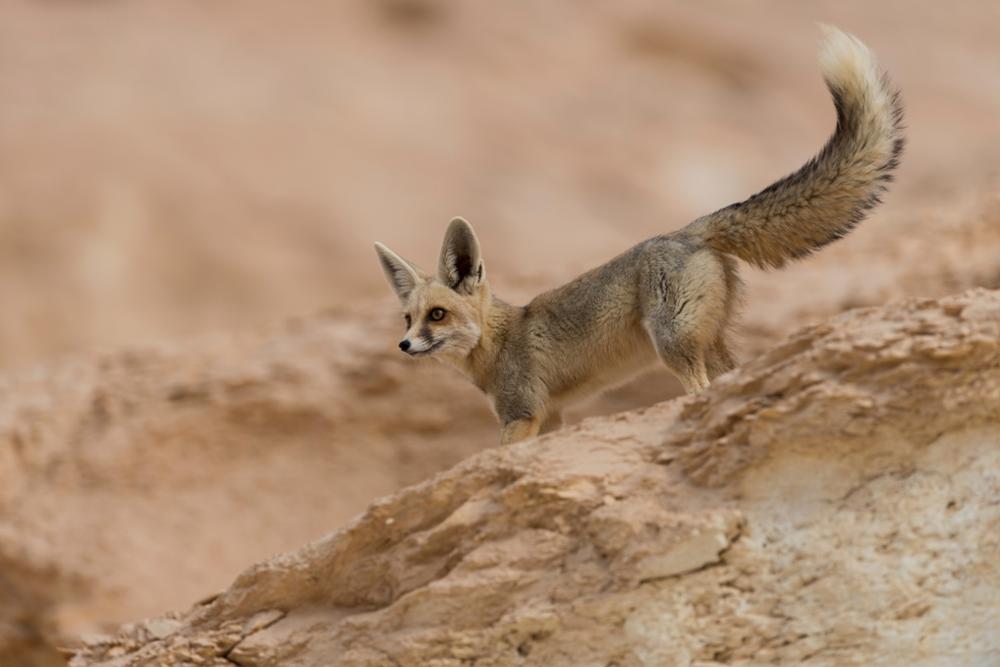
The fennec is one of the fox species you can spot in the Sahara Desert. It is the smallest of the canids. Its distinctive large ears (which can measure up to 10 cm) are invaluable for surviving in the desert. Indeed, they allow it to withstand extreme temperatures by acting as a ventilation and blood cooling system. A formidable hunter, its ears also allow it to detect the slightest sound to hunt more effectively.
The Sand Cat
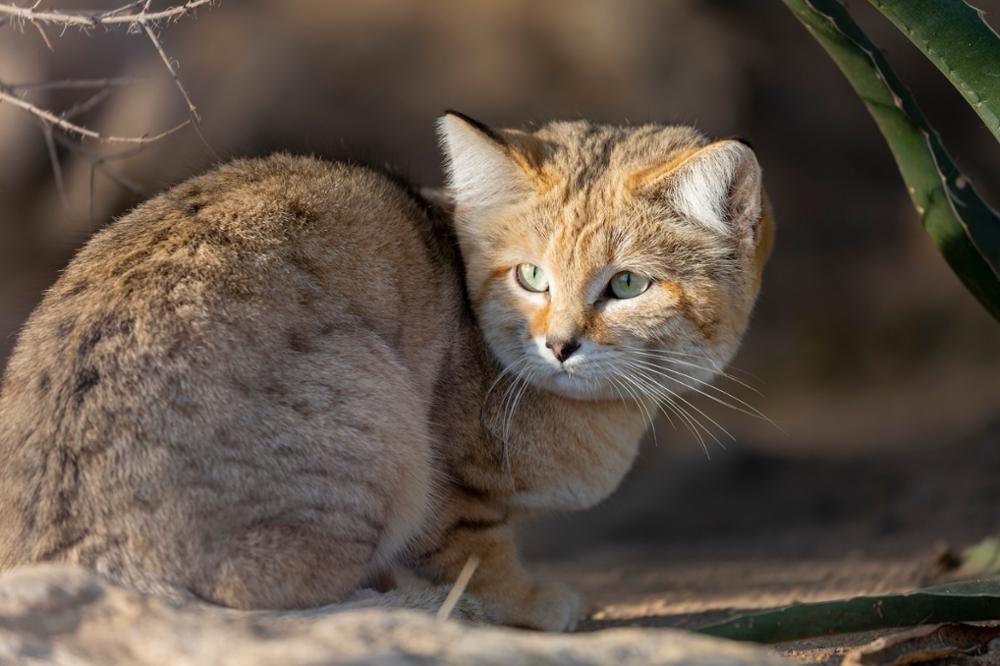
The sand cat is a wild cat species found throughout the Sahara. It is sometimes nicknamed "General Margueritte's cat" or "Margueritte's cat" because it was first observed in the Algerian desert in 1858 by Captain Jean-Auguste Margueritte. It is characterized by a cat-like appearance but differs by a smaller size and a broad head.
The Caracal
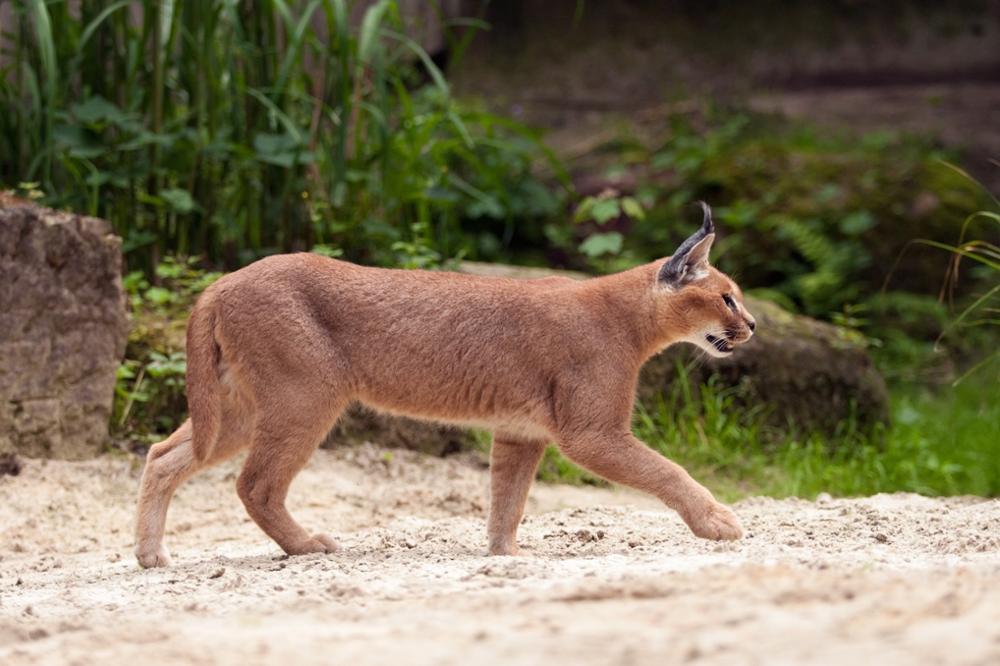
The caracal is a feline considered a threatened species. It is found throughout northern Algérie up to the Saharan Atlas and the northern part of the Sahara. It is recognized by its lynx-like appearance and its pointed, triangular ears topped with a long tuft of black fur. It is a formidable predator capable of leaping up to 3 meters to capture its prey, particularly birds in flight.
The Saharan Cheetah
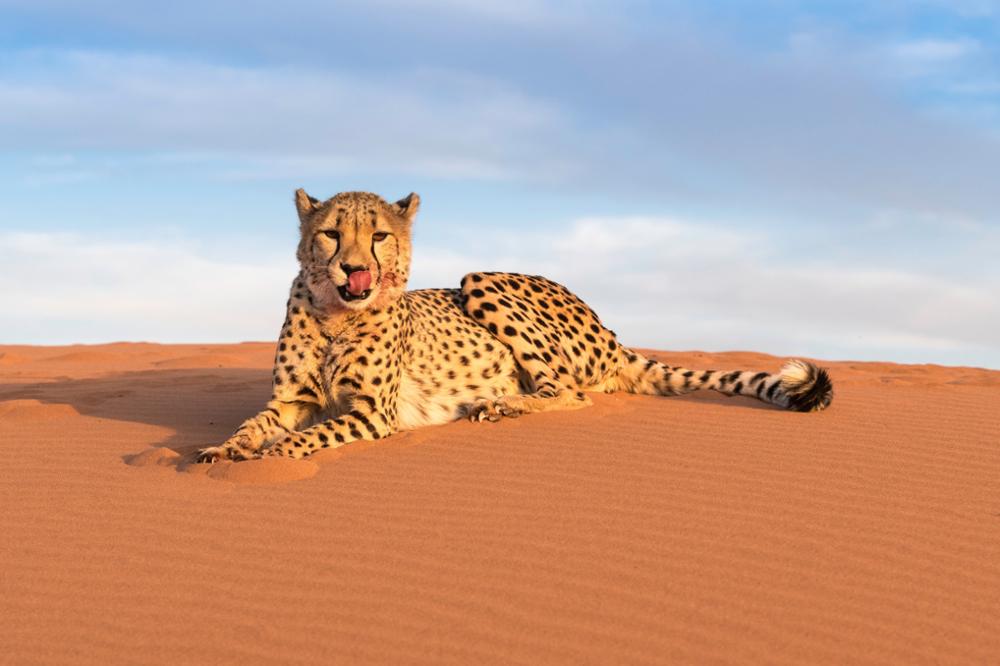
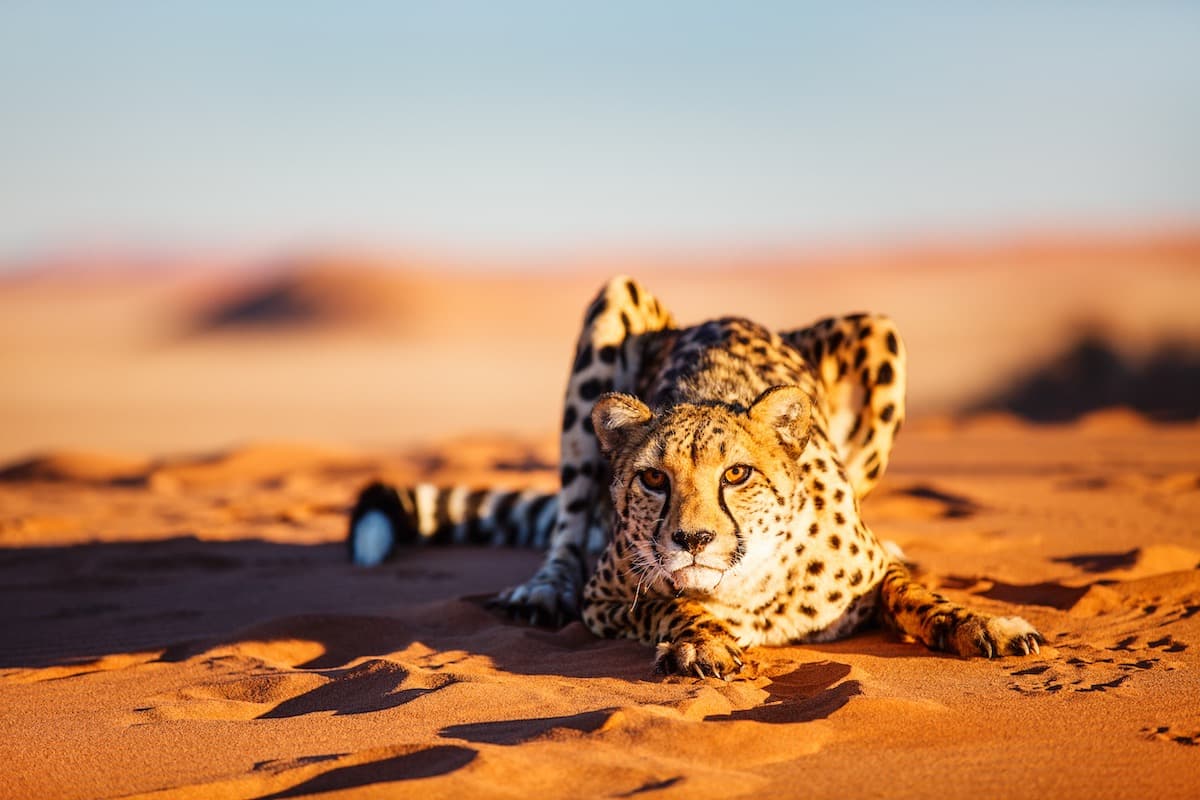
Also called the Northwest African cheetah, the Saharan cheetah is the largest feline living in the Algerian Sahara. Unfortunately, it has been subjected to poaching and illegal wildlife trafficking, making it today a critically endangered species. Furthermore, like all felines, it avoids human presence. It is therefore difficult to observe during an expedition in the Algerian desert.
The Rock Hyrax
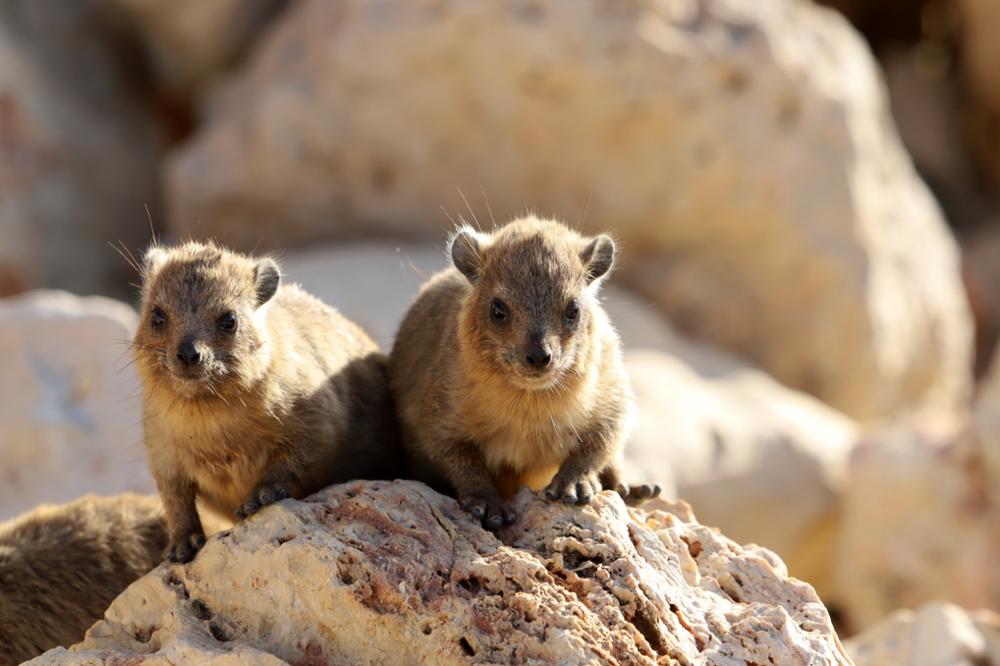
Although it is called a "desert marmot" by locals due to their similarities, the rock hyrax is not a rodent but a mammal species of the order Hyracoidea. The size of a hare, it lives, as its name suggests, in the rocky landscapes of the desert, often near wadis where it can feed on acacia leaves, among others.
The Desert Jerboa
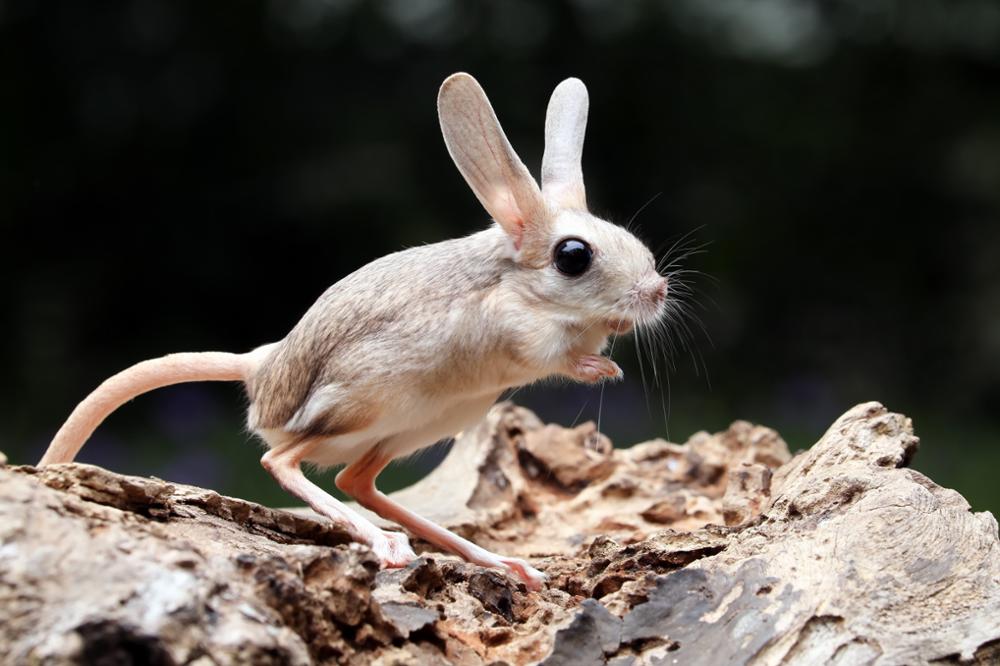
The desert jerboa is a jerboa species of the Dipodidae family. This tiny rodent is present in the Algerian Sahara, whether in rocky or sandy landscapes. It is characterized by large eyes, ears serving as a thermoregulation system, and thighs with well-developed musculature. The word jerboa actually comes from the Arabic word yerbo, which means "big thighs".
Reptiles to See in the Algerian Sahara
Lizards
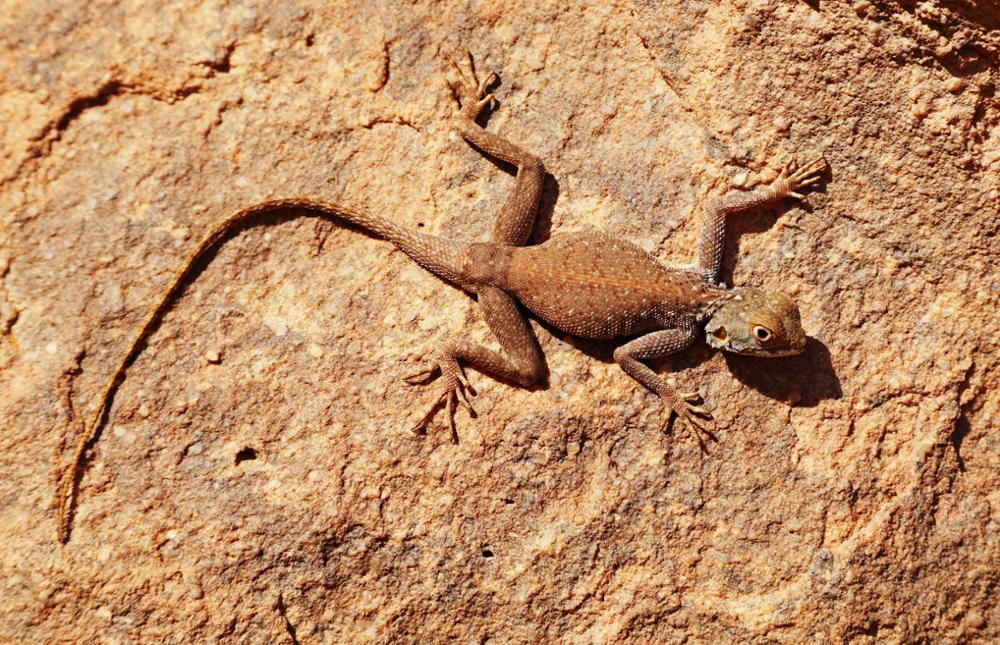
Many lizard species live in the Algerian desert. Among the main ones, we can mention:
several varieties of agama called el rechaba,
geckos, or amatartar and tamekwart,
the spiny-tailed lizard or Uromastix, which is the agezeram of the Tuaregs or the dob of the Arabs,
the desert monitor, arata, which is the largest of the Saharan lizards.
Snakes
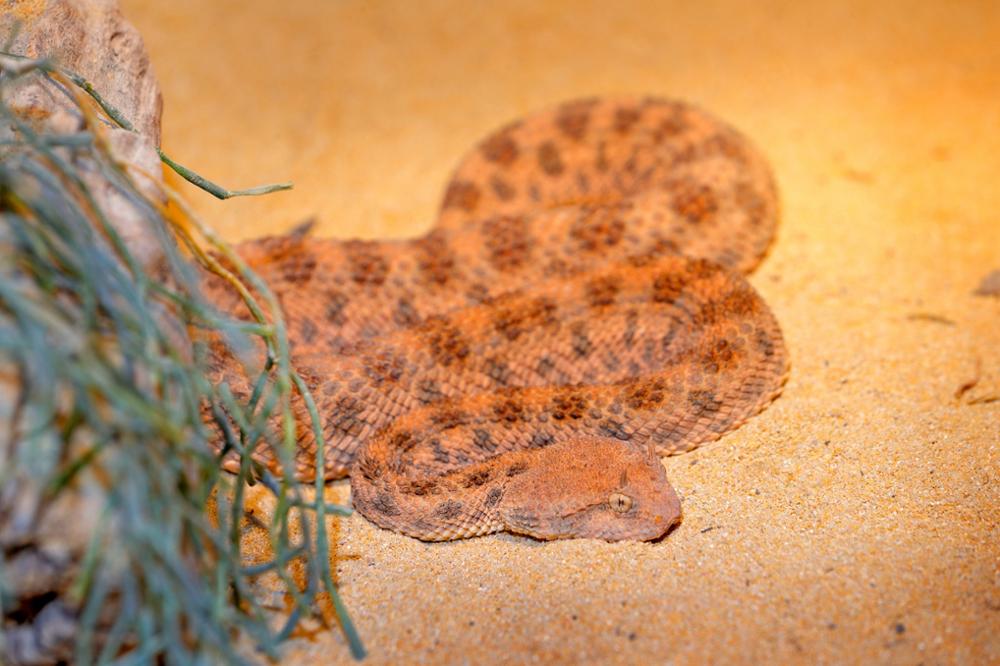
Several snake species live in the Sahara desert in Algérie. Among the most common, two dangerous venomous species stand out: the sand viper and the horned viper. The first lives mainly in sandy regions, particularly in the ergs, while the second prefers rocky and stony landscapes. They are excellent hunters who hide easily thanks to their color, which blends with sand and rocks.
For a little anecdote and according to legend, Cleopatra reportedly used a sand viper to end her life.
How to Avoid Snakes During an Expedition in the Algerian Desert?
Are you planning a trek in the Algerian desert and worried about coming face-to-face with a snake? Here are the precautions you should know:
By nature fearful, snakes tend to flee humans and hide. They only attack when they feel threatened. Being sensitive to vibrations, you can warn them of your presence and make them flee by tapping a hiking pole on the ground, especially when visibility on the path is limited.
During your expedition, be sure to wear high-ankle hiking boots to avoid bites to the legs (this is where snakes attack most often if you walk near their hiding place without spotting them first). You can also wear gaiters.
If you take a break, always take precautions before sitting down: check bushes, rocks, and any areas that could serve as hiding places for snakes. Also remember to check your belongings before leaving.
Listen carefully to and follow the instructions given by your guide.
Scorpions
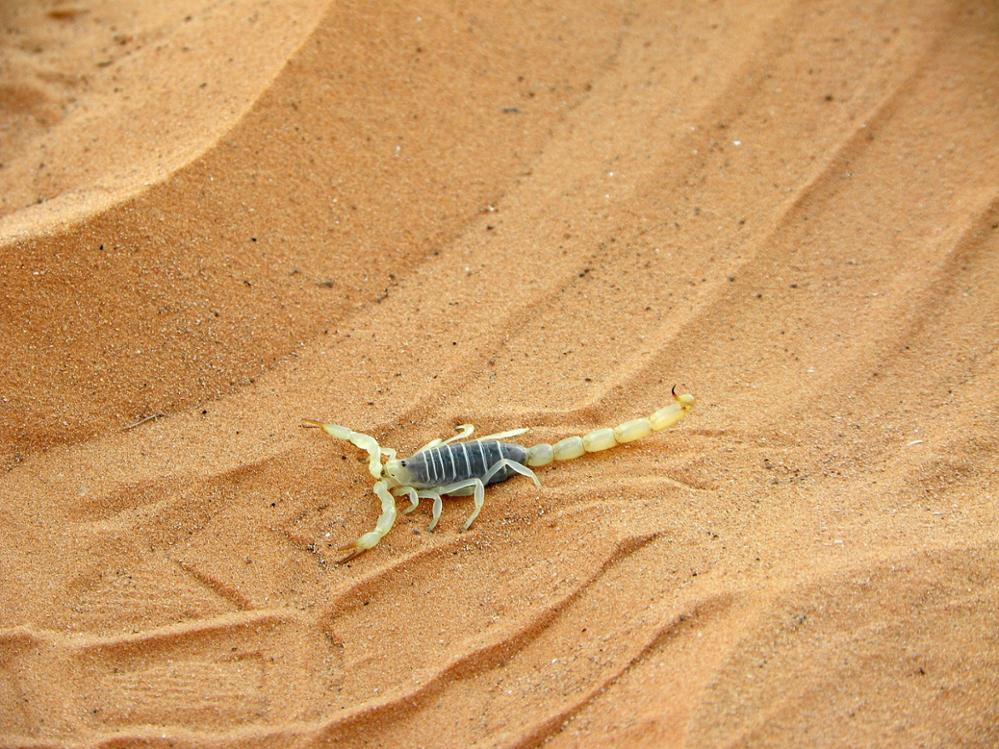
There are more than 40 scorpion species in Algérie. Some are yellow, others black, and all live mainly in the Sahara. Scorpions emerge more during periods of extreme heat. Among the scorpion species, the Leiurus quinquestriatus is found, one of the most venomous scorpion species in the world. These are the most dangerous animals in the country: between 50 and 100 deaths are recorded each year due to scorpion envenomation.
How to Protect Yourself from Scorpions During a Trek in the Desert?
As with snakes, it is best to wear high-ankle hiking boots and gaiters during your treks in the Algerian Sahara.
In case of bivouac, keep your sleeping bag closed until bedtime.
Inspect and shake out all your belongings (especially shirt sleeves and trouser legs) as well as your sleeping bags and meat sacks before sleeping if you are bivouacking. Do the same when you leave and pack your belongings.
Always check your shoes before putting them back on as scorpions can shelter in them. You can place them upside down by placing them on two pegs or wooden sticks during the night.
Never walk barefoot in the desert and be extra careful at sunrise and sunset.
Listen carefully to and follow the instructions given by your guide.
Birds to See in the Algerian Sahara
The White-Crowned Wheatear (Moula-Moula)
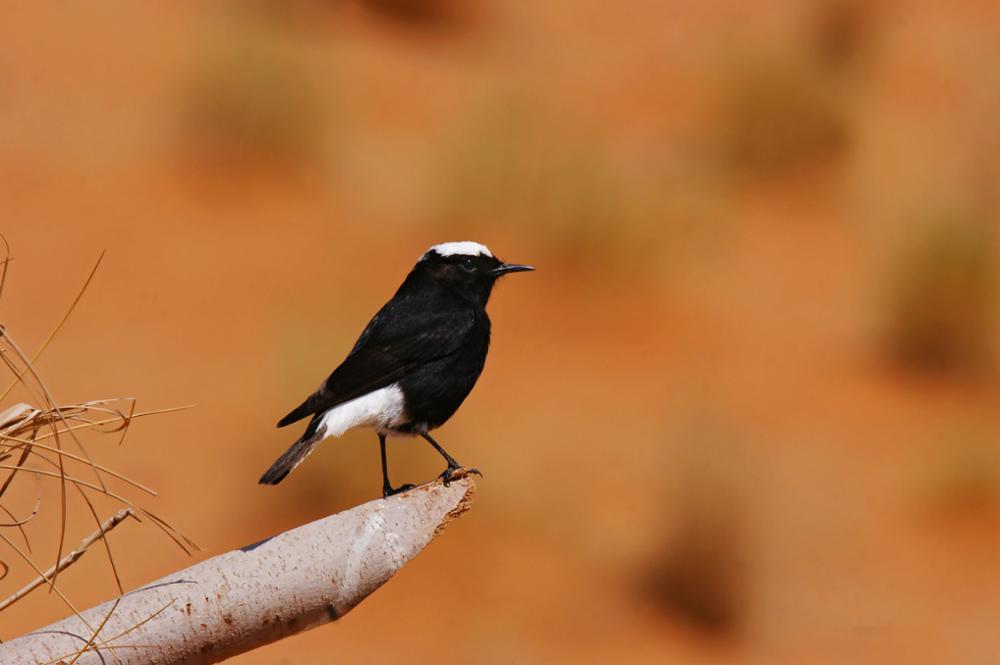
The white-crowned wheatear is the quintessential desert bird. It is found in both mountainous deserts, rocky landscapes, ravines, wadis, and near oases. It is distinguished by a black body with a white head, lower belly, under-tail coverts, and tail feathers. Called "moula-moula" by the Tuaregs, who consider it a bird of good fortune, the white-crowned wheatear has been the subject of many legends.
Raptors
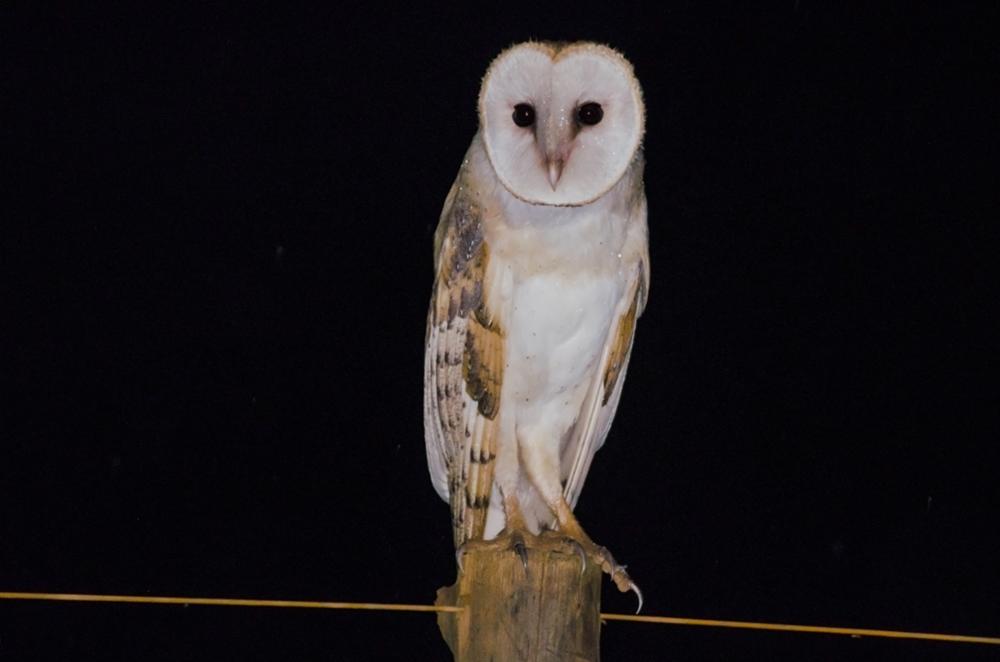
Most of the birds you can observe in the Algerian desert are raptors and scavengers on the lookout for food scraps left at bivouac camps. Among the species you are most likely to see, we can mention:
the African harrier-eagle,
the falcon,
the owl,
the horned owl...
Are you dreaming of embarking on an exploration in the Algerian desert to enjoy desert landscapes and wildlife? Whether during a camel trek, a hiking expedition, or a 4x4 adventure, we can create a bespoke journey with Tuareg guides who know the region and its secrets perfectly.