Atakor
Atakor
A volcanic plateau north of Tamanrasset, Atakor captivates with its surreal landscape of basalt peaks, natural water pools, prehistoric rock carvings, and Tuareg camps beneath star-studded skies.
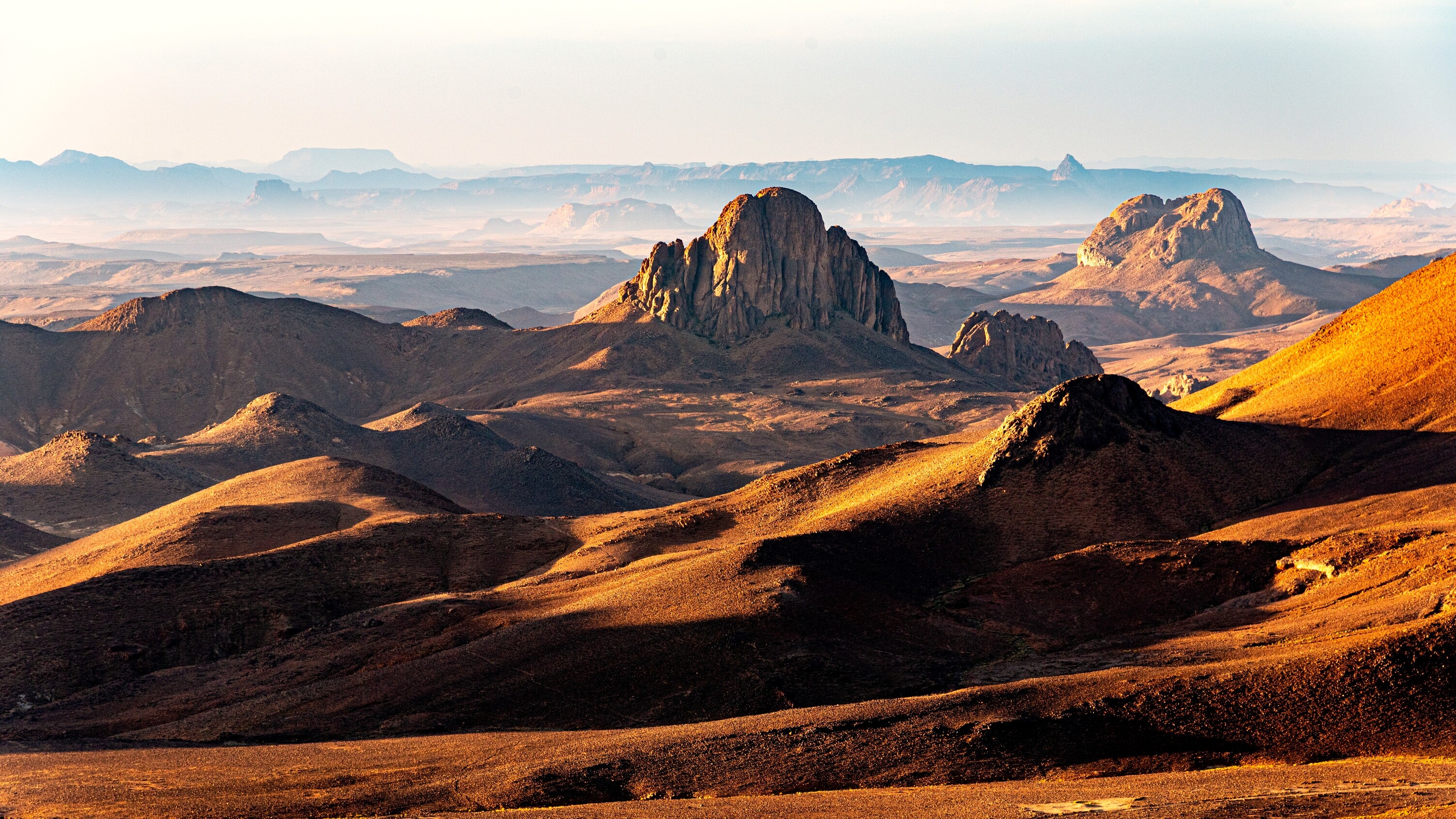
Atakor is a volcanic plateau that forms part of the Hoggar massif, north of Tamanrasset, in the heart of the Sahara. Renowned as a premier tourist destination in Algeria, it mesmerizes visitors with its otherworldly scenery of towering rock formations, basalt columns, and domes. The region offers the opportunity to immerse yourself in a mineral universe that is both hostile and profoundly captivating, where life has adapted to extreme conditions.
Geological Formation and History
The Atakor plateau is the result of millions of years of geological evolution. Situated at an average altitude of 2,000 meters, it comprises Precambrian rocks and sedimentary formations from the Primary era. Successive erosion from water and wind has sculpted its impressive landscapes, marked by deep canyons and rock formations of striking and unusual shapes. The region's arid climate and sparse rainfall have also contributed to the formation of gueltas—temporary water pools that provide shelter for local flora and fauna.
The human history of Atakor is closely intertwined with that of the Tuaregs, a nomadic people who mastered the art of thriving in this harsh environment. Rock paintings and carvings scattered throughout the massif bear witness to human presence in the region since prehistoric times.
Must-See Activities
Ascending Mount Tahat, Algeria's Highest Peak
One of the most popular activities on the Atakor plateau is climbing Mount Tahat, the highest point in Algeria, standing at 2,918 meters. The ascent is suitable for trekkers of varying levels, though it does demand reasonable physical fitness and typically takes between 5 and 6 hours. The climb starts early in the morning to avoid the intense midday heat.
The journey promises breathtaking views across surrounding valleys and rock formations. Local wildlife may make an appearance during your ascent.
At the summit, trekkers are rewarded with a breathtaking panorama of the plateau—a vista that will undoubtedly remain etched in your memory forever.
Assekrem and the Hermitage of Father de Foucauld
Another celebrated site within the Atakor region is Assekrem, a plateau standing at 2,780 meters. This historically significant location is home to the hermitage of Charles de Foucauld (1858-1916), a French explorer, geographer, and priest renowned for his missionary work across North Africa, particularly in Algeria.
Following a military career and expeditions across the Sahara, this religious figure withdrew to Tamanrasset, where he lived a life devoted to solitude and prayer. His spiritual and missionary legacy endures to this day, inspiring numerous religious and humanitarian movements.
The hermitage of Father de Foucauld offers a unique spiritual experience at the heart of the desert. Visitors can contemplate the magnificent landscape that inspired the celebrated hermit.
While the climb to the site is demanding, it rewards hikers with panoramic views that take your breath away—revealing the volcanic peaks of Atakor in all their glory.
Sunrises and sunsets from Assekrem are particularly striking, bathing the surrounding mountains in golden light. For complete immersion, some travelers choose to spend the night in the refuge near the hermitage, beneath a night sky of exceptional clarity.
Trekking Through the Taessa Massif
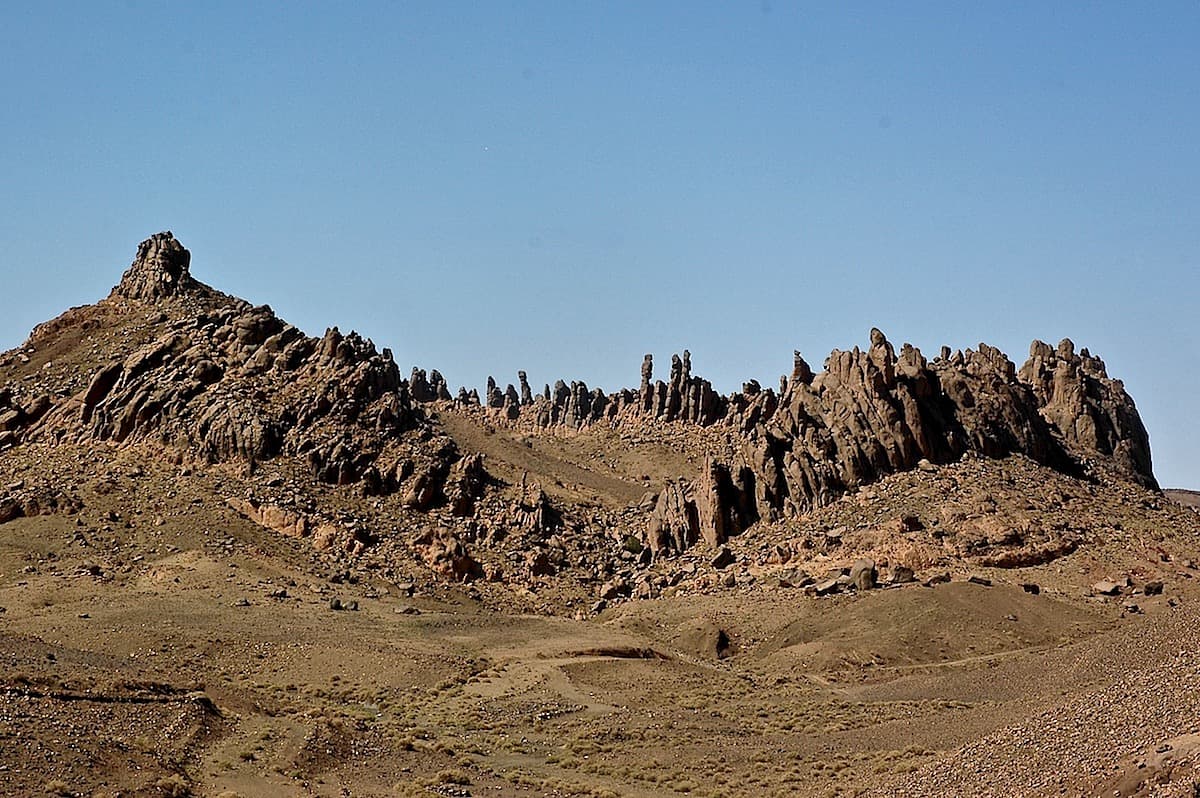
The Taessa massif, with its distinctive pink granite formations, creates a striking contrast with Atakor's volcanic landscapes. Trekkers discover an intricate terrain scattered with rounded domes and deep-cut valleys.
Traversing the massif allows you to observe flora that has adapted to the mountain Mediterranean climate. Winding trails lead also to exceptional vantage points overlooking oueds (seasonal riverbeds) and distant Hoggar peaks.
A multi-day trek with bivouacs beneath the stars provides complete immersion within the massif. English-speaking Tuareg guides will be delighted to share their knowledge of the region's geology and history. Don't forget your camera to capture the interplay of light across the rocks at sunrise and sunset!
Discovering Prehistoric Rock Art
Atakor holds millennia-old artistic treasures in the form of rock paintings and engravings. These prehistoric works, nestled within rock shelters, tell the story of daily life and beliefs of ancient Saharan peoples, when the desert still teemed with vegetation.
Tourists can admire depictions of wild animals that once roamed the region (giraffes, elephants, ostriches, and more), along with hunting scenes and rituals that offer insight into the cultures of their creators.
Among the most renowned sites are:
- The valleys of Tadrart Rouge, celebrated for their colorful frescoes;
- The gorges of Arak, home to sophisticated carvings;
- The Serkout plateau, featuring enigmatic anthropomorphic figures.
Exploring the Gueltas
The gueltas—veritable desert oases—form a vital element of Atakor's ecosystem. These water pools, formed within rocky depressions, harbor surprising biodiversity.
During your journey, you'll discover endemic species such as the desert barbel, a fish that has adapted its way of life to the desert's extreme constraints. The magnificent flora surrounding the gueltas, which contrasts starkly with the surrounding aridity, will likewise captivate you.
Among the most remarkable gueltas are those of Imlaoulaouene, nestled within a spectacular canyon. To preserve these fragile ecosystems, visitors are encouraged to observe without disturbing, following the wise guidance of local guides.
When to Visit the Atakor Plateau?
The best period to explore Atakor extends from October to April. During these months, daytime temperatures range between 20°C and 25°C, making trekking and excursions considerably more pleasant. Cool nights, with temperatures hovering around 5°C, promise comfortable evenings around a campfire.
Avoid summer, from May to September, when temperatures can soar to 40°C.
Excursions to Atakor typically begin from Tamanrasset, the region's primary gateway. This city is served by air connections to Algiers and select European cities such as Paris.
Once there, a 4x4 vehicle with driver-guide is necessary to navigate desert tracks. Plan for approximately 3 to 4 hours of travel from Tamanrasset to reach the heart of Atakor.
For an authentic experience, consider a camel trek. This option allows you to discover the plateau at a more leisurely pace while achieving complete immersion in the Saharan environment. Whatever your approach, it is strongly recommended to engage a specialized agency.
Want to discover this destination?
Our local advisors design your tailor-made trip.