Red Hotel of Timimoun
The Red Hotel of Timimoun is one of the most representative buildings of Sudano-Sahelian rammed-earth architecture. Facing the sebkha and palm grove, it symbolizes the visual identity of the 'red city' of Algeria's Sahara.
In the heart of Timimoun, the city nicknamed "the Red" for its ochre rammed-earth buildings, the Red Hotel stands as one of the most photographed structures in Algeria's Sahara. Built during the French colonial era, it embodies Sudano-Sahelian architecture adapted to desert life: thick rammed-earth walls, crenellated towers, earth-colored façade. Still standing today facing the palm grove and sebkha, it remains a striking visual landmark of the city.
What you'll see
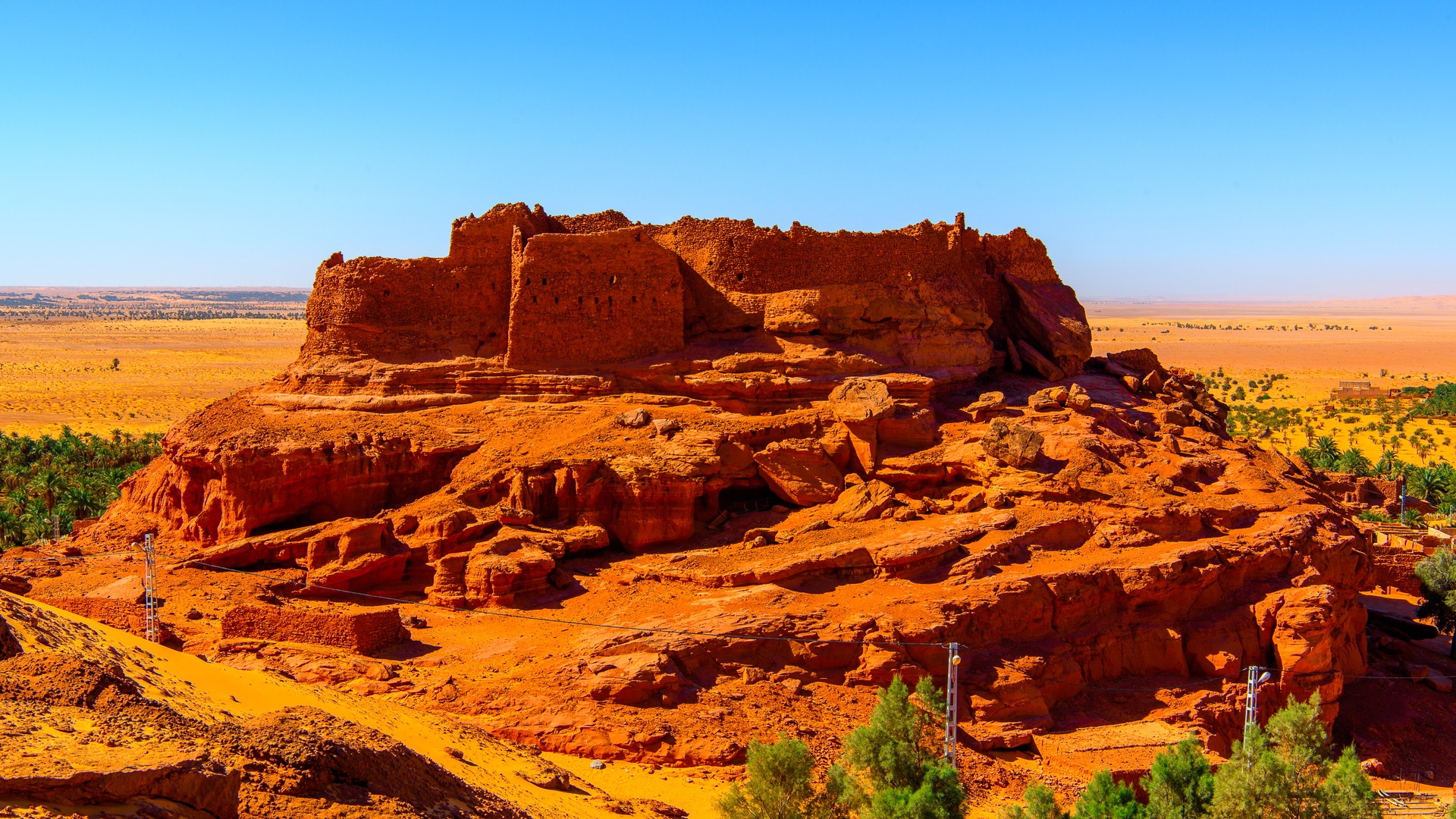
The façade of the Red Hotel strikes with its color: a deep red-ochre drawn from local laterite. The rammed-earth walls, the characteristic crenellations of the Sudanese style, and small openings designed for the heat create a coherent ensemble. The building fits into the urban fabric of the old town, surrounded by alleys and traditional houses of the same hue.
History and context
Timimoun was a French administrative post in the Touat-Gourara region. The Red Hotel was built to welcome travelers and colonial officials. Its architecture intentionally blends local codes—rammed earth, corner towers—with the needs of a hospitality establishment. After independence, the building served various purposes. It remains a symbol of the colonial period and of Timimoun's architectural identity.
Highlights of the visit
The façade and architectural details
Observe the sawtooth crenellations, a signature of the Sudano-Sahelian style also seen in Ghardaïa and Adrar. The palm-wood buttresses piercing the walls serve both as structure and scaffolding for rammed-earth repairs.
The panorama over the sebkha
From the hotel's surroundings, views open onto Timimoun's sebkha, a vast saline depression with shifting reflections according to the light. In late afternoon, the ensemble—ochre building, green palm grove, white sebkha—offers a striking contrast.
The surrounding old quarter
The Red Hotel is part of a well-preserved urban fabric. Adjacent alleys, rammed-earth houses, and small squares give a sense of traditional Gourara urbanism. A walking tour through this area nicely complements your visit.
Photography tips
Golden late-afternoon light intensifies the red-ochre color of the walls: this is the best time to photograph the façade. Step back enough to frame the corner towers and crenellations. Avoid midday; overhead light flattens reliefs and overexposes the light walls.
Location and access
Timimoun is located in Adrar Province, approximately 1,400 km south of Algiers. The Red Hotel sits in the city's historic center, accessible on foot from the main square. The city has an airport with domestic connections. Roads linking Timimoun to Ghardaïa and Adrar are paved.
Nearby
- Sebkha of Timimoun — spectacular saline depression visible from the city's heights, with shifting hues throughout the day.
- Palm Grove of Timimoun — network of foggaras (underground canals) irrigating thousands of date palms in the heart of the Sahara.
- Ksar of Timimoun — fortified old town built of rammed earth, listed among Algeria's remarkable Saharan architectural ensembles.
- Adrar — provincial capital a few hours' drive away, a departure point toward the Tanezrouft and the ksour of Touat.
Frequently asked questions
The building's current status varies over time. Check with your local agency before planning a stay: the establishment has undergone several changes in use.
Autumn (October-November) and spring (March-April) offer manageable temperatures. The Saharan summer regularly exceeds 45°C: best avoided for a comfortable visit.
Interior access depends on current use. The façade and surroundings can be freely viewed from the street. Check access conditions on site.
The Red Hotel, the ksar, the palm grove, and the sebkha can easily be visited in one day on foot or by vehicle. Plan the sebkha for late afternoon for the best light.
No known restrictions for photographing the exterior from public access. Ask permission before photographing residents in the adjacent alleys.
Interested in this visit?
We can include it in your personalised itinerary.