Hoggar National Park
Hoggar National Park
In southern Algérie, Hoggar National Park combines volcanic landscapes, Saharan wildlife, rock art and Tuareg culture across a UNESCO-listed territory.
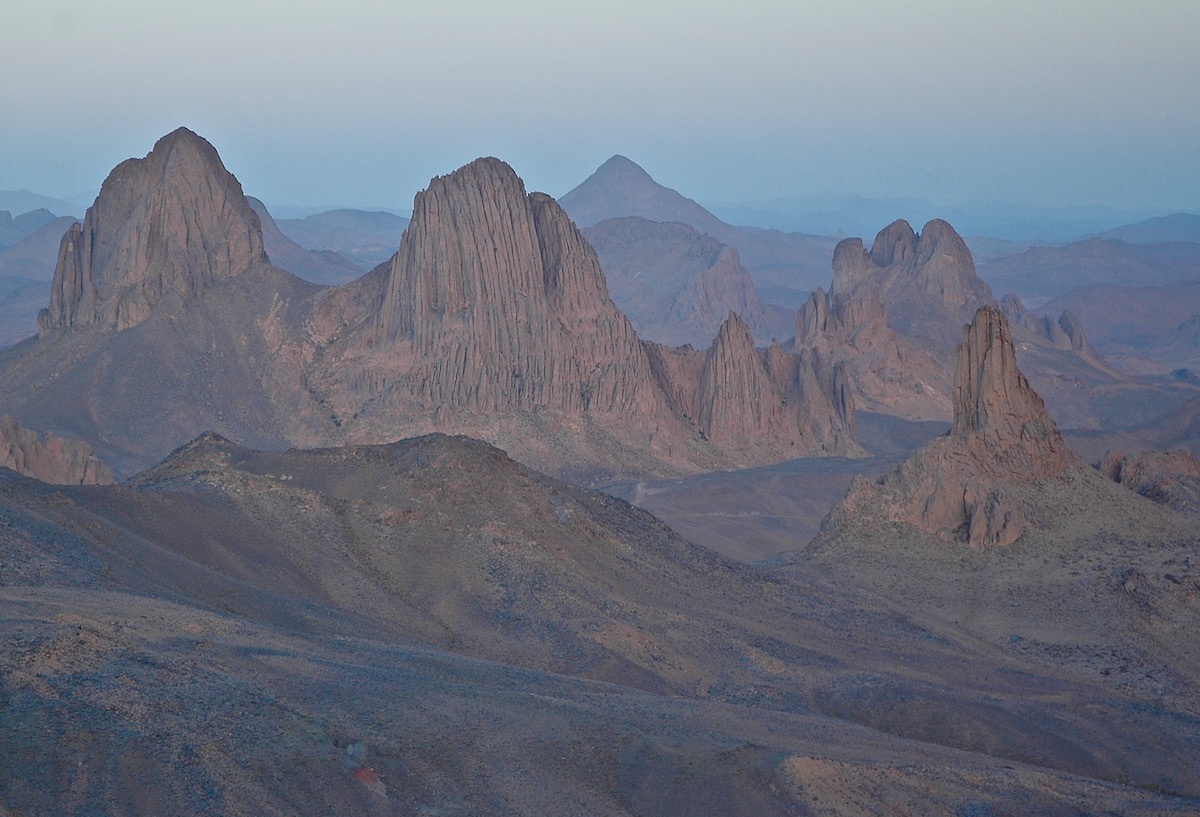
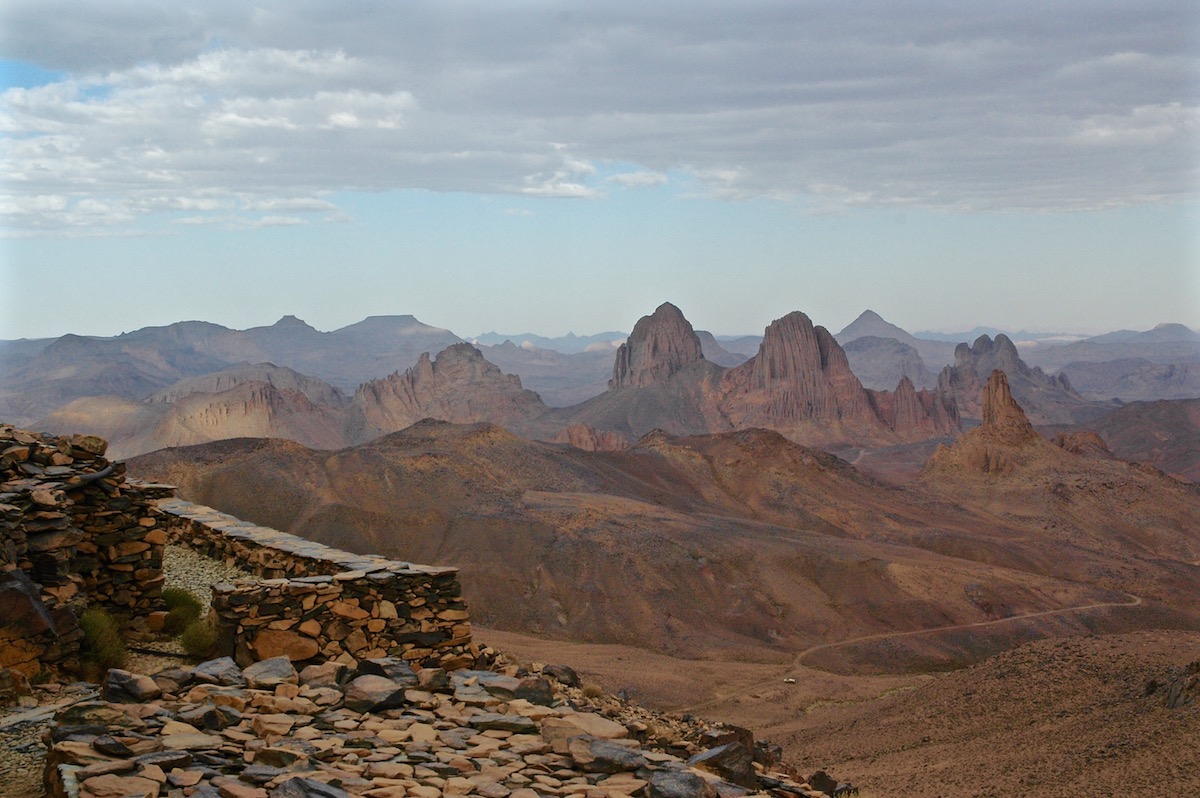
In southern Algérie, in the wilaya of Tamanrasset, Hoggar National Park protects a vast Saharan territory marked by volcanism, rock art and Tuareg culture. Listed as a UNESCO World Heritage site since 1988 and reclassified as the Ahaggar cultural park in 2011, it encompasses an exceptional expanse of volcanic landforms, wildlife adapted to arid conditions, and major archaeological heritage.
Why visit Hoggar National Park
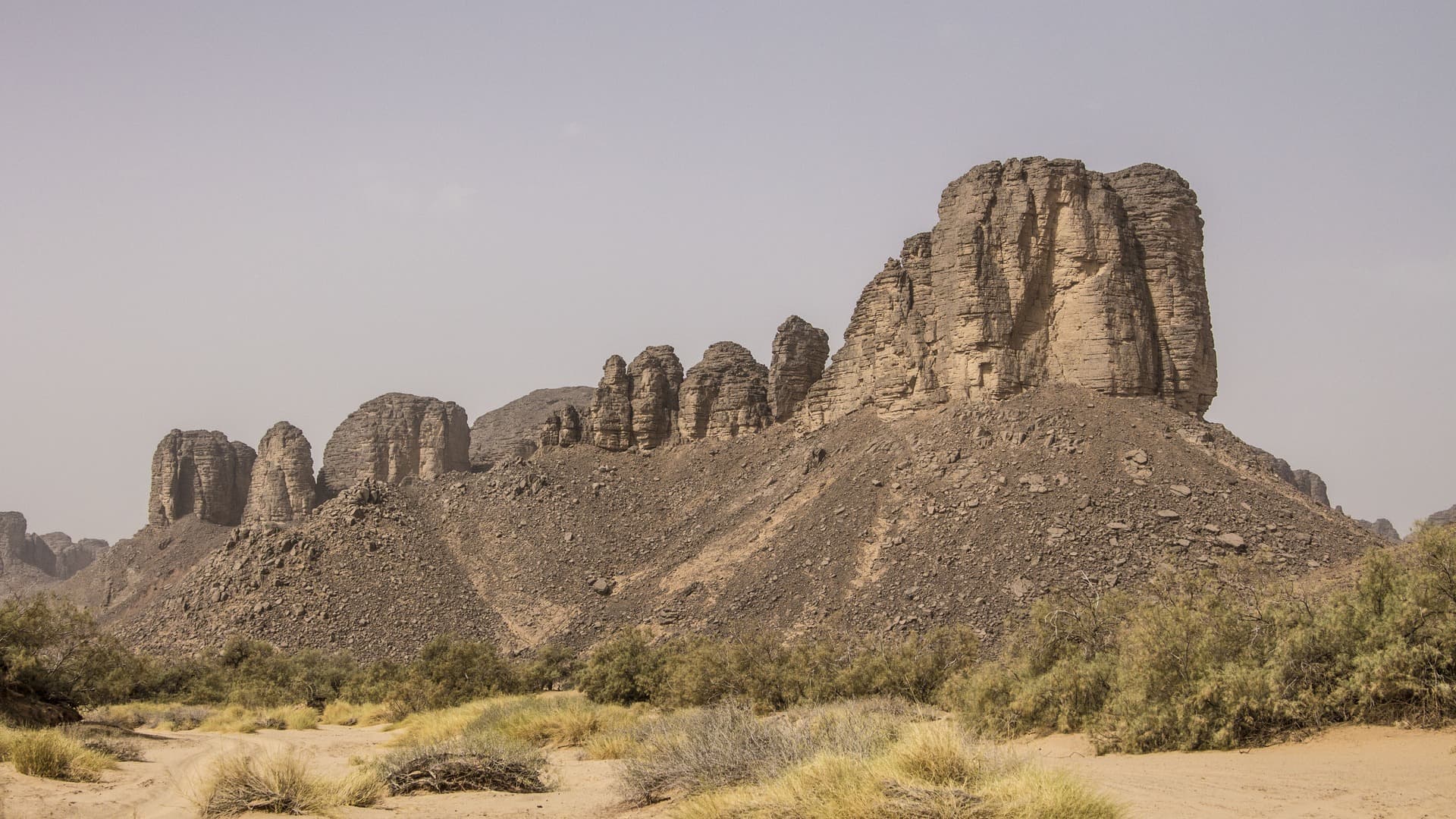
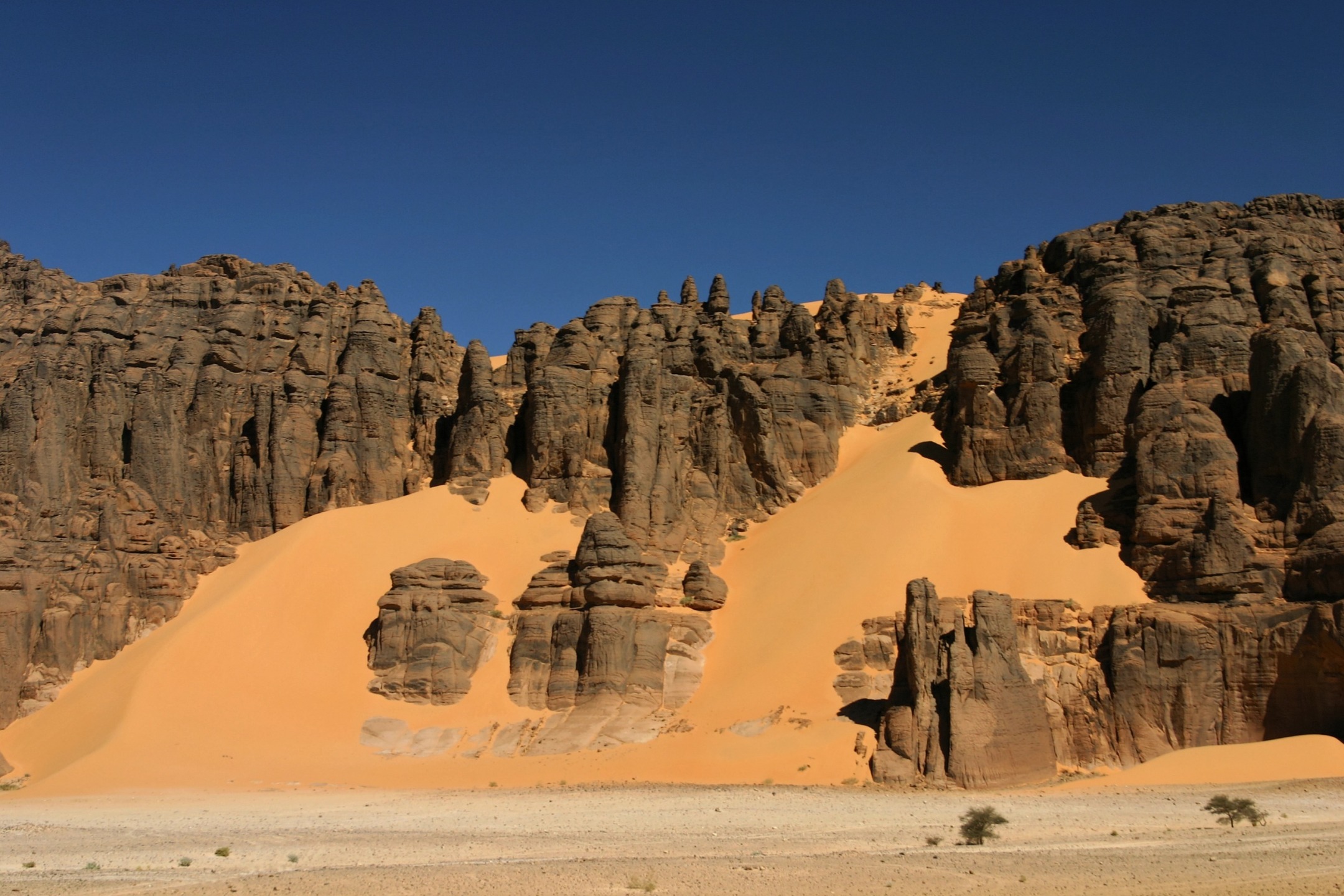
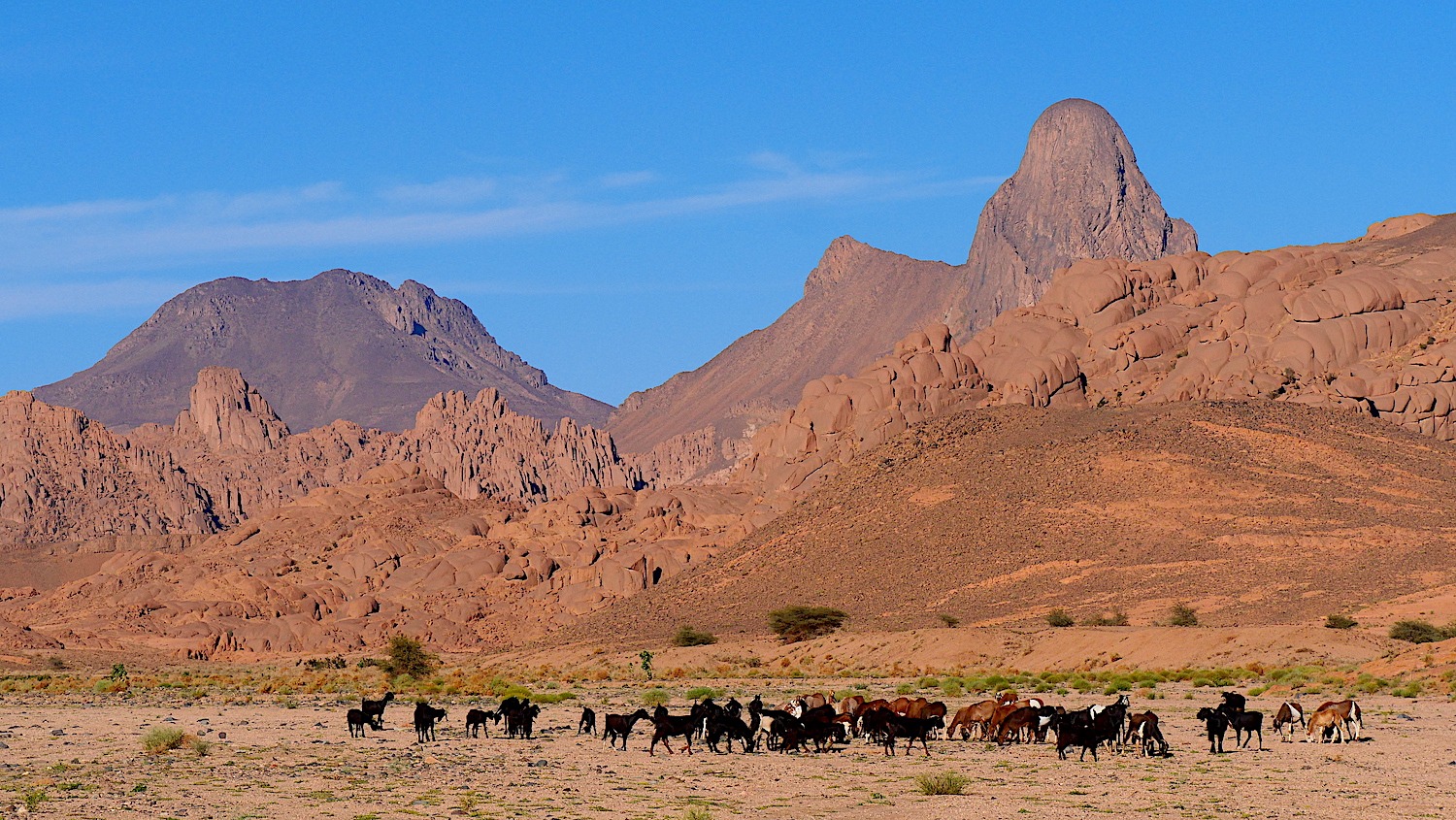
The park combines three attractions rarely found together in one location: spectacular volcanic landscapes culminating at Mount Tahat (2,918 m), a concentration of archaeological sites and rock engravings, and the living presence of Tuareg culture. It is one of Algérie's largest protected areas and a reference destination for scientific research in the Saharan environment.
The territory lies 80 km north of Tamanrasset and is traversed by the Tropic of Cancer. The landscapes alternate between basaltic plateaus, rocky peaks, oases and vast desert expanses.
A history shaped by Tuaregs, missionaries and conservation
The territory has been historically inhabited by Tuareg tribes, who established the kingdom of Kel Hoggar in the mid-18th century. French colonial expansion integrated the Tuaregs into the protectorate from 1903 onward. Around the same time, several Catholic missionaries arrived, including Father Charles Eugène de Foucauld, founder of the Little Brothers of Jesus. Based at Assekrem, he was assassinated by Bedouins on December 1, 1916. His beatification, pronounced by Pope Benedict XVI on November 13, 2005, renewed attention to the site.
The park was officially created on December 3, 1987, then inscribed as a UNESCO World Heritage site in 1988. Its initial area of 450,000 km² expanded to 535,000 km² before reaching its current extent. A decree of February 23, 2011 granted it the status of Ahaggar cultural park, recognizing both the patrimonial and natural dimensions of the territory.
What to see in the park
The Atakor plateau and Mount Tahat
East of Tamanrasset, the Atakor plateau rises above 2,000 meters in elevation over approximately 250 km in diameter. Formed by ancient lava flows, it features rugged terrain made up of peaks, basalt cliffs and porphyry escarpments. Mount Tahat (2,918 m) is its highest point and ranks among the country's most elevated summits.
Saharan wildlife
The park is home to fauna adapted to arid conditions: barbary sheep, dorcas gazelle, fennec fox, pale fox, spiny rat, Saharan cheetah and rock hyrax. Birdlife includes steppe eagle, steller's sea eagle, Montagu's harrier, black stork, white stork, spotted dove, northern pintail, desert warbler and short-toed snake eagle. To explore this topic further, consult our page on Saharan wildlife.
Flora
Despite aridity, several plant species persist: olive, myrtle, lavender, wormwood, calotropis, acacia, date palm, Vachellia tortilis, Vachellia seyal, Tamarix aphylla and drinn grass. Vegetation concentrates near wadis and water sources.
Remarkable archaeological and cultural sites
- Assekrem, the retreat sanctuary of Charles de Foucauld
- The Immidir massif
- The Tefedest massif
- Tassili Tin Missao
- Rock engravings and paintings at Tit-Aguenar-Silet
- Ahnet
- The Tassili of Hoggar
- Casbah Badjouda at Aïn-Salah
- Casbah of Silet
- The tomb of Tin Hinan at Abalessa
When to visit
The park experiences a desert climate with very low rainfall throughout the year. Summers are hot and dry, with daytime temperatures that make high-altitude hiking challenging. Winters, by contrast, are cool to cold, and nights can drop below freezing, particularly at the heights of the Atakor and Assekrem.
The most favorable period generally extends from October to April, when daytime temperatures are moderate. Plan for warm clothing for nights, even in shoulder seasons.
Practical information
Access to the park and its interior massifs is mandatory with an approved local guide and a 4x4 vehicle. Trails are not marked and distances between water sources can be considerable. Circulation authorization is generally required for remote areas; it is managed by local agencies in coordination with authorities.
Plan for several days for a meaningful exploration of the Atakor massif (3 to 5 days minimum), and longer to combine Assekrem, Tefedest or Tassili of Hoggar. Accommodation is primarily in bivouac camps, with a few basic mountain shelters at altitude. Bring water, clothing suited to temperature swings and sun protection.
How to get there
The gateway is Tamanrasset, served by Aguenar – Hadj Bey Akhamok Airport from Algiers. From Tamanrasset, the Atakor and Assekrem are reached by 4x4 mountain tracks (allow half a day to a full day for Assekrem). More distant massifs (Tefedest, Tassili of Hoggar, Immidir) require multi-day expeditions organized from the city.
Nearby attractions
- The Amadror salt flats, a vast saline depression northeast of Hoggar
- Tassili n'Ajjer National Park, another UNESCO site celebrated for its rock art
- Tin Merzouga and the Tadrart rouge, dune landscapes and engravings of the southeastern Sahara
- The Ighzer caves
Frequently asked questions
Frequently asked questions
It is situated in southern Algérie, in the wilaya of Tamanrasset, 80 km north of the city. It is crossed by the Tropic of Cancer.
Yes. Officially created on December 3, 1987, it was inscribed as a UNESCO World Heritage site in 1988, then granted the status of Ahaggar cultural park by decree on February 23, 2011.
Mount Tahat, which rises to 2,918 meters, on the volcanic Atakor plateau.
October to April, when daytime temperatures are moderate. Plan for warm clothing, as winter nights can be very cold at altitude.
No. Access to the interior massifs requires an approved local guide and a 4x4 vehicle, and generally requires authorization managed through local agencies.
Plan your trip
Hoggar is best explored as part of an organized itinerary combining Tamanrasset, the Atakor and, depending on duration, neighboring massifs. To build a comprehensive route, consult our trips to Algérie.
Interested in this visit?
We can include it in your personalised itinerary.