Duprez's Cypress of the Tassili
Duprez's Cypress of the Tassili
An endemic conifer of Tassili n'Ajjer, Duprez's Cypress numbers around 200 individuals, some of which are over 2,000 years old. A guide to encountering them.
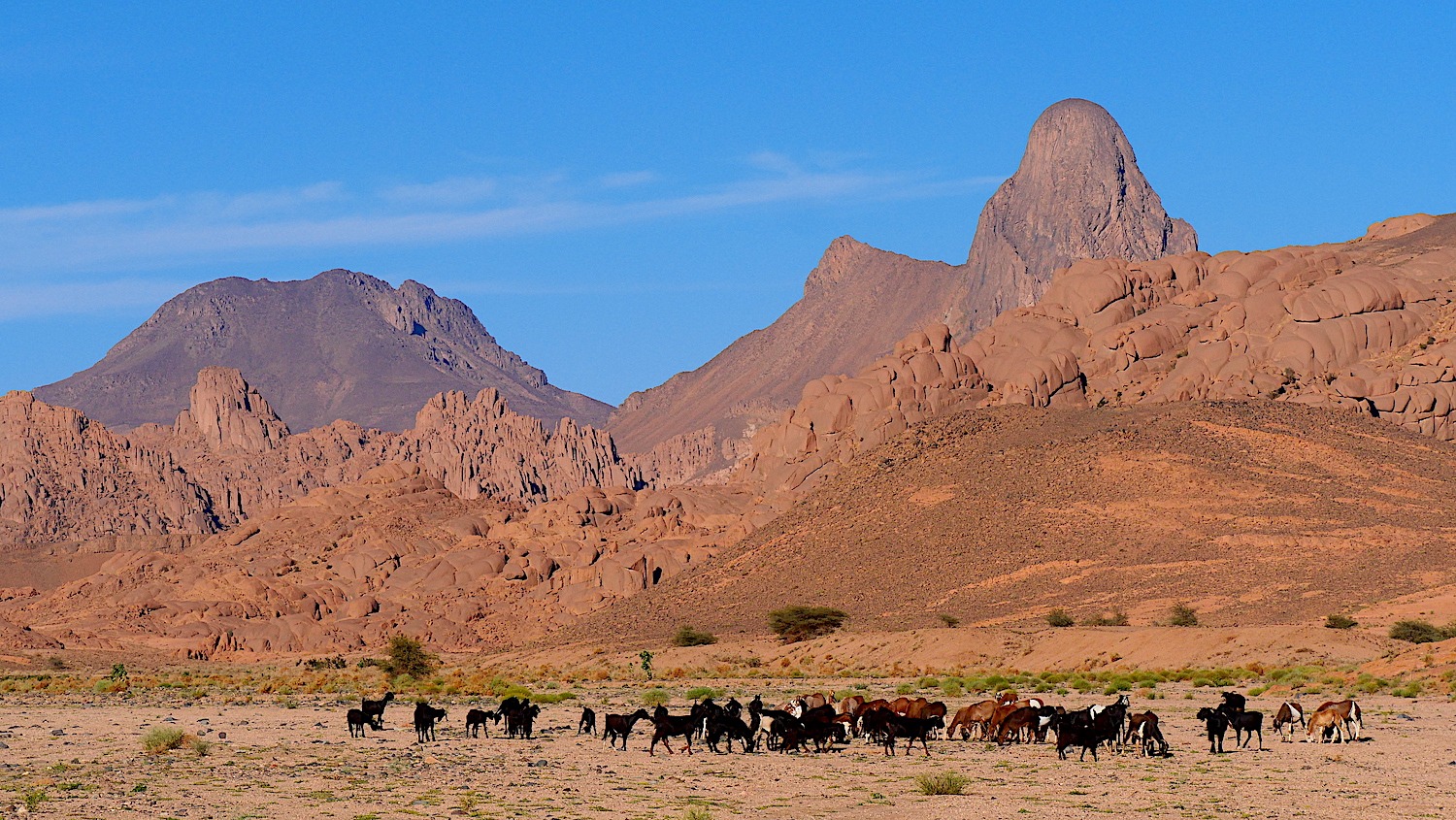
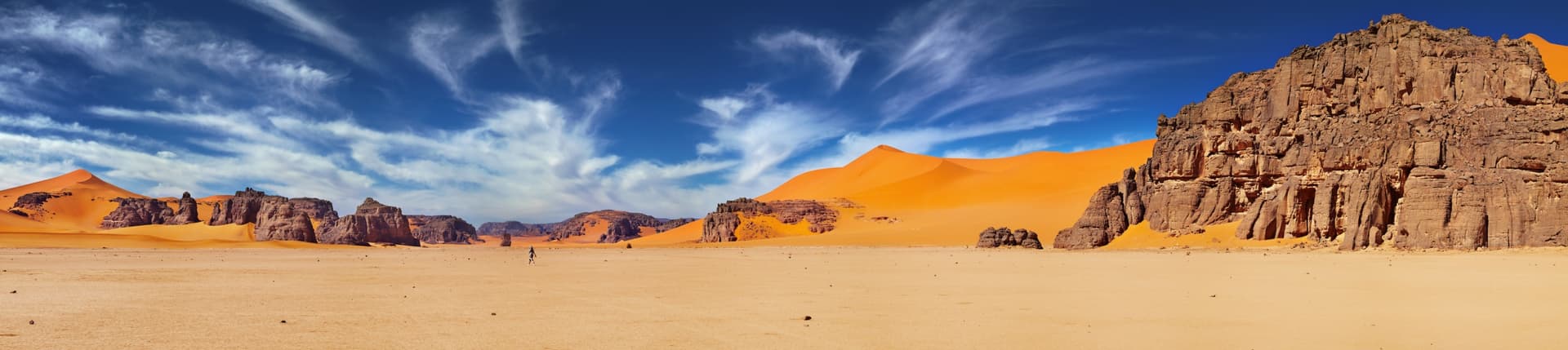
Duprez's Cypress (Cupressus dupreziana) is a conifer endemic to the Tassili n'Ajjer massif in southeastern Algérie. The only tree of its kind to have survived in the central Sahara, it grows between 1,000 and 2,000 meters in altitude, on windswept plateaus watered by barely 30 mm of rain annually. With approximately 200 specimens recorded, some of which are more than millennial, it ranks among the world's most threatened plant species.
Why see Duprez's Cypress
Approaching these trees means witnessing living testimony of a vanished climate. When the Sahara was more humid, several millennia ago, cypresses covered a far larger expanse of the Tassili. The specimens still standing today have endured the region's gradual desiccation and represent a biogeographic relic studied by botanists since the early twentieth century.
- A species classified as critically endangered by the IUCN.
- Trees, some of which exceed 2,000 years of age, among the oldest on the African continent.
- A unique mode of reproduction in the known plant kingdom: male apomixis.
- An exceptional landscape setting, at the heart of a park inscribed on the UNESCO World Heritage list.
What you observe in the field
Isolated giants
Cypress trees are found scattered across the Tassili plateaus, rarely in groups. The largest reach over 20 meters in height with trunks reaching circumferences up to 12 meters. Their gnarled silhouettes, fissured bark and roots clinging to rock tell the story of adaptation to a hostile environment.
An unparalleled mode of reproduction
Duprez's Cypress is the first plant species in which male apomixis was described: the seed develops from the pollen's genetic content alone, with no contribution from the female plant. Young individuals are thus clones of the father. This peculiarity, likely linked to the population's isolation and the scarcity of reproductive partners, is being studied to understand genetic resilience in ultra-reduced species.
An associated ecosystem
Around the cypress trees, you encounter a few species adapted to extreme aridity: acacias, wild oleasters and discreet Saharan fauna, notably including dorcas gazelles, fennecs and reptiles.
When to visit
The comfortable window for exploring the Tassili extends from October to March. Daytime temperatures remain manageable (20 to 25 °C in the heart of winter) and nights can drop near freezing at altitude. Avoid the period from June to September: the heat, regularly exceeding 40 °C, makes daytime walking in full sun hazardous and limits access to the plateaus. November, December and February often offer the best conditions for visibility and coolness.
How to get there
The logical entry point is the town of Djanet, connected to Algiers by domestic flights. From Djanet, access to cypress areas is mandatory with an approved guide and a 4x4 vehicle, followed by several hours of hiking depending on the sites visited. The trees are scattered throughout remote sectors of the Tassili n'Ajjer National Park, and their approach is organized as part of a multi-day circuit combining rock engravings, rock formations and bivouacs.
- Domestic flight Algiers – Djanet (approximately 2 hours).
- Travel permit and local guide mandatory in the park.
- Allow a minimum of 4 to 6 days on site to integrate the cypress visit into a coherent itinerary.
Practical information
- Status: protected species, access supervised by Tassili n'Ajjer National Park.
- Duration of visit: from a few hours to a full day depending on the site, as part of a longer trek.
- Physical level: hiking over rocky terrain, sometimes at altitude. Good physical fitness recommended.
- Equipment: hiking shoes, warm clothing for nighttime, sun protection, adequate water supply.
- Behavior: do not touch the bark or young shoots, take nothing away. The cypress trees are fragile and natural regeneration is very slow.
To combine in the region
The Tassili and Hoggar sector offers several sites compatible with visiting the cypress trees:
- Tassili n'Ajjer National Park: engravings and rock paintings among the oldest in the world.
- Hoggar National Park: volcanic massif with contrasting landscapes, accessible from Tamanrasset.
- Amadror Salt Flats: vast salt expanse in the heart of the desert.
- Ighzer Caves: prehistoric testimonies in rocky settings.
Frequently asked questions
Frequently asked questions
Estimates place the wild population around 200 adult individuals, which classifies the species as critically endangered according to the IUCN. Conservation programs and ex situ cultivation attempts seek to expand this base.
Some specimens exceed 2,000 years, making them among Africa's oldest trees. Their very slow growth, linked to aridity, explains this exceptional longevity.
It is a mode of reproduction where the seed develops solely from the pollen's genetic content, with no contribution from the female plant. Duprez's Cypress is the first plant species in which this mechanism was observed.
No. Access is granted within the framework of Tassili n'Ajjer National Park, with an approved guide and local authorizations. This organization protects the trees and ensures visitor safety in the heart of the desert.
October to March, when temperatures allow daytime hiking. The Saharan summer makes the experience grueling and several areas become difficult to access.
Prepare your trip
Approaching Duprez's Cypress is part of a broader itinerary through Algérie's Saharan landscapes. To build a journey suited to your pace, consult our suggestions for travel in Algérie.
Interested in this visit?
We can include it in your personalised itinerary.