Exploration of the Algerian Cultural and Ancient Heritage
On the white terraces of El Bahja, between Ottoman alleyways and Roman ruins, the Mediterranean soul of Algiers is revealed.
Duration
8 days
Ideal seasons
Mar, Apr, May, Oct, Nov
Style
Guided tour
Comfort
classique
Travelers
Couple, Solo, senior, groupe
The spirit of travel
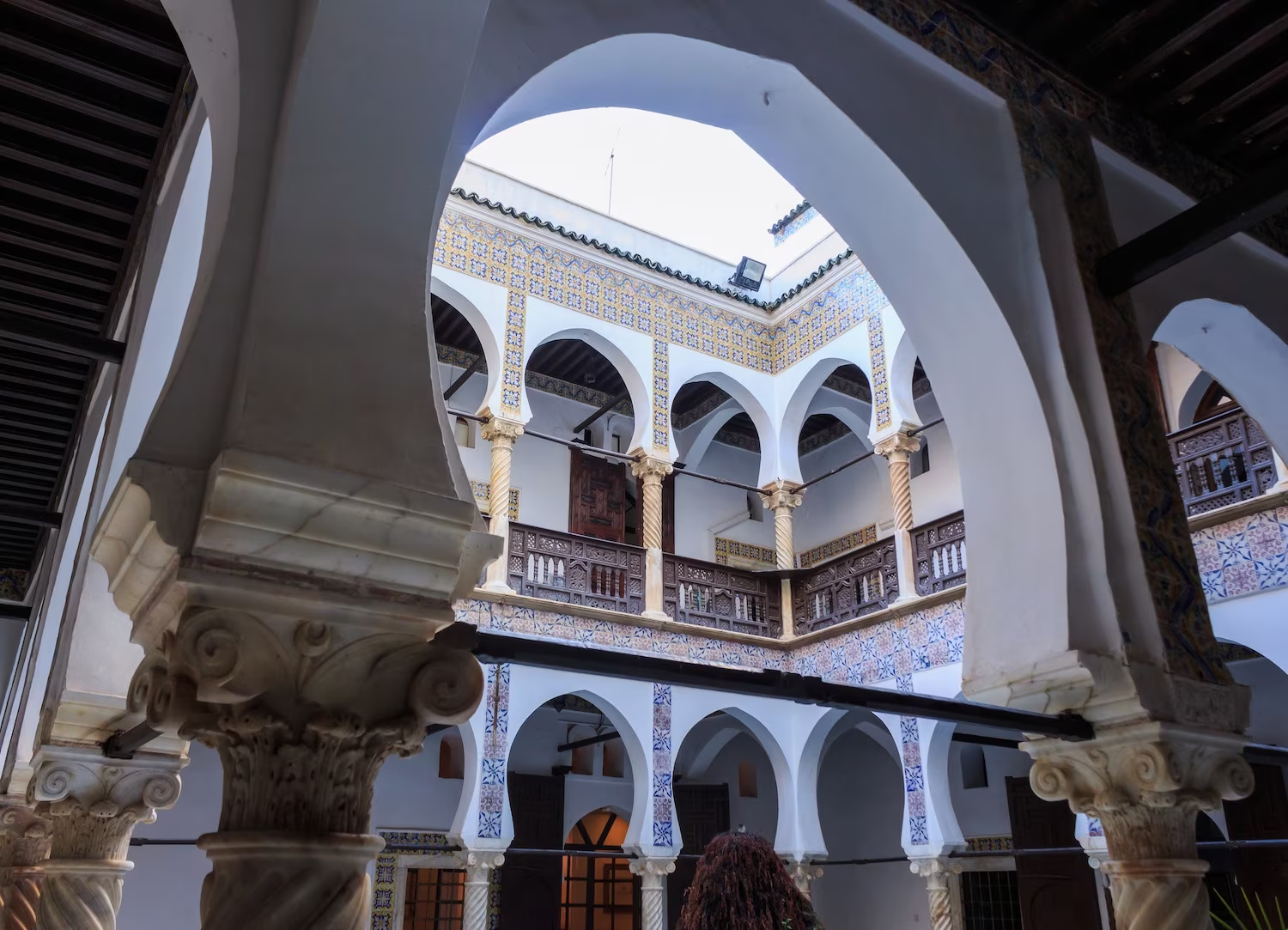
Algiers the white, called El Bahja – the joyful –, is considered the first city of the Maghreb region. Founded in 960 by Boulougine Ibn Ziri on the ruins of the ancient Roman city Icosium, the former Ottoman city extends over about thirty kilometers. It is bordered to the north and east by the Mediterranean Sea which forms the famous Gulf of Algiers, dominated by the Casbah, the ancient city and Medina; a center of cultural influence and headquarters of military and political command. Numerous foreign interventions (Roman, Turkish and French) have affected the Algiers region, making it an international region open to the world.
From the legendary Casbah to traditional spice markets and through to its cuisine, you discover at every moment the authenticity of a city that is determined to preserve its soul … the city of Muhammad Racim master of miniature plastic arts, of Hadj M'Hammed El Anka the virtuoso and dean of popular Châabi music, of Albert Camus and of so many other geniuses of creativity who found an inexhaustible source of inspiration there.
Algiers has been able to benefit from its rich Mediterranean and African cultural heritage because its highly cosmopolitan and mixed population expresses spontaneous hospitality and a sense of sacred welcome.
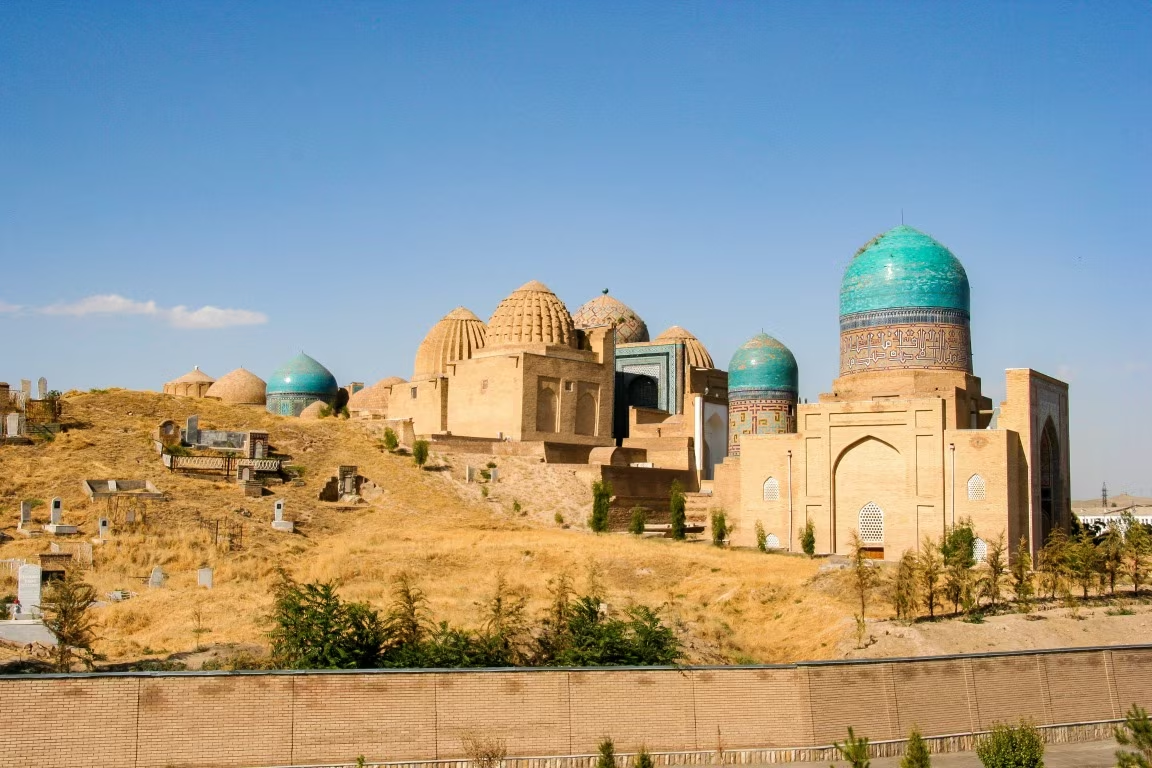
A few kilometers away, we will discover the ancient Roman city of Tipaza, its ancient museum and the Royal Mausoleum of Mauritania.
The stages of your journey
Highlights
Day-by-day itinerary
International flight > Algiers
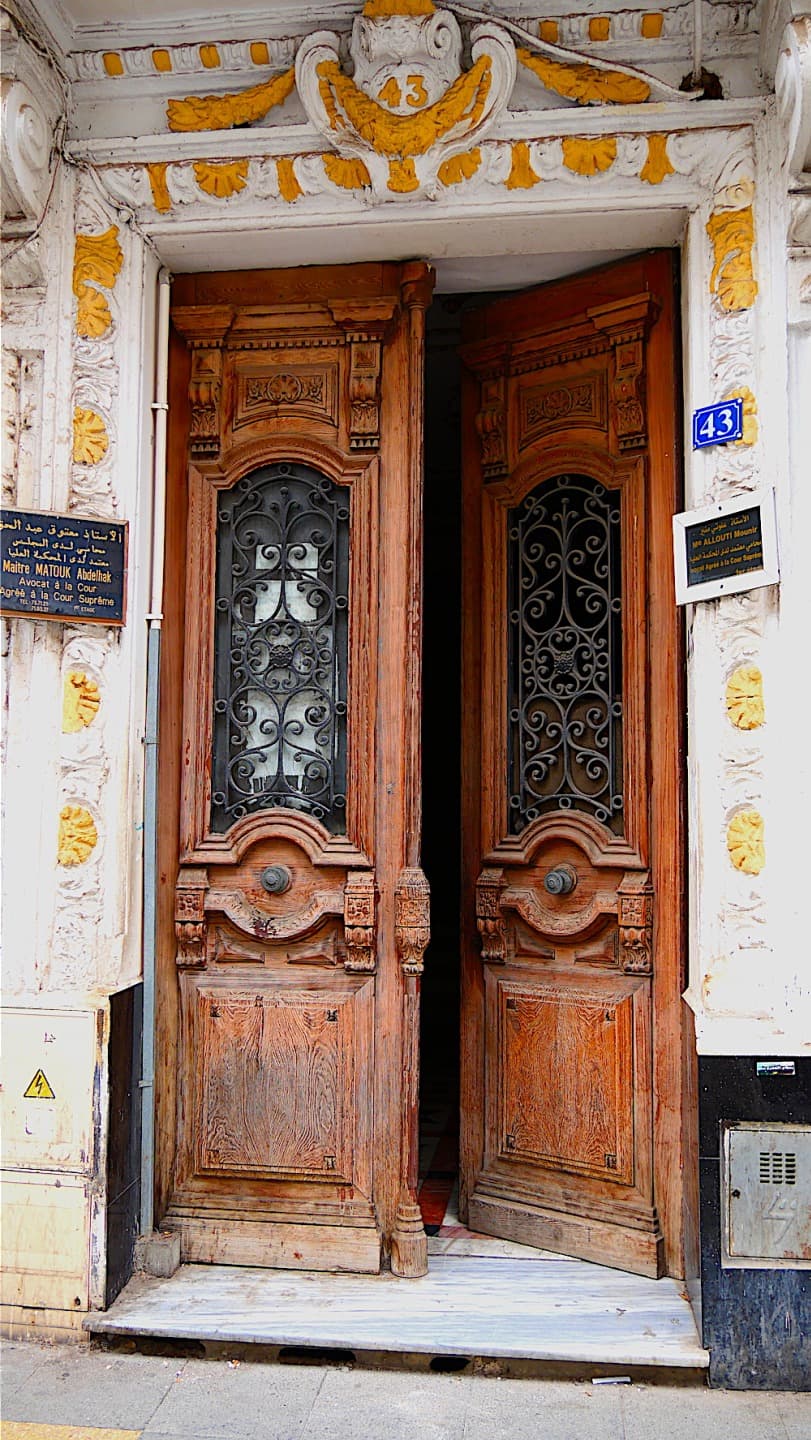
Arrival, welcome and assistance at Algiers international airport. Transfer by vehicle to the city center. Check-in at a guesthouse.

The Casbah of Algiers and Our Lady of Africa
Visit to the Casbah, the old Medina of Algérie. Nicknamed Al Bahdja (The Radiant) or (The White), by both Algerians and French, it is the capital of Algérie and the largest city in the country. With nearly five million inhabitants, the greater Algérie metropolitan area brings together 10% of the Algerian population and ranks first among the most populated cities in the Maghreb.
The Casbah was built in the 10th century. We will begin our visit with the Citadel (the Dey's palace) or Dar El Soltane. Places to visit: the Dey's mosque, the Janissaries club, the craftsmen (ceramicist, cabinetmaker, etc.), the alleyways where the film The Battle of Algérie by Gillo Pontecorvo (released in 1966) was filmed, the Sidi Mohammed Chérif mosque, the Sidi Mohammed Chérif fountain, the Ali la Pointe museum, the market of the Mosque of the Jews, the periphery of the Ketchaoua mosque and the Mustapha Bacha museum. The duration of the visit is 3 to 4 hours maximum, depending on the group's pace.
Lunch as a traditional meal at a guesthouse table in the Casbah.
Continuation of our visit in the afternoon through Martyrs' Square. Visit to the Palais des Raïs "Bastion 23" - Cultural arts center – the only witness to the extension of the Casbah to the sea. Then, we will go to higher ground (transfer by vehicle) to visit "The Basilica of Notre Dame d'Afrique". If the sky is clear we may be able to witness a beautiful sunset.
Return to downtown. Free dinner. Overnight at the guesthouse.
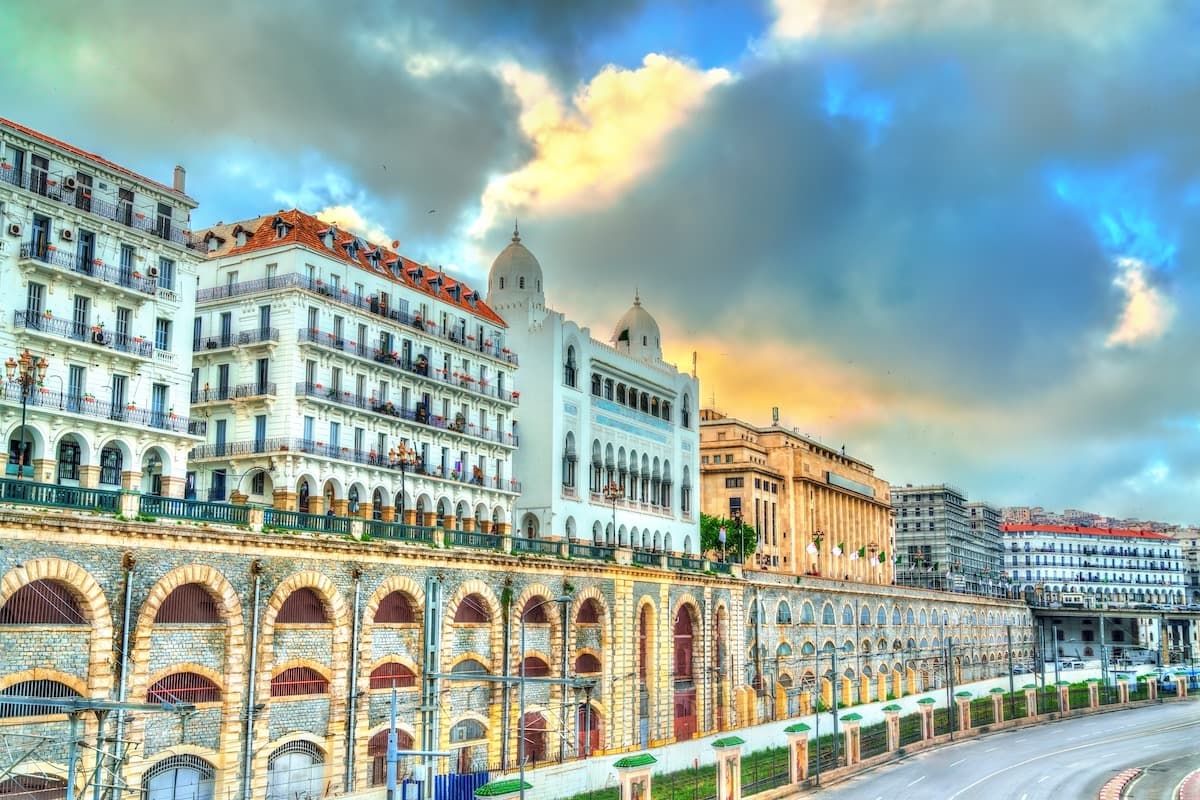
The Bardo and Unusual Algiers
Visit of the Bardo Museum in the morning. The villa, whose patron was a wealthy exiled Tunisian, Mustapha Ben Omar, was built on the heights of Algiers at the end of the 18th century to serve as a summer residence for welcoming the notables of the time. In turn, the property passed through several owners, including Admiral Maurice Exelmans in 1830, General Valentin Auguste Lichtlin in 1846, officer and landscape painter artist Prosper Baccuet in 1851, Monsieur Grauby in 1868, then Madame Aziza Fao, daughter of Jewish merchant Joseph Cohen-Bacri in 1874. In 1875, the villa became the property of Ali Bey Bouakkaz, Agha of Biskra, then he resold it in 1879 to Monsieur Pierre Joret, the last occupant of the villa.
Upon his death, his sister, Madame Frémont, ceded the Bardo villa to the French State in 1926, which transformed it into a Museum of Ethnography and Indigenous Art. Inaugurated in 1930, on the occasion of the centenary of colonization, the museum became the Museum of Prehistory and Ethnography, whose founder and first curator was prehistorian Maurice Reygasse, then the National Museum of Bardo in 1985, and classified the same year as a historic monument.
Regarding the word Bardo, it would be a distortion derived from the Spanish name Prado, which means garden, place of pleasure. It would refer to the sumptuous palaces of the Hafsid sultans dating back to the 15th century, traces of which are found in the Tunisian suburbs. Currently, the Bardo Museum houses an important collection of ethnography and African art.
Visit of the city center – unusual Algiers –, Didouche Mourad street, the market, the craft shops up to the main post office, then Larbi Ben M'Hidi street - formerly Isly street - and Emir Abdelkader square.
Hiking walk along the seafront.
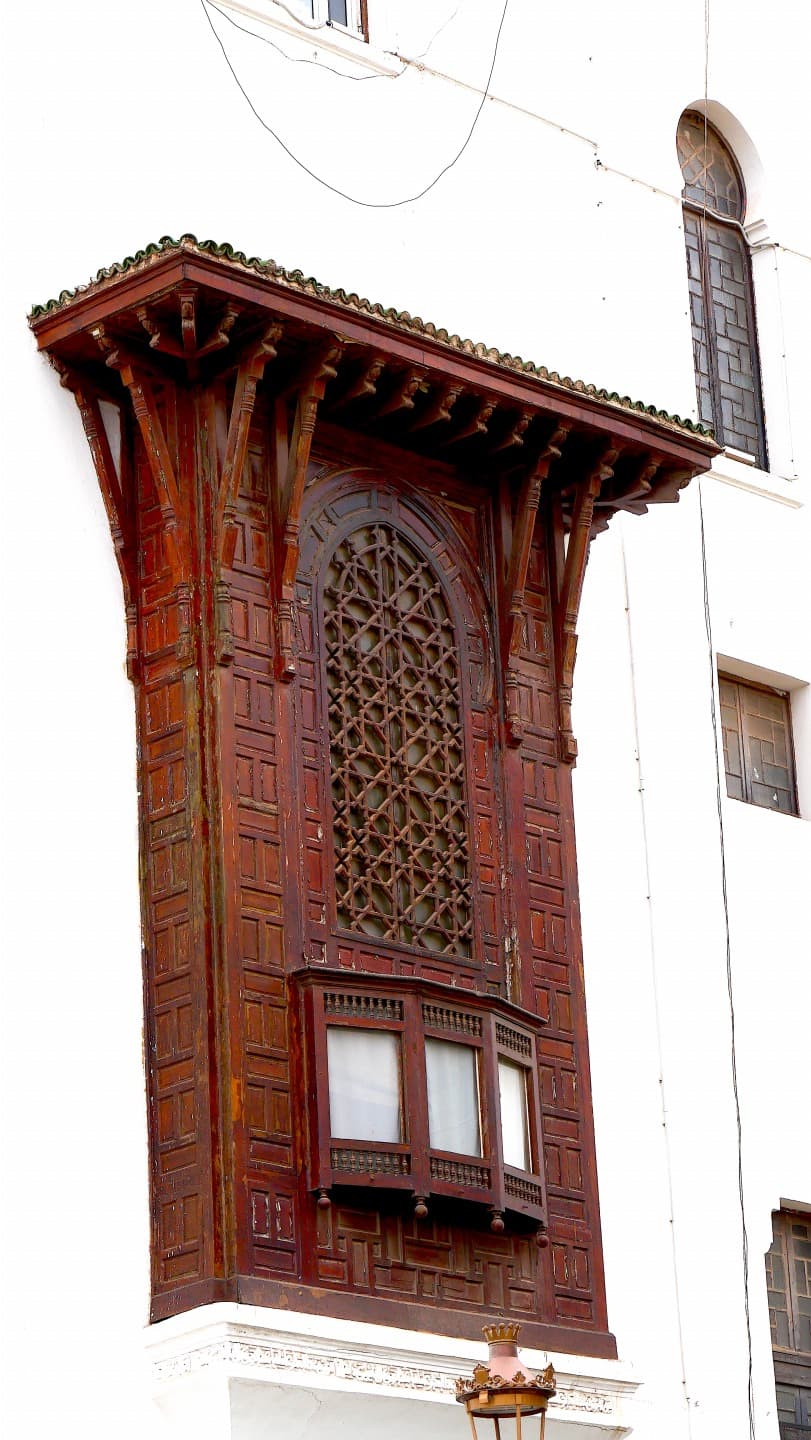
From Fine Arts to the Hamma Botanical Garden
Visit to the National Museum of Fine Arts in Algiers, one of the largest art museums in Africa. Open to the public since May 5, 1930, it is located in the Hamma district, near the Hamma botanical garden. The museum with its 8,000 works brings together painted works, drawings, engravings and old prints, sculptures, antique furniture and decorative art, ceramics, glassware, as well as a numismatic collection. Among the works on display are paintings by Dutch and French masters such as Brugghen, Van Uyttenbroeck, Van Goyen, Monet, Matisse, Delacroix, Honoré Daumier, Renoir, Gauguin and Pissarro. But also emblematic Algerian artists, such as Baya, Yellès and Racim. The museum houses sculptures by Rodin, Bourdelle and Belmondo.
In the afternoon, visit to the Botanical Garden "Jardin d'essai du Hamma". Created in 1832, with the aim of draining swampy terrain in order to transform it into agricultural land, the Garden becomes a "Central Government Nursery", which initially covers 5 hectares and then expands to 18 hectares in 1837. Subsequently, it becomes an "Acclimatization Garden" then a "Pleasure Garden" with the development of horticulture; the goal being to introduce various plant species in order to test their acclimatization and adaptability to the local climate.
The El-Hamma experimental garden served as a natural setting for the filming, in 1932, of Tarzan, the ape man by American director Woodbridge Strong Van Dyke. The character of this jungle lord was portrayed on screen, in this feature film, by Johnny Weissmüller, an American actor of Austro-Hungarian origin. Tarzan, a fictional character known throughout the world, has inspired several writers, filmmakers and comic book creators. You only have to close your eyes to imagine, emanating from a giant ficus tree, Tarzan's very first cry
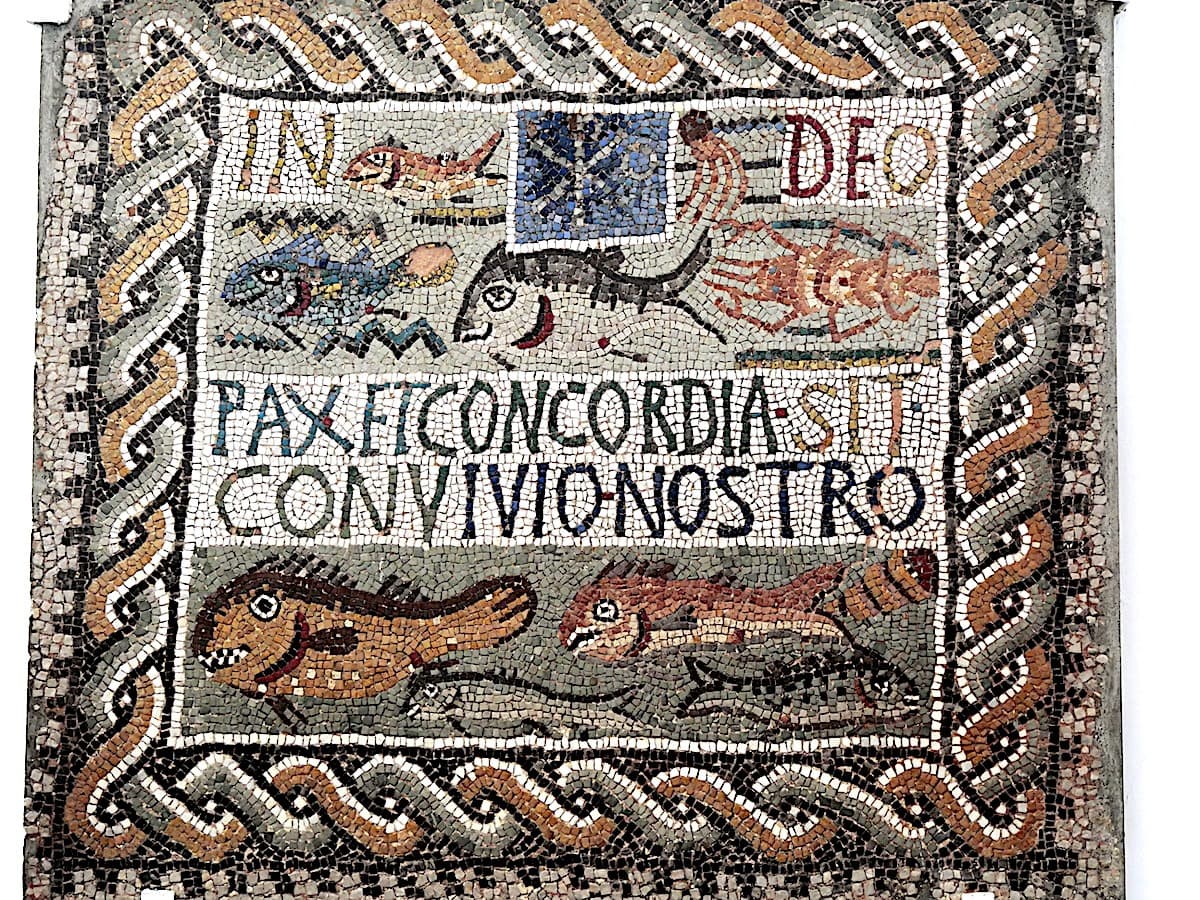
Tipaza the Ancient Through Its Roman Ruins of the First Century
Early morning departure for a visit to the Roman ruins of the port of Tipaza. Located 70 km west of Algiers, the city was founded by the Phoenicians around the 6th century BC, and its name means "place of passage". This enchanting city experienced the succession of several civilizations:
Roman civilization: between 145 and 150 AD (in the 2nd century of the Christian era), Tipasa became a Roman colony.
Vandal civilization: its passage dates to around the 5th century AD.
Byzantine civilization: in the 6th century AD, the Byzantines retook Tipasa.
The city was surrounded by an enclosure of 2200 meters and 37 guard towers. The percentage of excavations is between 35 and 40%. Among the important monuments that visitors can discover are: the amphitheater, the temples, the villa (or Roman house), the theater, the baths, the basilica, the forum, the courthouse, the nymphaeum (the public fountain) and the commemorative stele of Albert Camus. I won't tell you more, I invite you to discover the beauty of this city rich in history and mysteries.
Afternoon visit to the Royal Mausoleum of Mauretania, founded towards the end of the 1st century BC. It is the tomb of Cleopatra Selene, wife of Juba II, who was the king of Caesarea at the time (present-day Cherchell, a coastal city located 27 km west of Tipaza). It is presumed to be the tomb of Cleopatra Selene, daughter of the famous Queen Cleopatra of Egypt. It is falsely called the "Tomb of the Christian Woman" because of its four false doors decorated with moldings in the shape of a cross.

Multicultural and Religious Old Algiers
Visit of the Great Mosque of Algiers in the morning. With its spectacular dimensions, the Great Mosque of Algiers has become the largest mosque in Africa. And it is also the 3rd largest in the world, behind those of Mecca and Medina in Saudi Arabia. Spanning nearly 30 hectares, its site has a vast prayer hall, as well as a reception space for exhibitions, a museum of Islamic art and history spanning 15 centuries, a media library, amphitheaters and a research center. The total capacity of the site is nearly 120,000 people. The gigantic prayer hall can accommodate some 35,000 worshippers.
In the afternoon, visit of the Diocese of Algiers. The Archdiocese of Algiers is a particular church of the Catholic Church in Algérie. Established in 1838, the diocese of Algiers was elevated to the rank of metropolitan archdiocese in 1866. Its seat is the Cathedral of the Sacred Heart of Algiers.
During the Roman period the current site of Algiers was occupied by the city of Icosium (seat of a bishopric), which was part of the province of Mauretania Caesariensis, whose capital was Cherchell. During the Ottoman period, Lazarist Fathers successively held the position of apostolic vicar from 1650 to 1827, ensuring the service of Christians, prisons, merchants and consuls.
The Church regained a diocesan structure in 1838 with the creation of the bishopric of Algiers, which covered all of Algérie until 1866, when it became an archbishopric with the creation of two other dioceses in the North. After Monseigneur Dupuch (1846-1866), who was the interlocutor of Emir Abdelkader, and Monseigneur Pavy (1846-1866), the builder of the Basilica of Notre Dame d'Afrique, Cardinal Lavigerie led the diocese of Algiers from 1866 to 1892. Upon his arrival (1868) he founded the White Fathers and the White Sisters (1869).
Free dinner. Overnight stay.
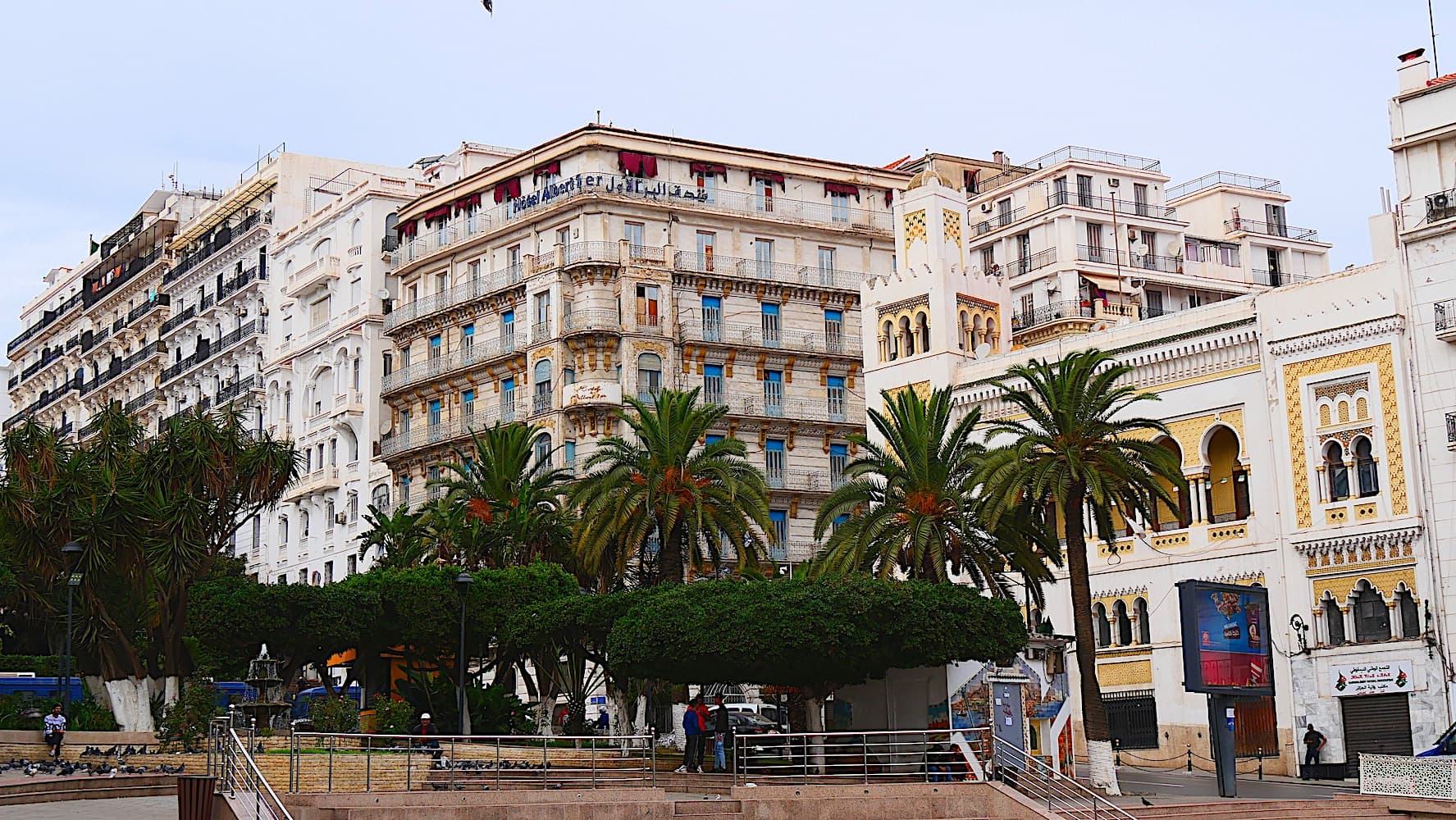
Discovery of Dar Essalam and the Palace of the Raïs
Visit of the "House of Peace" Dar Esslam, lower Casbah of Algiers, which was inaugurated on July 22, 2022 by Sheikh Khaled Bentounes, dedicated to the universal values of peace, fraternity and humanity. This building will bear the first marker in Algiers, echoing the international day of living together which was decreed by the UN on December 8, 2017 and the date retained is May 16. Algerian initiative, initiated by the guide of the Alawiya tariqa Sheikh Khaled Bentounes.
In the afternoon, visit of the Palais des Raïs – Arts and Culture Center-, also called "Bastion 23", which is one of the most important historical monuments in the city of Algiers. It also represents one of the last witnesses that physically attest to the extension of the Medina of El Djazair (Casbah) towards the sea, during the Ottoman era until the 19th century.
At the end of the visit, we will have a coffee at the "Café Malakoff", a mythical place imbued with the memory of the master of Châabi music El Hadj M'Hammed El Anka.
Free dinner and thematic evening of Châabi music. Overnight.
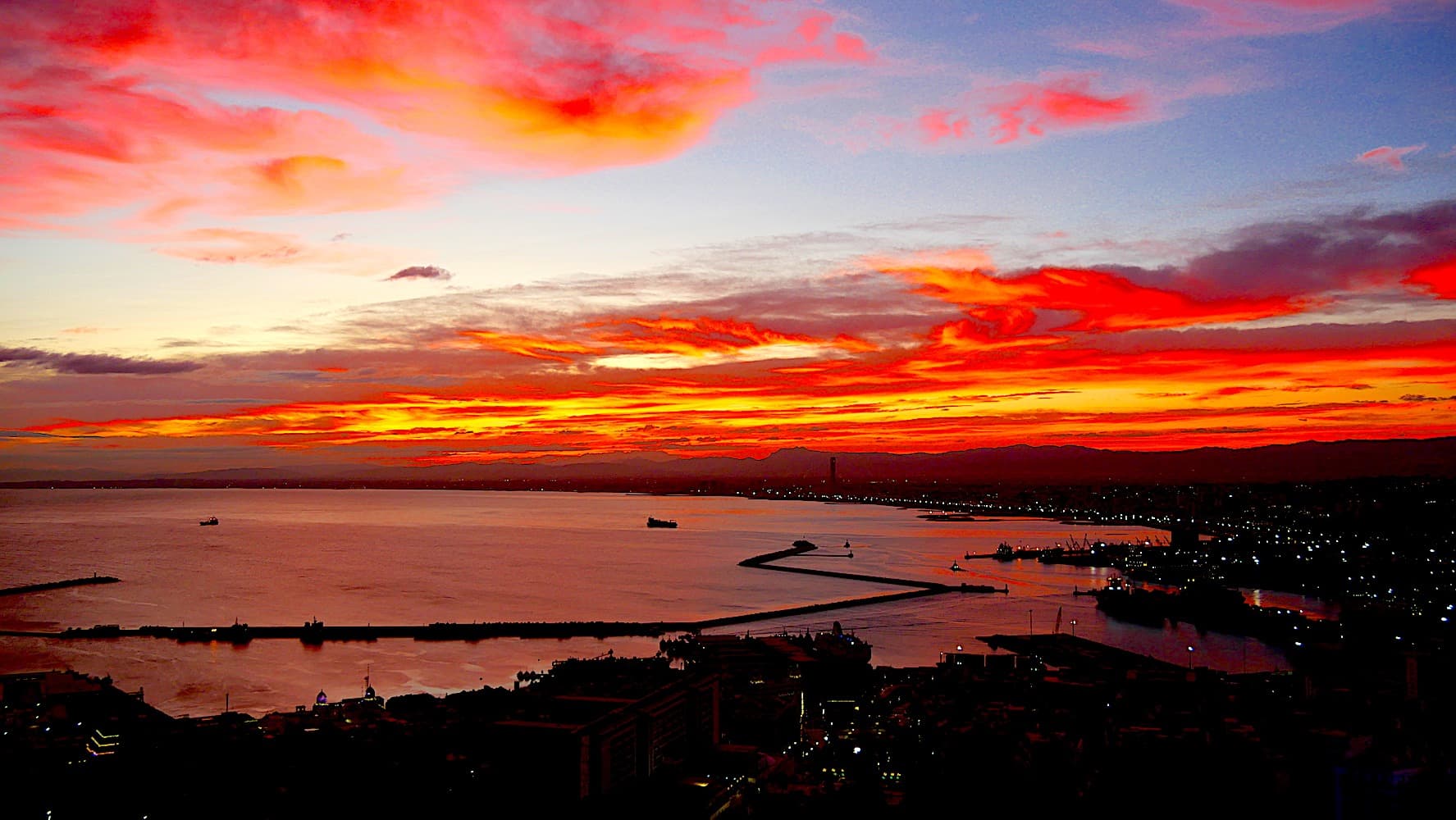
Algiers > Departure on an international flight
Breakfast and departure to the airport, departure assistance and boarding on an international flight.
Practical Information
Registration is considered firm and final after payment of a deposit of 30% of the total price and acceptance of the specific terms of sale.
The balance must be paid no later than 45 days before the departure date.
See our specific terms of sale for full details.
In the event of cancellation by the traveller, the following fees apply:
- Plus de 60 jours avant le départ : 40 % du prix total (acompte retenu)
- Entre 60 et 30 jours avant le départ : 50 % du prix total
- Moins de 30 jours avant le départ : 100 % du prix total
We strongly recommend taking out cancellation insurance. See our specific terms of sale for full details.
The information below concerns travelers who are nationals of the European Economic Area (EEA), Switzerland, and Canada traveling to Algeria for a tourist stay. As entry rules may change, we recommend verifying this information with the official authorities before your departure.
Passport
To enter Algeria, your passport must be valid for at least six months after your date of entry into the country and have at least one blank page for immigration stamps.
The document must be in good condition (no damaged, torn, or altered pages).
Visa
Nationals of the European Economic Area, Switzerland, and Canada must be in possession of a valid visa to enter Algeria for a tourist stay. There is no visa exemption for these nationalities.
The visa must be obtained before departure, from the Algerian embassy or consulate responsible for your country of residence. It is recommended to apply several weeks in advance, as processing times may vary.
Documents generally required for a visa application include:
a valid passport with at least six months of remaining validity,
a completed and signed visa application form,
recent passport-sized photos complying with required standards,
a return flight ticket or booking,
proof of accommodation (hotel reservation or invitation),
proof of sufficient financial resources for the duration of your stay.
The authorized length of stay is generally 30 days, depending on the conditions mentioned on the visa issued.
Travel with children
Minors must be holders of their own valid passport covering the duration of their stay.
In some European countries, when a minor travels without one of their parents, an authorization to exit the territory may be required according to the regulations of their country of residence.
Health
No vaccination is officially required to enter Algeria for nationals of the EEA, Switzerland, and Canada. However, it is recommended to consult a doctor or vaccination center before departure and to ensure that basic vaccinations are up to date (diphtheria, tetanus, poliomyelitis, hepatitis A).
It is also advisable to take out international health insurance covering medical expenses and repatriation for the entire duration of your stay.
Other nationalities
Entry conditions may vary depending on nationality. Travelers concerned should inquire at the Algerian embassy or consulate of their country of residence.
To participate in our trips, it is strongly advised to have assistance-repatriation and foreign medical expenses insurance.
Your local agency encourages you to familiarize yourself with the specific policy developed with our partner CHAPKA ASSURANCES and AXA ASSISTANCE.
To subscribe to insurance, learn about coverage and rates, follow the link below.
CAP EXPLORER: The complete insurance solution designed for a worry-free trip!
Choose the plan that best suits you:
Explorer'Multirisque
Explorer'Annulation
Explorer'Assistance
Explorer' Complementary Credit Card
Specific to our trips, we strongly recommend subscribing to them.
If you choose to subscribe to one of these plans, the policy detailing all coverage and claims declaration procedures are available on the insurer's website.
Your local agency will be aware of this, but only the participant is responsible for complying with the claims declaration procedures. The participant must therefore keep this policy with them throughout their trip.
Chapka — Cap Explorer
Our insurance partnerTravel with peace of mind with our partner Chapka. Cancellation, repatriation, medical expenses, baggage… All the coverage for a worry-free trip.
Travel with peace of mind — I'll handle the insuranceFrequently asked questions
A tourist visa is required and must be requested from the consulate (consular fees apply, processing time 2-3 weeks). An invitation letter or accommodation certificate is required. Your passport must be valid for at least 6 months beyond your planned entry date. Conditions can be stringent. We strongly recommend verifying the rules applicable to your nationality with the Algerian consular authorities before booking your trip.
Go to the My Trips section to find all your projects.
You can send a message to your host directly from the Tea Lounge.
For a tailor-made quality trip, budget between 140 and 240 euros per day and per person, including accommodation, meals, internal transfers and English-speaking guide. International flights (350-700 euros return) are additional. The Algerian Sahara (Tassili, Hoggar) requires a specific budget.
Your documents are accessible in the Documents tab of your trip.
Absolutely. We adapt each itinerary to match your travel profile. For families, we prioritize relaxed paces, family-friendly accommodations, engaging and educational activities, and comfortable private transfers. Our local English-speaking guides know how to captivate children with age-appropriate stories and anecdotes.
It's simple. You exchange with our local team to define your wishes, budget and dates. You receive a detailed itinerary proposal within 48 hours. You refine every detail together until you have the perfect version. You confirm and set off with peace of mind. Your local agency remains available 7 days a week throughout your trip.
In case of emergency, contact your local agency immediately.
Payment is generally made in two installments.
Our agency is part of the Nomadays network, registered in France. You benefit from APST guarantee (Professional Association of Tourism Solidarity) which covers 100% of your funds. Secure payment, repatriation insurance included, and English-speaking assistance 24/7 on site throughout your stay.
Let's talk about your adventure — Algiers Central Coast
Pioneer of Algeria's great deserts, based in Ghardaïa / M'zab (puis Alger à partir de 2006)
The desert is not crossed with an itinerary alone. It demands listening, respect, and a certain inner availability.
— Louiza